Sunday, October 11, 2026

Fed Leadership Shift, Congressional Stock Trades, and SEC Reforms Signal New Era for U.S. Financial Governance

The nomination of Kevin Warsh as Federal Reserve Chair is reshaping market expectations and banking regulation outlooks, while controversy over congressional stock trading — highlighted by Rep. Marjorie Taylor Greene's disclosed positions — is renewing bipartisan pressure for legislative reform. The SEC is simultaneously tightening retail investor protections through fraud enforcement and a Regulation NMS review.

Source Trace Score11 source documents11 with a live linkVerifiability: Strong
Fed Leadership Shift, Congressional Stock Trades, and SEC Reforms Signal New Era for U.S. Financial Governance
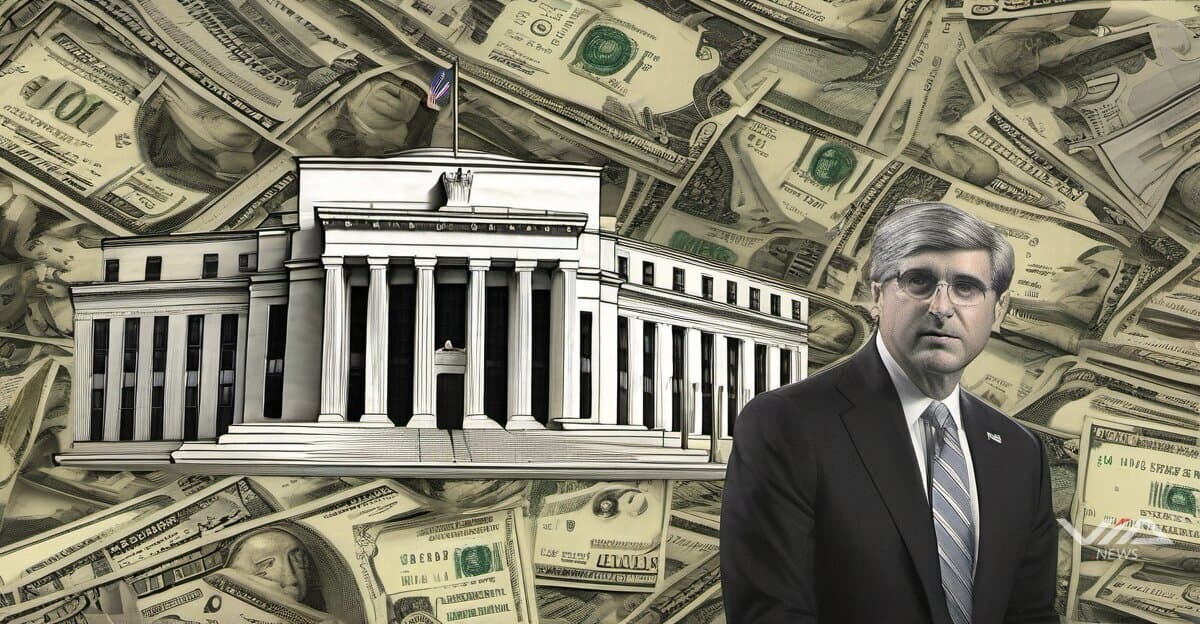
Image generated by AI for illustrative purposes. Not actual footage or photography from the reported events.

U.S. financial governance is entering a period of simultaneous institutional stress and structural reform, as three distinct forces — a Federal Reserve leadership transition, renewed controversy over congressional stock trading, and an activist SEC agenda — converge to redefine the regulatory landscape for banks, investors, and markets alike.

Warsh Nomination Jolts Markets and Banking Sector

The prospective nomination of Kevin Warsh as the next Federal Reserve Chair has already produced measurable market reactions: a strengthening dollar and a sell-off in precious metals, reflecting investor expectations that Warsh would adopt a less accommodative monetary stance than his predecessors. For the banking sector, the implications run deeper. Warsh, a former Fed governor and Morgan Stanley investment banker, has historically favored lighter-touch financial regulation and a more rules-based approach to monetary policy — a posture that could translate into a recalibration of post-2008 prudential standards, including capital buffer requirements and stress testing regimes that major U.S. banks have long lobbied to ease.

The transition also raises questions about Fed independence at a moment when political pressures on central bank policy are unusually visible. Markets will be watching closely whether a Warsh-led Fed would hold the line on rate decisions insulated from executive influence, or whether the institutional norms established over decades begin to bend.

Congressional Trading Scandal Accelerates Reform Push

The disclosure of Rep. Marjorie Taylor Greene's stock trades — which surged in value following tariff-related policy announcements by the Trump administration — has reignited one of Washington's most persistent governance debates. Greene defended her portfolio manager's decisions, stating: "I don't place my buys and sells. He did a great job. Guess what he did. He bought the dip." She dismissed criticism of trades that appeared to anticipate tariff moves as "laughable," arguing that "President Trump has been talking about tariffs for decades."

Critics were unconvinced. Rep. Mike Lawler, a Republican, called the episode "just another reason why stock trading by members of Congress or their spouses should be banned" — a notably bipartisan sentiment in an otherwise fractured political environment. The episode has added momentum to renewed legislative proposals modeled on the STOCK Act, which requires disclosure but stops short of prohibition. Advocacy groups and institutional investors argue that the current framework creates an uneven information playing field that undermines retail investor confidence in market integrity.

SEC Tightens the Net Around Retail Investors

Against this backdrop, the Securities and Exchange Commission is moving on two fronts to strengthen protections for individual investors. An aggressive fraud enforcement posture — targeting pump-and-dump schemes, misleading AI-driven investment platforms, and social media manipulation — signals that the agency intends to use its existing authority expansively. In parallel, the SEC has convened a Regulation NMS roundtable to reassess the equity market structure rules that govern how retail orders are routed and executed, a process that could ultimately affect payment for order flow arrangements and the economics of retail brokerage.

Together, these developments point toward a tighter, more contested regulatory environment for financial markets. For institutional players, the Warsh appointment could bring relief on capital requirements while the SEC tightens market conduct rules. For retail investors, the message from regulators is increasingly clear: the era of light-touch oversight is giving way to renewed scrutiny — whether Congress chooses to reform itself or not.

Source documents

Via News is a conduit. We point to the source documents behind this report — we don't replace them. Trace any claim to its source and decide what to trust. How we source

Source Trace Score11 source documents11 with a live linkVerifiability: Strong
  1. [1]News articleYahoo Finance· February 1, 2026
    January jobs data, Alphabet and Amazon earnings, more Warsh fallout: What to watch this week
  2. [2]News articleYahoo Finance· November 29, 2025
    Marjorie Taylor Greene’s stocks jumped 476% since joining Congress: Here are her 5 biggest investing wins to learn from
  3. [3]News articleYahoo Finance· December 9, 2025
    San Francisco Downtown Development Corporation Announces Over $60 Million in Early Contributions and Commitments to Revitalize and Reimagine Downtown
  4. [4]Press releaseGlobeNewswire· November 28, 2025
    Single-Use Plastic Water Bottles Market Growth, Trends, Key Segments, and Regional Dynamics
  5. [5]Press releaseGlobeNewswire· December 3, 2025
    Trends in North America Automotive Thermoformed Plastic Parts Packaging Market - 2035
  6. [6]News articleYahoo Finance· January 9, 2026
    Two Decades of Brand Evolution: Global Top Brands Witness Transformation and Perseverance of Consumer Electronics Industry
  7. [7]News articleYahoo Finance· February 10, 2026
    Butterfield (NTB) Q4 2025 Earnings Call Transcript
  8. [8]News articleYahoo Finance· February 13, 2026
    DSV, 1166 - NOTICE OF ANNUAL GENERAL MEETING 2026
  9. [9]Press releaseGlobeNewswire· January 8, 2026
    Minim Martap Development Update
  10. [10]News articleYahoo Finance· January 8, 2026
    TASTE OF THE NFL BRINGS SUPER BOWL LX'S ULTIMATE CULINARY EXPERIENCE TO SAN FRANCISCO TO RALLY SUPPORT TO END STUDENT HUNGER
  11. [11]Press releaseGlobeNewswire· February 2, 2026
    Trust Stamp provides a business update highlighting progress in focus areas

In this story · Knowledge Files

What we know · the intelligence behind this page
Live from the substrate
What we're seeing
Agentic AI Rewires Enterprise Software: Platform Incumbents, Governance, and a Funded Startup Wave
Enterprise software is being rebuilt around autonomous AI agents. Incumbents and large platforms (SAP with its Autonomous Suite and Joule, Zeta with AthenaOS/AIM/Athena MCP, Meta with its new Enterprise Platform) are racing to own the agent layer. Meanwhile, seed and Series A money flows to finance-office and vertical startups (Dextr, Latitude, Dentira, Light), and consolidation continues through acquisitions (Tiny–Oso Cloud, Harvey–Guardrails AI). Investor commentary stresses that AI is better at disrupting around the edges of systems of record than at replacing them, that it should not be trusted with finance calculations, and that governance must be enforced by the system rather than left to agents.
Our read on the data ›
Signals we're tracking
EPKINLY Regulatory-Clinical Success Cascade
High probability of expanded label indications, additional combination approvals, and competitive positioning strength in follicular lymphoma market. Predicts positive commercial uptake and potential accelerated review for related indications.
Patterns we're watching ›
Where sources disagree
ING Group
Both facts record the same metric (shares_outstanding) for ING Group at the identical observation date (2025-12-31). FACT A states 2,902,437,688 shares; FACT B states 2,902 million shares (2,902,000,000). The difference is 437,688 shares (~0.015%). This is a genuine value conflict, though the discrepancy appears to result from FACT B rounding to the nearest million while FACT A provides the precise count.
We flag conflicts openly ›
Recently verified
✓ Checked against the original source
4,986
facts traced to their source — and we flag the ones that don't hold up.
101 entities tracked4,986 facts checked against source5,369 source documents archived
Query this data → isubstrate.com