Tuesday, August 18, 2026
What we know · the intelligence behind this page
Live from the substrate
What we're seeing
Enterprise AI Agent Rollout Outpaces Data Trust and Readiness
Enterprise adoption of agentic AI is accelerating fast — Siemens deepening its NVIDIA partnership for self-verifying agentic AI in chip design, Manulife expanding its Microsoft AI-governance partnership, and a wave of infrastructure launches (NVIDIA GPU-accelerated data processing, Dell exascale storage, new AI chip generations) — even as a new Google Cloud survey shows the underlying data foundation isn't ready: companies have AI access to only 45% of their data on average, data laggards see access fall to 30% or less, and only about half of organizations trust their AI agents' decisions. Meanwhile, insider selling at enterprise-AI bellwether C3.ai (CEO Thomas Siebel offloading $4.8M in shares) hints at investor caution layered under the adoption hype.
Our read on the data ›
Signals we're tracking
Satellite-Terrestrial Network Integration Acceleration
Increased investment and launches in hybrid satellite-cellular networks across telecom industry; competitive responses from other carriers; regulatory activity around satellite spectrum; expansion of emergency/rural connectivity use cases
Patterns we're watching ›
Where sources disagree
JPMorgan Chase & Co.
Both facts report JPMorgan Chase & Co.'s revenue for the same fiscal period (FY 2025) with the same observation date (2025-12-31), but with different values: $182.447 billion vs. $185 billion. The ~1.4% difference ($2.553 billion) is too large to be explained by rounding alone and represents conflicting data for the identical time period.
We flag conflicts openly ›
Recently verified
Checked against the original source
4,812
facts traced to their source — and we flag the ones that don't hold up.
101 entities tracked4,812 facts checked against source5,219 source documents archived
Work with this data → vianewsagency.com

Robotics Startups Raise $890M in Single Month as Sector Shifts from R&D to Commercial Deployment

Four robotics companies secured $890 million in February 2026, with Nio GeniTech's $330M Series A leading the funding wave. The capital influx follows commercial traction signals: Fleet now operates autonomous delivery across 20 cities on Uber Eats and DoorDash, while Olix targets 2027 product shipments.

Robotics Startups Raise $890M in Single Month as Sector Shifts from R&D to Commercial Deployment
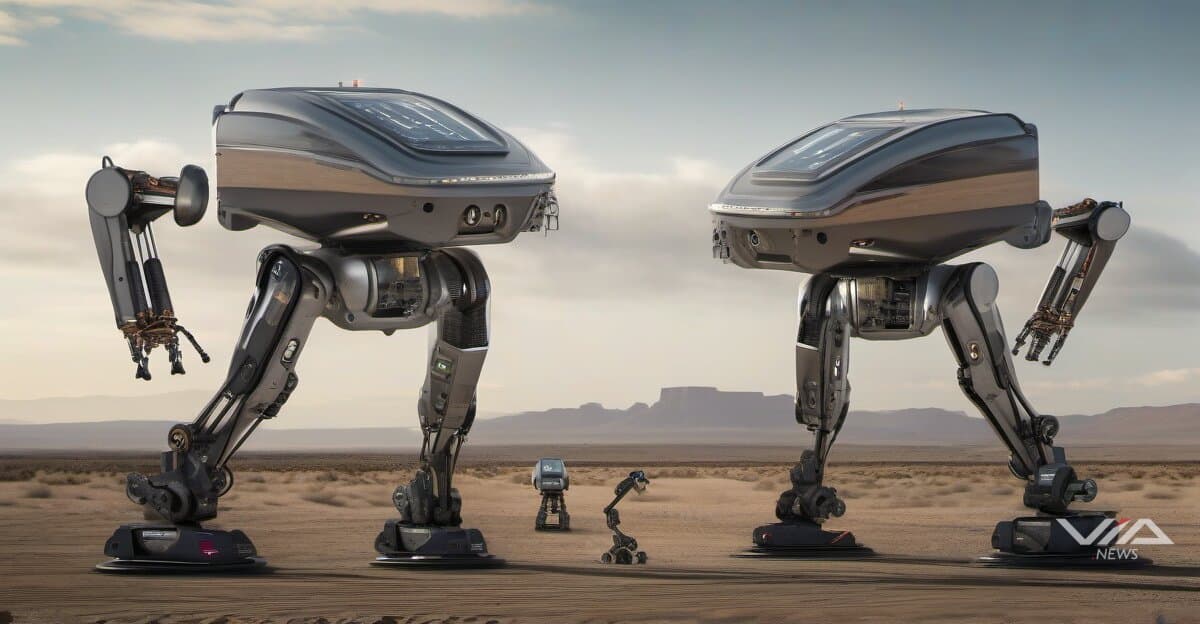
Image generated by AI for illustrative purposes. Not actual footage or photography from the reported events.

Robotics startups raised $890 million across four deals in February 2026, marking one of the sector's largest single-month funding concentrations. Nio GeniTech led with a $330 million Series A, followed by Bedrock Robotics' $270 million Series B, and matching $145 million Series B rounds for AI² Robotics and Galaxea AI.

The funding wave differs from previous robotics investment cycles. Companies are deploying commercial products rather than conducting research. Fleet operates autonomous delivery robots across 20 cities spanning six metro areas from Los Angeles to Washington D.C., partnering with both Uber Eats and DoorDash. Olix plans to ship its first commercial product in 2027.

Series B funding dominated the February deals, with three of four companies raising second institutional rounds. This signals investors are backing proven business models over early-stage concepts. The $270 million Bedrock round represents the largest Series B among the four deals.

Geographic expansion patterns show robotics deployment moving beyond coastal tech hubs. Fleet's 20-city footprint includes major metro areas across the country, demonstrating infrastructure readiness for autonomous systems. The dual-platform strategy with Uber Eats and DoorDash provides revenue diversification and market validation.

Capital deployment timelines point to 2027-2028 as critical commercialization years. Olix's 2027 shipping target aligns with the 12-18 month product development window typical for Series B funding. The $890 million February total funds this development runway across multiple companies simultaneously.

AI integration drives the current robotics investment thesis. All four funded companies incorporate artificial intelligence into core operations, distinguishing them from previous automation technologies. AI² Robotics' company name explicitly signals this positioning.

The sector faces key validation tests through 2028. Revenue growth rates, partnership announcements with enterprise customers, and successful product launches will determine whether the $890 million investment wave marks a genuine inflection point. Fleet's existing partnerships and multi-city operations provide early evidence of commercial viability, but broader market adoption remains unproven.

In this story · Knowledge Files