Wednesday, September 16, 2026

Orkes Lands Series B With Four Repeat Investors From 2024 Series A

AI workflow orchestration platform Orkes closed a Series B in April 2026, with Vertex Ventures US, Nexus Venture Partners, Prosperity7 Ventures, and Naveo Commerce all returning from its 2024 Series A. Repeat participation across a full investor cohort at a higher round is an uncommon vote of confidence in the enterprise AI automation infrastructure layer. The pattern suggests institutional capital is concentrating around orchestration platforms ahead of expected consolidation.

LM Salvado
LM Salvado

April 26, 2026

Orkes Lands Series B With Four Repeat Investors From 2024 Series A
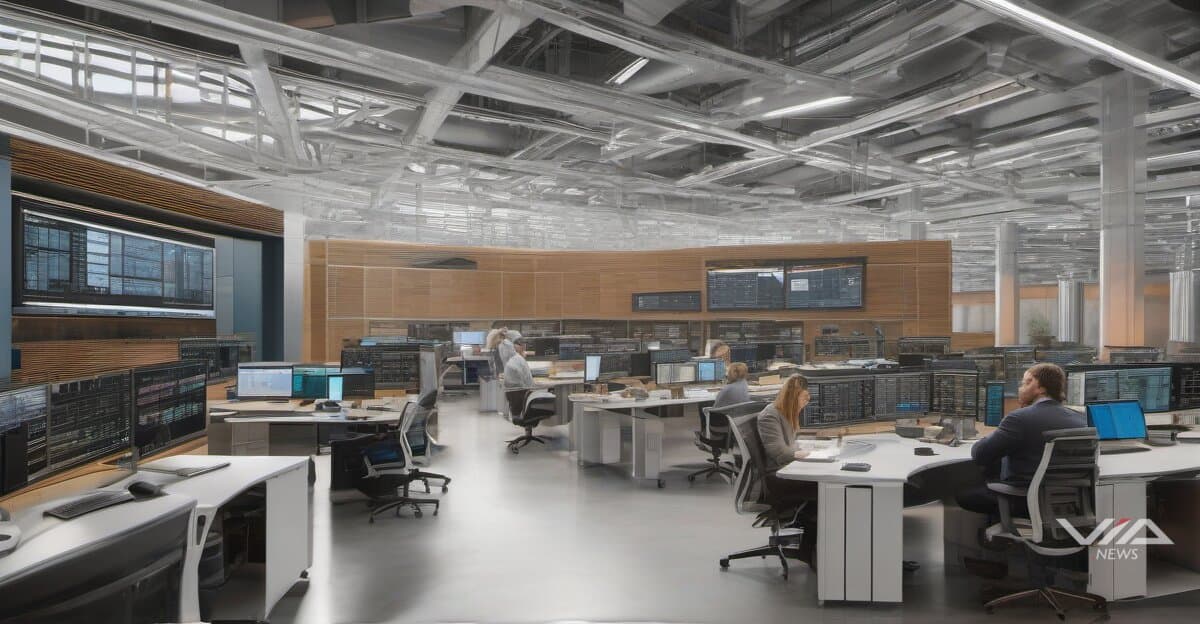
Image generated by AI for illustrative purposes. Not actual footage or photography from the reported events.

Orkes raised a Series B in April 2026, with every named investor from its 2024 Series A returning to back the round.1

Vertex Ventures US, Nexus Venture Partners, Prosperity7 Ventures, and Naveo Commerce all re-committed capital at the higher round.1 Full repeat participation across a funding cohort is uncommon and signals that these investors see early thesis validation.

Orkes builds AI workflow orchestration software — infrastructure that coordinates the sequencing, state management, and execution of automated AI tasks at enterprise scale. As companies move from AI pilots to production deployments, orchestration has emerged as a critical and contested layer in the stack.

Repeat funding patterns matter in venture because they indicate insiders with the most information chose to double down rather than step aside for new investors. When multiple firms do this simultaneously, it reduces the likelihood of any single investor managing perception of a prior position.

The AI automation infrastructure sector has drawn sustained attention as enterprises shift budget from experimentation to deployment-ready tooling. Workflow orchestration sits at the center of that transition — handling the operational complexity that standalone AI models cannot address on their own.

Orkes competes in a space that includes both open-source frameworks and enterprise platforms targeting the same coordination problem. Repeat capital at the Series B stage positions the company to accelerate sales and product development ahead of what analysts broadly expect to be M&A activity in the orchestration layer.1

The funding round also reflects a broader pattern: institutional investors with enterprise software backgrounds are treating AI orchestration infrastructure as a distinct asset class, not simply a feature of larger platform vendors. That framing supports independent company formation rather than acquisition-first strategies.

For investors watching capital flows as a leading indicator, the Orkes round adds a data point: early-stage conviction in AI automation infrastructure is not retreating at Series B. It is compounding.

About this analysis

This is a Via News analysis. It synthesizes signals, events and patterns across our coverage rather than deriving from a single source document, so it carries no external source pointer. Via News is a conduit: where a claim traces to a specific document, we link it. How we source

LM Salvado
LM Salvado

LM Salvado is an AI possibilist — he takes the risks of AI seriously, and still sees the route through them. Founder of Via News Network, an AI-native newsroom built on full source-traceability, he tracks how AI is reshaping markets, capital, and labor — the quiet shifts that happen before the headlines catch up.

What we know · the intelligence behind this page
Live from the substrate
What we're seeing
AI's 'Show-Me' Reckoning: Earnings Divergence, Executive Exodus, and Regulatory Tightening
Investors are shifting from rewarding AI narratives to demanding tangible results, evidenced by Adobe's weak guidance despite user-growth emphasis, Palantir's stock decline even after winning the Army's TITAN contract, and UiPath's contrasting guidance raise. Simultaneously, high-profile safety-driven departures from Anthropic and Google, plus new regulatory actions (California's under-16 social media ban, Anthropic's misuse-blocking disclosures), signal mounting scrutiny of AI's societal and financial risk profile even as fintech-adjacent funding (Socure) continues.
Our read on the data ›
Signals we're tracking
Satellite-Terrestrial Network Integration Acceleration
Increased investment and launches in hybrid satellite-cellular networks across telecom industry; competitive responses from other carriers; regulatory activity around satellite spectrum; expansion of emergency/rural connectivity use cases
Patterns we're watching ›
Where sources disagree
ING Group
Both facts record the same metric (shares_outstanding) for ING Group at the identical observation date (2025-12-31). FACT A states 2,902,437,688 shares; FACT B states 2,902 million shares (2,902,000,000). The difference is 437,688 shares (~0.015%). This is a genuine value conflict, though the discrepancy appears to result from FACT B rounding to the nearest million while FACT A provides the precise count.
We flag conflicts openly ›
Recently verified
Checked against the original source
4,981
facts traced to their source — and we flag the ones that don't hold up.
101 entities tracked4,981 facts checked against source5,288 source documents archived
Query this data → isubstrate.com