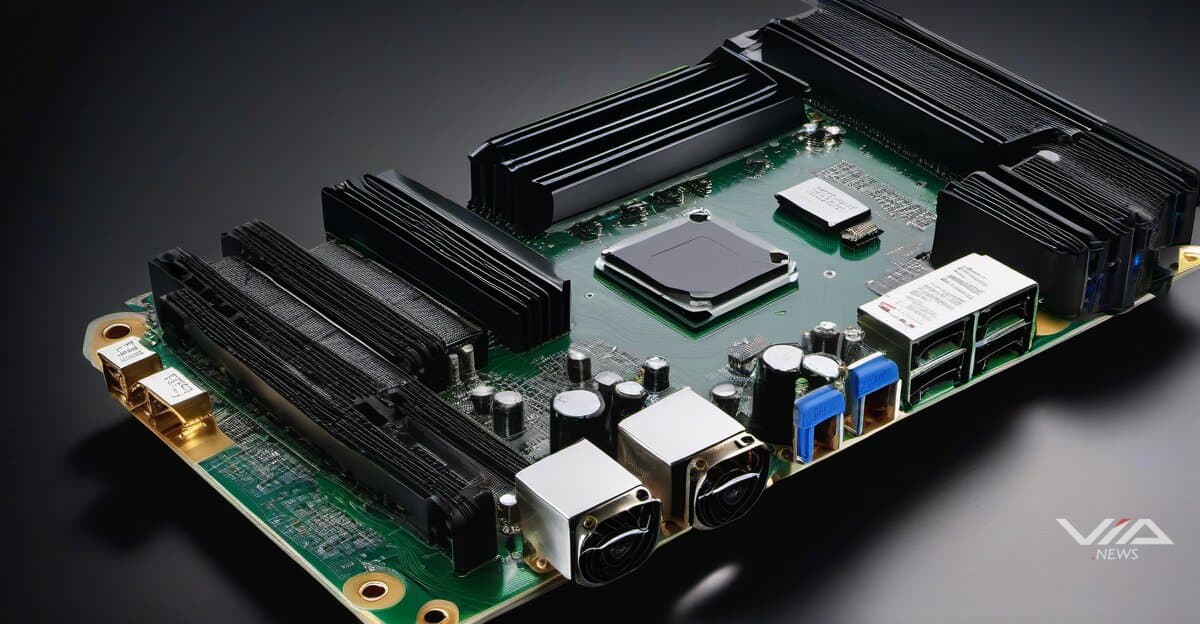
Supermicro released DCBBS Blueprints for NVIDIA's Vera Rubin NVL72 and HGX Rubin NVL8 platforms on June 1, 2026.1 The move targets hyperscalers seeking to compress deployment timelines for large-scale AI factories.
NVIDIA's Vera Rubin platform doubles AI factory performance density compared to prior generations, according to Supermicro.1 For enterprises running dense GPU workloads, that density gain directly affects capital efficiency and facility planning.
The DCBBS — Data Center Building Block Solutions — framework delivers pre-validated, turnkey reference architectures. Customers receive a complete blueprint rather than assembling components from multiple vendors. That model reduces integration risk and shortens time-to-deployment for hyperscale buyers.
Supermicro's DLC-2 Direct Liquid Cooling system underpins the new blueprints.1 The technology is engineered for near-total heat capture, addressing a core constraint as GPU power density rises. Cooling infrastructure has become a strategic differentiator in AI factory procurement, not a secondary concern.
The company cites a track record deploying what it describes as the world's largest liquid-cooled AI factories.1 That claim positions Supermicro as an execution-proven vendor at a moment when hyperscalers face pressure to bring AI capacity online quickly.
From a corporate strategy standpoint, the blueprint approach is a deliberate move up the value chain. Rather than competing solely on component pricing, Supermicro bundles systems integration expertise into a standardized product. This mirrors how enterprise infrastructure vendors have historically defended margin against commodity hardware pressure.
The financial test for investors will come in Q2 and Q3 2026 results. Key metrics to watch include order backlog growth, revenue tied to Vera Rubin NVL72 deployments, and gross margin trajectory — all benchmarked against the prior Hopper and Blackwell product cycles.1 A meaningful backlog acceleration would validate that the blueprint model is converting hyperscaler interest into contracted revenue.
SMCI shares have been sensitive to any signal of demand normalization following the Blackwell ramp. A strong Vera Rubin order cycle would counter that narrative heading into the second half of 2026.