Tuesday, September 22, 2026

Markets Price Electricity Scarcity Into AI Infrastructure as NVIDIA and Hyperscalers Surge

NVIDIA and major hyperscaler stocks have reached all-time highs over two years, with both rallies narratively tied to US electricity grid constraints limiting AI compute expansion. Markets are now pricing a scarcity premium into infrastructure-adjacent sectors including power generation, grid operators, cooling systems, and data center REITs. The structural bottleneck is reshaping where AI wealth creation flows.

LM Salvado
LM Salvado

June 23, 2026

Markets Price Electricity Scarcity Into AI Infrastructure as NVIDIA and Hyperscalers Surge
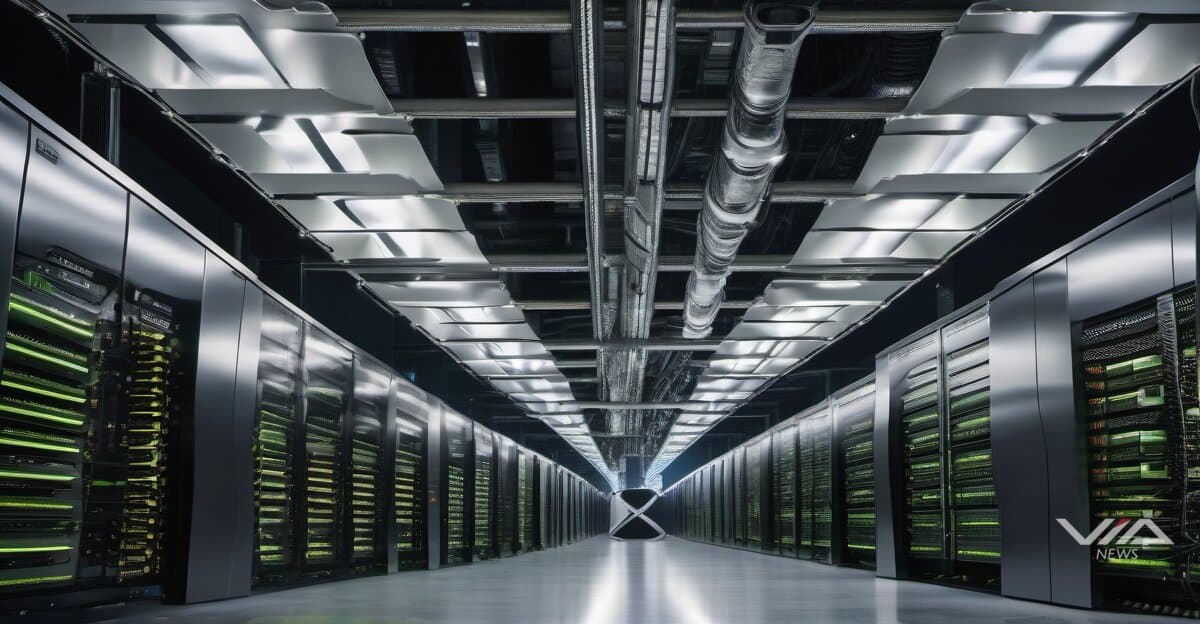
Image generated by AI for illustrative purposes. Not actual footage or photography from the reported events.

NVIDIA and hyperscaler stocks have hit all-time highs over two years, both tied to the same constraint: the US electricity grid cannot keep pace with AI compute demand.1

Markets have begun pricing this scarcity into downstream sectors. Power generation companies, grid operators, industrial cooling providers, and data center REITs are attracting capital previously reserved for pure-play AI names.1

The investment logic is straightforward. AI model training and inference require dense compute clusters. Dense compute clusters require massive, reliable power. The US grid, built for a different era, cannot scale fast enough. Whoever solves the bottleneck captures a premium.

Data center REITs illustrate the dynamic most clearly. Operators with secured power contracts and land adjacent to existing transmission infrastructure command higher valuations than those without. Power availability has become the scarcest input in AI infrastructure, outranking chips or land.

Grid operators and utilities with exposure to high-load industrial customers are similarly re-rated. Long-term power purchase agreements with hyperscalers now function as growth catalysts rather than mere revenue stabilizers.

Cooling is the less-discussed bottleneck. High-density GPU racks generate heat loads that standard air cooling cannot manage. Liquid cooling providers and specialized thermal management companies are absorbing investment as data center operators retrofit existing facilities and design new ones around thermal constraints.

The scarcity premium thesis rests on a timing asymmetry. AI compute demand is compounding faster than grid infrastructure can be permitted, financed, and built. That gap — measured in years — creates a sustained pricing advantage for companies holding the constrained assets.1

NVIDIA's wealth creation over the period reflects the chip layer of this stack. Hyperscaler all-time highs reflect the platform layer. The next leg of the trade, markets appear to be signaling, runs through the physical infrastructure underneath both.

Investors rotating from software multiples toward tangible infrastructure assets are following the same signal: in AI, electricity is the new semiconductor.

In this story · Knowledge Files

About this analysis

This is a Via News analysis. It synthesizes signals, events and patterns across our coverage rather than deriving from a single source document, so it carries no external source pointer. Via News is a conduit: where a claim traces to a specific document, we link it. How we source

LM Salvado
LM Salvado

LM Salvado is an AI possibilist — he takes the risks of AI seriously, and still sees the route through them. Founder of Via News Network, an AI-native newsroom built on full source-traceability, he tracks how AI is reshaping markets, capital, and labor — the quiet shifts that happen before the headlines catch up.

What we know · the intelligence behind this page
Live from the substrate
What we're seeing
Frontier AI Slowdown Call Splits Industry, Rattles Capex-Sensitive Markets
Anthropic's Dario Amodei publicly called for a coordinated global slowdown in frontier AI development, a stance Microsoft echoed with a 'humanist' AI code of conduct, but Nvidia and Meta's CEOs rejected any coordinated pause days later, exposing a widening rift between safety-focused and growth-focused AI leaders. The dispute landed amid growing financial scrutiny of AI infrastructure spending — a hyperscaler capex analysis, FTC warnings against antitrust waivers for AI firms, and an 8.6% single-day stock drop in GE Vernova tied directly to the slowdown remarks — signaling investors are newly nervous about whether the AI capex boom (including Alphabet's projected $701B revenue narrative) can be justified if the pace of development itself becomes contested.
Our read on the data ›
Signals we're tracking
EPKINLY Regulatory-Clinical Success Cascade
High probability of expanded label indications, additional combination approvals, and competitive positioning strength in follicular lymphoma market. Predicts positive commercial uptake and potential accelerated review for related indications.
Patterns we're watching ›
Where sources disagree
Berkshire Hathaway
Both facts report Berkshire Hathaway's cash position on 2026-01-01 with identical observation timestamps, but claim vastly different values: 380 billion USD vs 400 USD. These cannot both be true for the same entity at the same point in time. The magnitude of the discrepancy (a factor of ~10^9) rules out rounding, unit conversion, or methodological differences.
We flag conflicts openly ›
Recently verified
Checked against the original source
4,983
facts traced to their source — and we flag the ones that don't hold up.
101 entities tracked4,983 facts checked against source5,304 source documents archived
Query this data → isubstrate.com