Wednesday, September 16, 2026

Serve Robotics Acquires Vayu for AI Foundation Models as Humanoid Startups Draw Capital

Serve Robotics acquired Vayu Robotics to gain foundation model capabilities for physical intelligence, marking consolidation in the autonomous systems sector. Humanoid robotics startups including Galaxea AI, Spirit AI, and AI² Robotics are attracting investment capital. Autonomous security systems are delivering 35-80% cost savings versus human guards in the $50B security services market.

Source Trace Score3 source documents3 with a live linkVerifiability: Strong
Serve Robotics Acquires Vayu for AI Foundation Models as Humanoid Startups Draw Capital
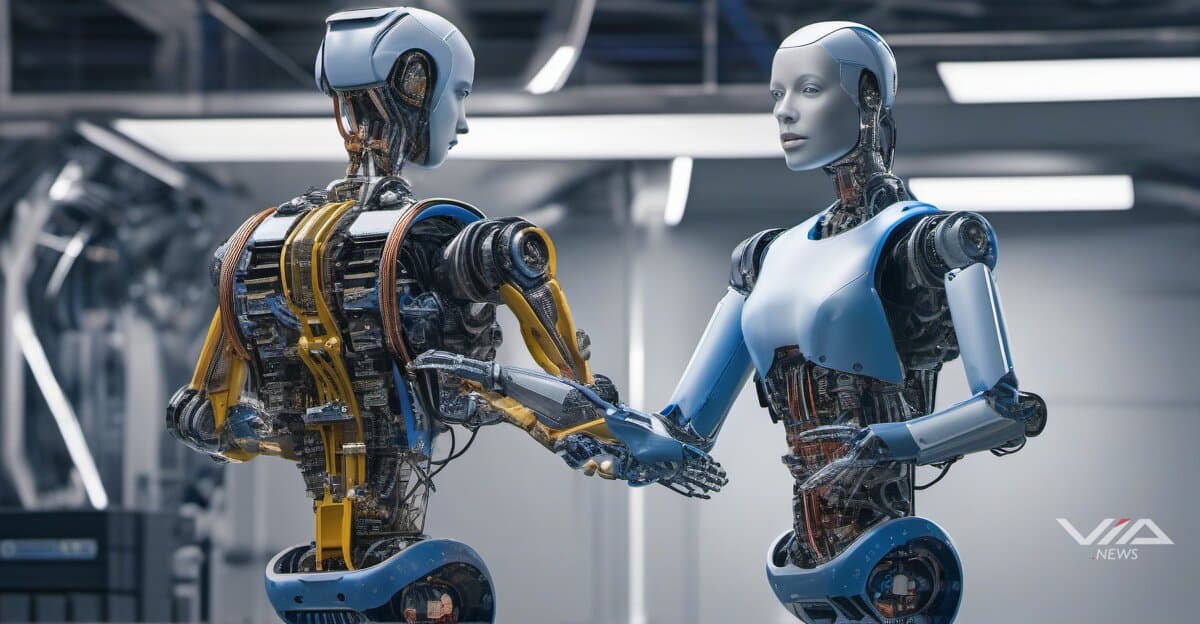
Image generated by AI for illustrative purposes. Not actual footage or photography from the reported events.

Serve Robotics completed its acquisition of Vayu Robotics to integrate foundation model technology for autonomous systems, combining Serve's deployment infrastructure with Vayu's AI capabilities for physical intelligence.

The deal reflects a pivot from traditional automation to AI-powered robotics with embedded foundation models. Fortune 500 companies are deploying autonomous security and warehouse systems that cut costs 35-80% compared to human-staffed operations, according to Artificial Intelligence Technology Solutions.

Humanoid robotics companies Galaxea AI, Spirit AI, and AI² Robotics have raised capital rounds as investors bet on commercial applications beyond warehousing. These startups are developing general-purpose humanoid platforms rather than task-specific industrial robots.

RAD's autonomous security systems generate recurring revenue from deployed units at enterprise clients. The company expects conversion of existing sales pipeline into active deployments across the $50B security and guarding services industry.

RADSight 2.0 architecture reduces power consumption by over 50% versus earlier configurations, lowering operational costs for businesses replacing manned security with autonomous units. Each Fortune 500 customer represents potential for multiple reorders as deployments scale.

The M&A activity and startup funding signal investor confidence in autonomous systems reaching commercial viability. Companies are moving beyond pilot programs to full-scale deployments that demonstrate measurable cost reduction and operational efficiency gains.

Internal tensions emerged at OpenAI regarding Pentagon partnerships, highlighting ongoing debates around AI ethics and defense applications as autonomous systems expand into security and military domains.

The robotics sector transformation combines three trends: consolidation through acquisitions like Serve-Vayu, venture capital flowing to humanoid startups, and enterprise adoption of autonomous systems delivering proven cost savings. Foundation models for physical intelligence are becoming strategic assets as companies compete for deployment scale across warehousing, security, and service industries.

Source documents

Via News is a conduit. We point to the source documents behind this report — we don't replace them. Trace any claim to its source and decide what to trust. How we source

Source Trace Score3 source documents3 with a live linkVerifiability: Strong
  1. [1]News articleYahoo Finance· January 26, 2026
    AITX's RAD Unveils RADSight 2.0 as the Next Evolution of Its Video Management Platform
  2. [2]News articleYahoo Finance· March 11, 2026
    Serve Robotics Announces Fourth Quarter and Full Year 2025 Results
  3. [3]News articleYahoo Finance· March 9, 2026
    Tech stocks today: OpenAI's robotics leader resigns after Pentagon deal, Anthropic prepares to battle ban

In this story · Knowledge Files

What we know · the intelligence behind this page
Live from the substrate
What we're seeing
AI's 'Show-Me' Reckoning: Earnings Divergence, Executive Exodus, and Regulatory Tightening
Investors are shifting from rewarding AI narratives to demanding tangible results, evidenced by Adobe's weak guidance despite user-growth emphasis, Palantir's stock decline even after winning the Army's TITAN contract, and UiPath's contrasting guidance raise. Simultaneously, high-profile safety-driven departures from Anthropic and Google, plus new regulatory actions (California's under-16 social media ban, Anthropic's misuse-blocking disclosures), signal mounting scrutiny of AI's societal and financial risk profile even as fintech-adjacent funding (Socure) continues.
Our read on the data ›
Signals we're tracking
Satellite-Terrestrial Network Integration Acceleration
Increased investment and launches in hybrid satellite-cellular networks across telecom industry; competitive responses from other carriers; regulatory activity around satellite spectrum; expansion of emergency/rural connectivity use cases
Patterns we're watching ›
Where sources disagree
ING Group
Both facts record the same metric (shares_outstanding) for ING Group at the identical observation date (2025-12-31). FACT A states 2,902,437,688 shares; FACT B states 2,902 million shares (2,902,000,000). The difference is 437,688 shares (~0.015%). This is a genuine value conflict, though the discrepancy appears to result from FACT B rounding to the nearest million while FACT A provides the precise count.
We flag conflicts openly ›
Recently verified
Checked against the original source
4,981
facts traced to their source — and we flag the ones that don't hold up.
101 entities tracked4,981 facts checked against source5,288 source documents archived
Query this data → isubstrate.com