Tuesday, August 18, 2026
What we know · the intelligence behind this page
Live from the substrate
What we're seeing
Enterprise AI Agent Rollout Outpaces Data Trust and Readiness
Enterprise adoption of agentic AI is accelerating fast — Siemens deepening its NVIDIA partnership for self-verifying agentic AI in chip design, Manulife expanding its Microsoft AI-governance partnership, and a wave of infrastructure launches (NVIDIA GPU-accelerated data processing, Dell exascale storage, new AI chip generations) — even as a new Google Cloud survey shows the underlying data foundation isn't ready: companies have AI access to only 45% of their data on average, data laggards see access fall to 30% or less, and only about half of organizations trust their AI agents' decisions. Meanwhile, insider selling at enterprise-AI bellwether C3.ai (CEO Thomas Siebel offloading $4.8M in shares) hints at investor caution layered under the adoption hype.
Our read on the data ›
Signals we're tracking
Satellite-Terrestrial Network Integration Acceleration
Increased investment and launches in hybrid satellite-cellular networks across telecom industry; competitive responses from other carriers; regulatory activity around satellite spectrum; expansion of emergency/rural connectivity use cases
Patterns we're watching ›
Where sources disagree
JPMorgan Chase & Co.
Both facts report JPMorgan Chase & Co.'s revenue for the same fiscal period (FY 2025) with the same observation date (2025-12-31), but with different values: $182.447 billion vs. $185 billion. The ~1.4% difference ($2.553 billion) is too large to be explained by rounding alone and represents conflicting data for the identical time period.
We flag conflicts openly ›
Recently verified
Checked against the original source
4,812
facts traced to their source — and we flag the ones that don't hold up.
101 entities tracked4,812 facts checked against source5,219 source documents archived
Work with this data → vianewsagency.com

Analog Devices Revenue Jumps 30% as AI Data Center Spending Lifts Semiconductor Suppliers

Analog Devices posted $3.16 billion in Q1 FY2026 revenue, up 30% year over year, while Applied Materials beat earnings expectations — both riding elevated AI infrastructure spending. ADI shares have gained 57.3% year to date. The cycle shows further runway as hyperscaler capital expenditure remains elevated into 2027.

L.M. Salvado
L.M. Salvado

May 17, 2026

Analog Devices Revenue Jumps 30% as AI Data Center Spending Lifts Semiconductor Suppliers
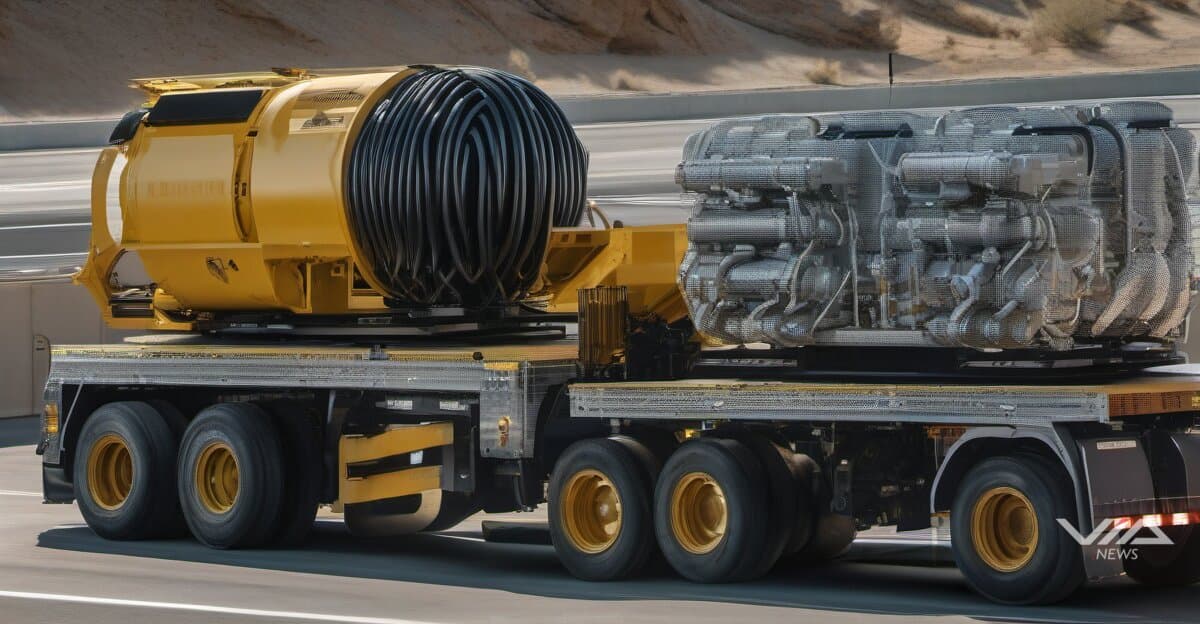
Image generated by AI for illustrative purposes. Not actual footage or photography from the reported events.

Analog Devices reported $3.16 billion in Q1 FY2026 revenue, a 30% year-over-year increase, driven by surging demand for analog chips in AI data center infrastructure.1 Applied Materials separately beat Wall Street expectations in its Q2 FY2026 earnings, reflecting strong orders for semiconductor manufacturing equipment.1

ADI shares have climbed 57.3% year to date, outpacing the broader market.1 The gains came despite the 10-Year Treasury yield rising from 3.97% to 4.32% — a move that typically pressures growth stocks but failed to slow semiconductor names.1

The common thread is AI infrastructure. Hyperscalers including Microsoft, Amazon, and Alphabet have committed annual data center capital expenditure above $50 billion, requiring both the chips that power AI workloads and the equipment used to fabricate them.1 Applied Materials sits at the equipment layer; ADI supplies the power management and signal-processing analog chips increasingly required in high-density server racks.

TSMC's decision to join the EPIC Platform as a founding partner adds weight to the expansion narrative.1 EPIC is an industry consortium coordinating advanced packaging and chiplet integration — a technology critical to fitting more compute into data center footprints. TSMC's participation signals that leading foundries expect sustained volume growth, not a short-term build cycle.

Analog chips have historically been a lagging indicator in semiconductor cycles, used heavily in industrial and automotive markets. Their current outperformance reflects a shift: AI servers now require precision power delivery and data conversion at scales industrial customers never demanded. That repositions ADI and peers as direct AI infrastructure plays, not just cyclical component suppliers.

Forward guidance from both companies will be the key test. If hyperscaler capex announcements hold above $50 billion annually, analysts tracking the sector expect Applied Materials and ADI to sustain revenue growth above 20% year over year through Q4 FY2026.1 A pullback in cloud spending commitments or a shift toward in-house chip designs could compress that runway.

For now, the numbers favor the bulls. A 30% revenue jump at ADI and an earnings beat at Applied Materials in the same reporting window is not coincidence — it reflects a capex wave moving through the semiconductor supply chain from fab to finished chip.

In this story · Knowledge Files

About this analysis

This is a Via News analysis. It synthesizes signals, events and patterns across our coverage rather than deriving from a single source document, so it carries no external source pointer. Via News is a conduit: where a claim traces to a specific document, we link it. How we source

L.M. Salvado
L.M. Salvado

L.M. Salvado is an AI possibilist — he takes the risks of AI seriously, and still sees the route through them. Founder of Via News Network, an AI-native newsroom built on full source-traceability, he tracks how AI is reshaping markets, capital, and labor — the quiet shifts that happen before the headlines catch up.