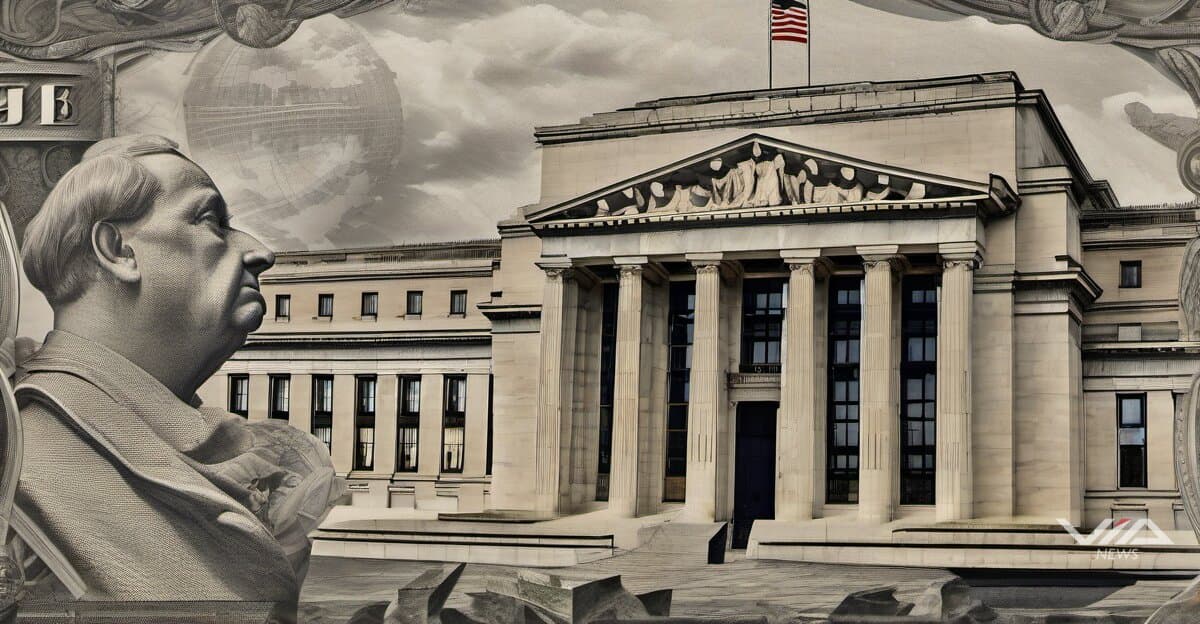
Futures markets price only a 1-in-3 probability of a Fed rate cut in 2026, as G-7 central banks lock into a synchronized rate-hold cycle.1 The Fed, ECB, Bank of England, Bank of Japan, and Bank of Canada are all pausing, navigating persistent inflation and trade-policy uncertainty.
Fed Chair Jerome Powell's term ends May 15. Kevin Warsh is emerging as the likely successor — a hawkish pick with no appetite to ease prematurely. "If Trump wants someone easy on inflation, he got the wrong guy in Kevin Warsh," said one economist cited in market commentary. Warsh's expected appointment reinforces a tighter-for-longer policy trajectory regardless of political pressure.
Inflation expectations have climbed since the start of 2026, Powell acknowledged.1 That trajectory deepens the case for holding rates across major economies and limits the Fed's policy flexibility through year-end.
ECB policymakers are divided on timing but aligned on caution. Governing Council member Gediminas Simkus said the ECB should not raise rates at its April meeting but cannot rule out a hike later this year.2 Fellow member Martins Kazaks said no urgency exists to move from the current 2% rate — present data does not yet justify action.3 Eesti Pank has echoed the cautious regional posture, consistent with ECB framework guidance.4
For banking institutions, the implications are structural. Prolonged high rates preserve net interest margins but elevate credit risk and suppress loan demand. Fintech and cloud-adjacent financial firms are repricing sharply: CLOD fell 14%, WCLD dropped 22%, SKYY shed 10%, and FICO declined 6%. Government-mandated reductions in credit scoring costs add a separate regulatory headwind compressing fintech valuations further.
The Warsh succession amplifies policy risk for rate-sensitive balance sheets. Banks that built liability repricing assumptions on a 2025–2026 easing cycle now face a credibility gap between market hopes and Fed reality. Higher-for-longer is no longer a tail scenario — it is the base case.
Treasury desks and bank CFOs need to revise funding cost assumptions now. The synchronized G-7 pause is not a transition phase. It is the policy regime.