Wednesday, September 16, 2026

ECB Signals Emergency Rate Response as Energy Prices Threaten Inflation Targets

The European Central Bank may adjust interest rates as early as April if elevated energy prices persist, marking a sharp pivot from its recent stance. Geopolitical tensions pushed oil prices up 3%+ while the Fed maintains its current rate trajectory with markets pricing 64% probability of unchanged rates through year-end. Central banks face competing pressures between containing energy-driven inflation and preserving financial stability.

LM Salvado
LM Salvado

April 13, 2026

Source Trace Score10 source documents10 with a live linkVerifiability: Strong
ECB Signals Emergency Rate Response as Energy Prices Threaten Inflation Targets
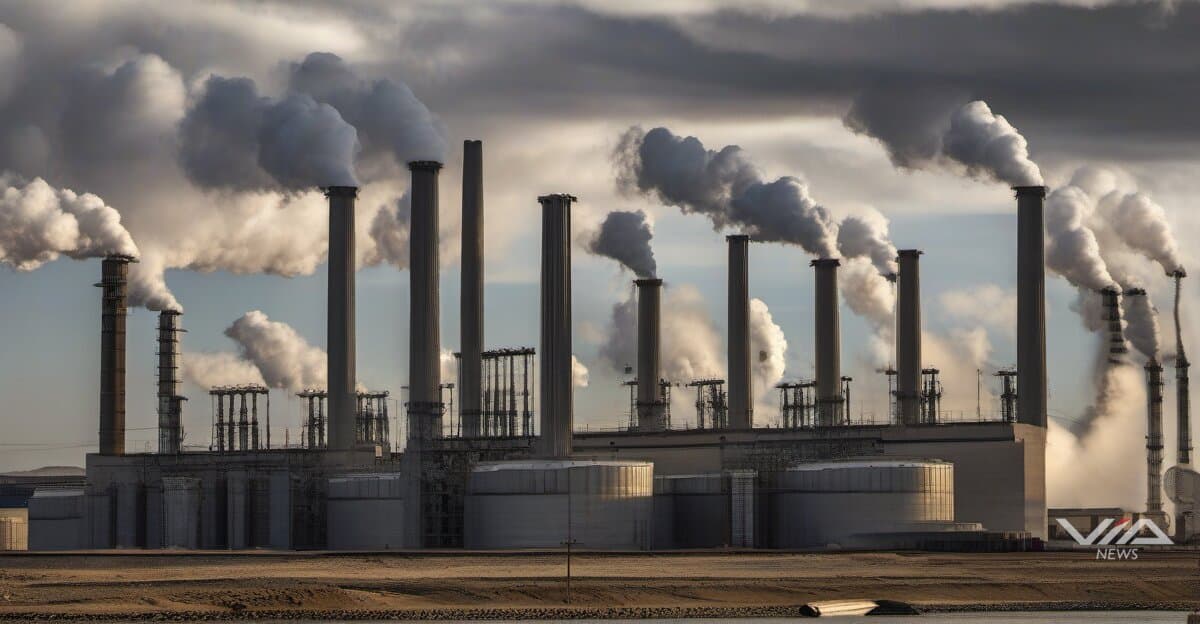
Image generated by AI for illustrative purposes. Not actual footage or photography from the reported events.

The European Central Bank won't rule out interest rate changes in April if energy prices stay elevated, ECB policymaker Madis Muller stated.1 This signals potential emergency action as Middle East geopolitical tensions drive oil prices up more than 3%.

The policy shift contrasts with the Federal Reserve's steadier approach. Only 0.2% of interest rate traders expect Fed rates to drop to 3.25-3.5% by end of 2026, down sharply from December when CME FedWatch polling indicated expectations for two rate cuts in 2026.2

Markets now price a 64% probability the Fed will hold rates unchanged through year-end. This represents a significant recalibration from expectations just four months ago.

ECB Executive Board member Olaf Sleijpen reinforced the bank's commitment to act if needed to keep inflation at target.3 The statement underscores how energy market volatility has become the dominant variable in central bank decision-making.

Energy-driven inflation poses a distinct challenge for monetary authorities. Unlike demand-pull inflation that responds to rate increases, supply-side energy shocks can simultaneously trigger inflation and economic slowdown. Central banks must balance inflation control against the risk of overtightening into a weakening economy.

The divergence between ECB and Fed responses reflects different regional exposures to energy shocks. Europe's heavier reliance on imported energy makes it more vulnerable to Middle East supply disruptions.

Central banks are also managing financial stability concerns alongside inflation risks. The combination of elevated rates and volatile energy costs creates stress for energy-intensive industries and financial institutions with exposure to those sectors.

Global central banks are building reserves as a hedge. China's central bank extended gold purchases for 15 consecutive months through January 2026, reflecting broader concerns about currency stability and inflation protection.4

The coming months will test whether central banks can contain energy-driven inflation without triggering broader economic contraction. April rate decisions by the ECB will signal how seriously policymakers view the energy price threat to inflation stability.

Source documents

Via News is a conduit. We point to the source documents behind this report — we don't replace them. Trace any claim to its source and decide what to trust. How we source

Source Trace Score10 source documents10 with a live linkVerifiability: Strong
  1. [1]News articleNasdaq· April 9, 2026
    Dollar Falls in Hopes of De-escalation of Middle East Hostilities
  2. [2]News articleNasdaq· April 9, 2026
    Dollar Slips on Weak US Economic News
  3. [3]News articleYahoo Finance· April 4, 2026
    Goldman Sachs has blunt message on gold price for rest of 2026
  4. [4]News articleNasdaq· April 3, 2026
    Retail Investors Are Getting Cautious: Is That Actually a Contrarian Buy Signal?
  5. [5]News articleNasdaq· April 9, 2026
    Stock Indexes Rebound Despite Rising Oil Prices
  6. [6]News articleYahoo Finance· April 8, 2026
    Stock market today: Dow, S&P 500, Nasdaq surge, oil plunges after US-Iran ceasefire sparks relief rally
  7. [7]News articleNasdaq· April 9, 2026
    Stocks Rebound on Optimism US-Iran Ceasefire to Hold
  8. [8]News articleNasdaq· March 31, 2026
    Stocks Surge on Signs the US and Iran Seek to End War
  9. [9]News articleSeeking Alpha· April 3, 2026
    Catalyst Watch: OPEC meeting, FedEx talks freight, inflation reads, and SpaceX IPO buzz
  10. [10]News articleYahoo Finance· April 4, 2026
    Paris launches €50,000 fuel loan scheme for war-hit small businesses

In this story · Knowledge Files

LM Salvado
LM Salvado

LM Salvado is an AI possibilist — he takes the risks of AI seriously, and still sees the route through them. Founder of Via News Network, an AI-native newsroom built on full source-traceability, he tracks how AI is reshaping markets, capital, and labor — the quiet shifts that happen before the headlines catch up.

What we know · the intelligence behind this page
Live from the substrate
What we're seeing
AI's 'Show-Me' Reckoning: Earnings Divergence, Executive Exodus, and Regulatory Tightening
Investors are shifting from rewarding AI narratives to demanding tangible results, evidenced by Adobe's weak guidance despite user-growth emphasis, Palantir's stock decline even after winning the Army's TITAN contract, and UiPath's contrasting guidance raise. Simultaneously, high-profile safety-driven departures from Anthropic and Google, plus new regulatory actions (California's under-16 social media ban, Anthropic's misuse-blocking disclosures), signal mounting scrutiny of AI's societal and financial risk profile even as fintech-adjacent funding (Socure) continues.
Our read on the data ›
Signals we're tracking
Satellite-Terrestrial Network Integration Acceleration
Increased investment and launches in hybrid satellite-cellular networks across telecom industry; competitive responses from other carriers; regulatory activity around satellite spectrum; expansion of emergency/rural connectivity use cases
Patterns we're watching ›
Where sources disagree
ING Group
Both facts record the same metric (shares_outstanding) for ING Group at the identical observation date (2025-12-31). FACT A states 2,902,437,688 shares; FACT B states 2,902 million shares (2,902,000,000). The difference is 437,688 shares (~0.015%). This is a genuine value conflict, though the discrepancy appears to result from FACT B rounding to the nearest million while FACT A provides the precise count.
We flag conflicts openly ›
Recently verified
Checked against the original source
4,981
facts traced to their source — and we flag the ones that don't hold up.
101 entities tracked4,981 facts checked against source5,288 source documents archived
Query this data → isubstrate.com