Tuesday, August 18, 2026
What we know · the intelligence behind this page
Live from the substrate
What we're seeing
Enterprise AI Agent Rollout Outpaces Data Trust and Readiness
Enterprise adoption of agentic AI is accelerating fast — Siemens deepening its NVIDIA partnership for self-verifying agentic AI in chip design, Manulife expanding its Microsoft AI-governance partnership, and a wave of infrastructure launches (NVIDIA GPU-accelerated data processing, Dell exascale storage, new AI chip generations) — even as a new Google Cloud survey shows the underlying data foundation isn't ready: companies have AI access to only 45% of their data on average, data laggards see access fall to 30% or less, and only about half of organizations trust their AI agents' decisions. Meanwhile, insider selling at enterprise-AI bellwether C3.ai (CEO Thomas Siebel offloading $4.8M in shares) hints at investor caution layered under the adoption hype.
Our read on the data ›
Signals we're tracking
Satellite-Terrestrial Network Integration Acceleration
Increased investment and launches in hybrid satellite-cellular networks across telecom industry; competitive responses from other carriers; regulatory activity around satellite spectrum; expansion of emergency/rural connectivity use cases
Patterns we're watching ›
Where sources disagree
JPMorgan Chase & Co.
Both facts report JPMorgan Chase & Co.'s revenue for the same fiscal period (FY 2025) with the same observation date (2025-12-31), but with different values: $182.447 billion vs. $185 billion. The ~1.4% difference ($2.553 billion) is too large to be explained by rounding alone and represents conflicting data for the identical time period.
We flag conflicts openly ›
Recently verified
Checked against the original source
4,812
facts traced to their source — and we flag the ones that don't hold up.
101 entities tracked4,812 facts checked against source5,219 source documents archived
Work with this data → vianewsagency.com

Eaton's Boyd Thermal Acquisition Faces Regulatory Approval Risk as Merger Control Review Looms

Eaton's acquisition of Boyd Thermal, announced in 2025, faces potential regulatory hurdles as merger control authorities assess the thermal management deal. The transaction could encounter delays or conditions as antitrust reviewers examine the combination's impact on liquid cooling and data center infrastructure markets. The outcome carries implications for deal completion timelines and strategic M&A planning in industrial technology sectors.

Eaton's Boyd Thermal Acquisition Faces Regulatory Approval Risk as Merger Control Review Looms
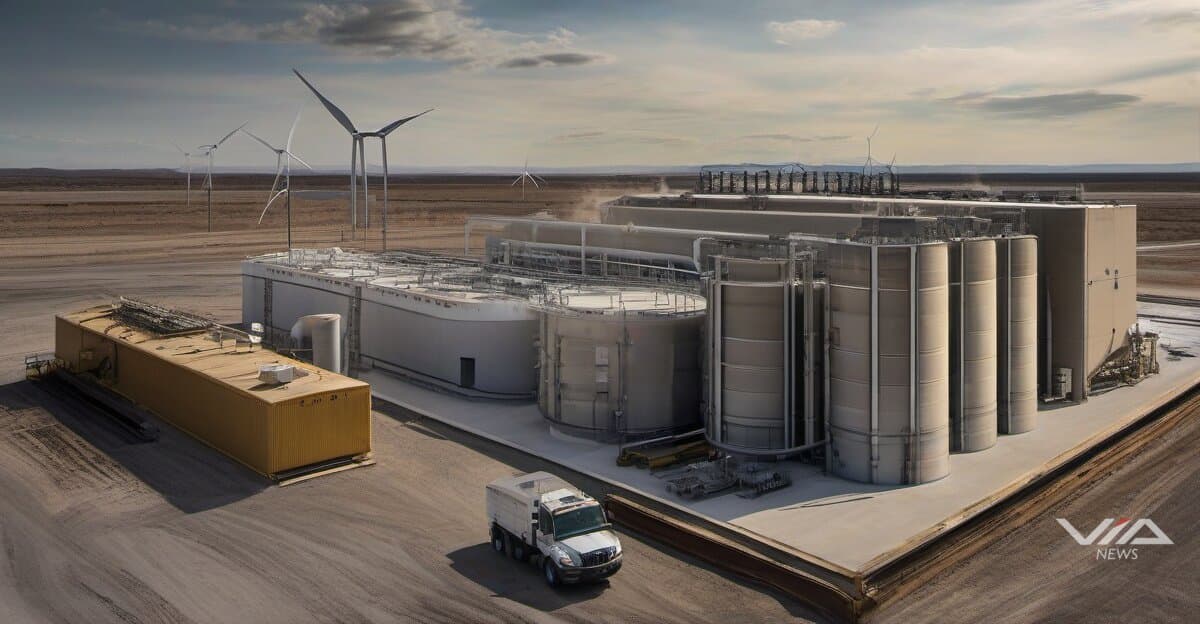
Image generated by AI for illustrative purposes. Not actual footage or photography from the reported events.

Eaton's pending acquisition of Boyd Thermal faces regulatory approval risk as merger control authorities review the transaction, with potential for delays or imposed conditions that could reshape the deal structure.

Boyd Thermal specializes in thermal management systems, liquid cooling technology, and data center infrastructure—sectors experiencing consolidation as hyperscale computing demands intensify. Eaton announced the acquisition in 2025, positioning the combination as a strategic expansion into high-growth cooling markets.

Merger control authorities in key jurisdictions will assess whether the deal reduces competition in thermal management solutions. Regulators typically examine market concentration, customer choice impacts, and potential innovation effects when reviewing acquisitions in specialized industrial technology segments.

The regulatory review timeline remains uncertain. Antitrust authorities may require divestitures, operational commitments, or other remedies before granting approval. Complex deals involving specialized technology suppliers have faced extended review periods, with some transactions requiring 12-18 months for clearance across multiple jurisdictions.

Deal completion risk extends beyond regulatory approval. Parties must maintain business operations during extended reviews, manage employee uncertainty, and preserve customer relationships while ownership remains in transition. Failed or delayed transactions can trigger termination fees, strategic setbacks, and market positioning losses.

The Boyd Thermal transaction reflects broader M&A dynamics in industrial infrastructure. Companies pursuing growth through acquisition face intensifying regulatory scrutiny, particularly in sectors touching critical infrastructure or emerging technologies. Deal planners now factor extended approval timelines and higher failure probabilities into transaction modeling.

Corporate acquirers are adapting strategies in response. Some structure deals with reverse termination fees to compensate targets if regulatory approval fails. Others conduct pre-filing engagement with authorities to identify concerns early. Deal timelines now routinely assume 9-12 month regulatory processes for mid-market industrial transactions.

For Eaton, regulatory approval represents a key milestone in executing its thermal management strategy. The company must balance growth ambitions against compliance requirements and deal execution risk as authorities assess the transaction's competitive implications.

In this story · Knowledge Files