Wednesday, September 16, 2026

Hormuz Blockade Removes 20M Barrels Daily, Driving Oil Volatility to Crisis Levels

The Iran-US conflict has triggered the largest oil supply disruption on record, with the Hormuz blockade cutting 20 million barrels per day from global markets. WTI crude prices and Oil VIX are spiking as the crisis cascades across commodities from fertilizers to industrial metals, prompting defensive portfolio shifts into mining equities and hard assets.

Source Trace Score3 source documents3 with a live linkVerifiability: Strong
Hormuz Blockade Removes 20M Barrels Daily, Driving Oil Volatility to Crisis Levels
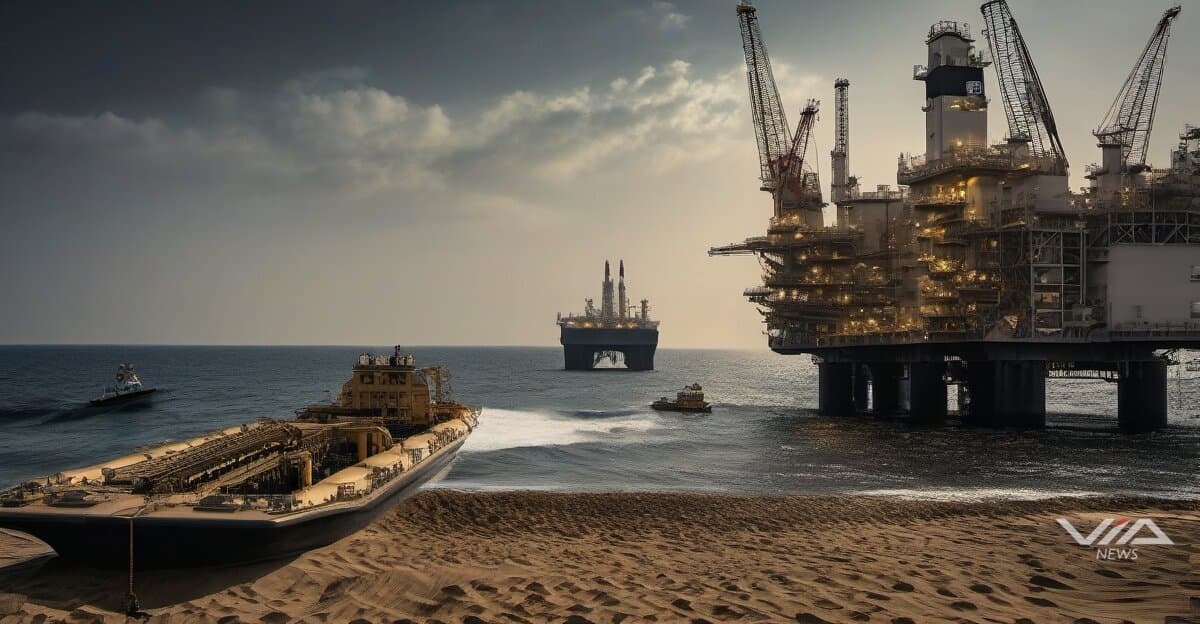
Image generated by AI for illustrative purposes. Not actual footage or photography from the reported events.

The Hormuz blockade has removed approximately 20 million barrels per day from global oil markets, the largest supply disruption ever measured, according to MacroEdge Research. WTI crude prices surged sharply as Oil VIX spiked to crisis levels, signaling extreme volatility in energy markets.

The supply shock is rippling beyond crude oil into agricultural and industrial commodities. CF Industries faces rising fertilizer production costs as natural gas prices climb. Aluminum futures are rallying on energy-intensive smelting concerns, while cocoa prices continue volatile trading patterns amid broader commodity market stress.

"Any geopolitical situation that can affect the price of oil is what will have the largest impact on the financial markets," said Scott Wren, citing both Middle East and Ukraine-Russia tensions as primary drivers. The current crisis validates his warning with unprecedented force.

Investors are rotating into defensive commodity positions. Mining equities including Agnico Eagle and Teck Resources are attracting capital as inflation hedges. Farmland investments are gaining traction as alternative commodity exposure, offering both agricultural price upside and tangible asset protection.

Portfolio managers face dual risks: energy price inflation eroding purchasing power and supply chain disruptions across commodity-dependent sectors. The fertilizer cost spike threatens agricultural margins globally, while metals volatility complicates industrial production planning.

Energy exposure requires immediate reassessment. Direct oil equity positions face extreme volatility, while indirect exposure through transportation, chemicals, and manufacturing sectors compounds risk. Commodity-linked inflation is accelerating faster than most portfolio models anticipated.

Defensive positioning now centers on three strategies: physical commodity producers with pricing power, precious metals as monetary hedges, and real assets including farmland and infrastructure. Traditional 60-40 portfolios lack adequate protection against simultaneous energy shocks and inflation acceleration.

The Hormuz crisis exposes structural vulnerabilities in global energy supply. With 20 million barrels daily offline, inventories will draw down rapidly unless diplomatic resolution emerges. Portfolio construction must account for extended supply disruption scenarios and persistent commodity volatility through 2026.

Source documents

Via News is a conduit. We point to the source documents behind this report — we don't replace them. Trace any claim to its source and decide what to trust. How we source

Source Trace Score3 source documents3 with a live linkVerifiability: Strong
  1. [1]News articleYahoo Finance· March 9, 2026
    Iran conflict exposes America’s Achilles’ heel
  2. [2]News articleYahoo Finance· December 7, 2025
    What bubble? Asset managers in risk-on mode stick with stocks
  3. [3]News articleNasdaq· March 6, 2026
    Stocks Retreat on Inflation Concerns and a Weak US Job Market
What we know · the intelligence behind this page
Live from the substrate
What we're seeing
AI's 'Show-Me' Reckoning: Earnings Divergence, Executive Exodus, and Regulatory Tightening
Investors are shifting from rewarding AI narratives to demanding tangible results, evidenced by Adobe's weak guidance despite user-growth emphasis, Palantir's stock decline even after winning the Army's TITAN contract, and UiPath's contrasting guidance raise. Simultaneously, high-profile safety-driven departures from Anthropic and Google, plus new regulatory actions (California's under-16 social media ban, Anthropic's misuse-blocking disclosures), signal mounting scrutiny of AI's societal and financial risk profile even as fintech-adjacent funding (Socure) continues.
Our read on the data ›
Signals we're tracking
Satellite-Terrestrial Network Integration Acceleration
Increased investment and launches in hybrid satellite-cellular networks across telecom industry; competitive responses from other carriers; regulatory activity around satellite spectrum; expansion of emergency/rural connectivity use cases
Patterns we're watching ›
Where sources disagree
ING Group
Both facts record the same metric (shares_outstanding) for ING Group at the identical observation date (2025-12-31). FACT A states 2,902,437,688 shares; FACT B states 2,902 million shares (2,902,000,000). The difference is 437,688 shares (~0.015%). This is a genuine value conflict, though the discrepancy appears to result from FACT B rounding to the nearest million while FACT A provides the precise count.
We flag conflicts openly ›
Recently verified
Checked against the original source
4,981
facts traced to their source — and we flag the ones that don't hold up.
101 entities tracked4,981 facts checked against source5,288 source documents archived
Query this data → isubstrate.com