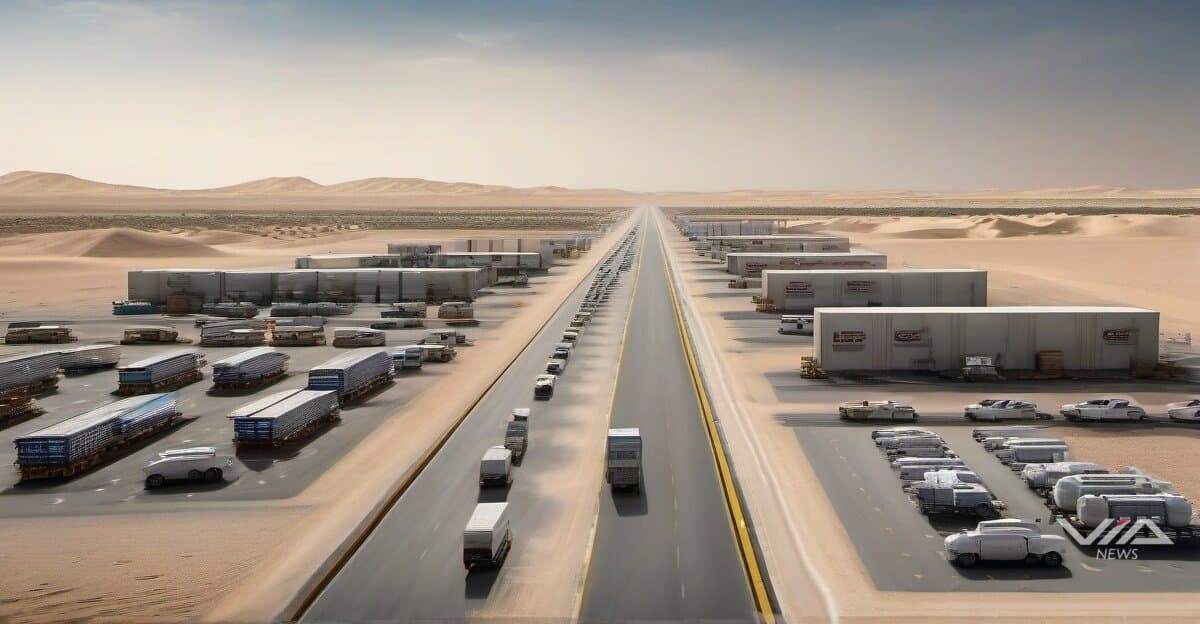
Qatar's government is pursuing aggressive EV infrastructure expansion and public transport electrification. Foreign technology partners are essential to that program. A diplomatic rupture—like the 2017–2021 GCC blockade—could make those partners walk away.1
The 2017 blockade lasted nearly four years. Saudi Arabia, the UAE, Bahrain, and Egypt severed ties with Qatar, closing borders and airspace. Supply chains rerouted. Costs surged. Qatar survived, but the disruption exposed structural vulnerabilities that remain relevant today.
EV components destined for Qatar flow predominantly through UAE logistics hubs.1 A blockade scenario would cut that pipeline. Replacement routes exist, but they are slower and more expensive. Delivery timelines for charging infrastructure, battery systems, and smart-grid hardware would slip.
The contract risk is more consequential than the supply chain risk. Foreign technology companies assess political stability before signing long-term infrastructure agreements. A credible threat of isolation—even without an actual blockade—creates hesitation. Procurement cycles slow. Partners demand risk premiums or exit clauses. Some walk away entirely.
Qatar's EV program depends on sustained foreign commitment. Charging networks, vehicle fleets, and grid integration require multi-year partnerships. Short-term vendor relationships cannot substitute. If diplomatic tension resurfaces, the pipeline of committed partners narrows precisely when Qatar needs to accelerate deployment.
The risk is rated catastrophic in severity.1 Likelihood is assessed as low. That combination defines a tail-risk profile: rare but devastating if realized. For infrastructure investors, tail risks in politically sensitive jurisdictions warrant scenario planning even when base-case probability is low.
Qatar has taken steps to reduce reliance on single-corridor logistics since the 2017 blockade. Direct shipping routes and alternative air freight partnerships have expanded. Those mitigations reduce supply chain vulnerability but do not eliminate it—and they do not address the contract commitment problem.
Investors evaluating Qatar infrastructure exposure should assess two separate risk vectors: physical supply chain disruption and partner confidence erosion. The second is harder to hedge and slower to recover from. A technology partner that exits a market rarely re-enters on the same terms.
The Gulf region's political environment has stabilized since the 2021 Al-Ula Declaration restored GCC ties. That stability is not guaranteed. Qatar's continued pursuit of independent foreign policy—including relations with Iran and Turkey—maintains the conditions under which diplomatic friction can re-emerge.