Tuesday, August 18, 2026
What we know · the intelligence behind this page
Live from the substrate
What we're seeing
Enterprise AI Agent Rollout Outpaces Data Trust and Readiness
Enterprise adoption of agentic AI is accelerating fast — Siemens deepening its NVIDIA partnership for self-verifying agentic AI in chip design, Manulife expanding its Microsoft AI-governance partnership, and a wave of infrastructure launches (NVIDIA GPU-accelerated data processing, Dell exascale storage, new AI chip generations) — even as a new Google Cloud survey shows the underlying data foundation isn't ready: companies have AI access to only 45% of their data on average, data laggards see access fall to 30% or less, and only about half of organizations trust their AI agents' decisions. Meanwhile, insider selling at enterprise-AI bellwether C3.ai (CEO Thomas Siebel offloading $4.8M in shares) hints at investor caution layered under the adoption hype.
Our read on the data ›
Signals we're tracking
Satellite-Terrestrial Network Integration Acceleration
Increased investment and launches in hybrid satellite-cellular networks across telecom industry; competitive responses from other carriers; regulatory activity around satellite spectrum; expansion of emergency/rural connectivity use cases
Patterns we're watching ›
Where sources disagree
JPMorgan Chase & Co.
Both facts report JPMorgan Chase & Co.'s revenue for the same fiscal period (FY 2025) with the same observation date (2025-12-31), but with different values: $182.447 billion vs. $185 billion. The ~1.4% difference ($2.553 billion) is too large to be explained by rounding alone and represents conflicting data for the identical time period.
We flag conflicts openly ›
Recently verified
Checked against the original source
4,812
facts traced to their source — and we flag the ones that don't hold up.
101 entities tracked4,812 facts checked against source5,219 source documents archived
Work with this data → vianewsagency.com

AI Virtual Twins Hit 2,000 Medical Procedures as FDA Guidelines Enable Drug Trial Shortcuts

Virtual twin-guided medical procedures reached 2,000 cases in March 2026, seven years after FDA joined the Living Heart Project that created the first fully functional virtual heart model. FDA published its first in silico clinical trial guidelines in August 2024, formalizing a regulatory pathway that pharmaceutical and medical device companies are now using to compress development timelines and slash trial costs.

L.M. Salvado
L.M. Salvado

March 21, 2026

AI Virtual Twins Hit 2,000 Medical Procedures as FDA Guidelines Enable Drug Trial Shortcuts
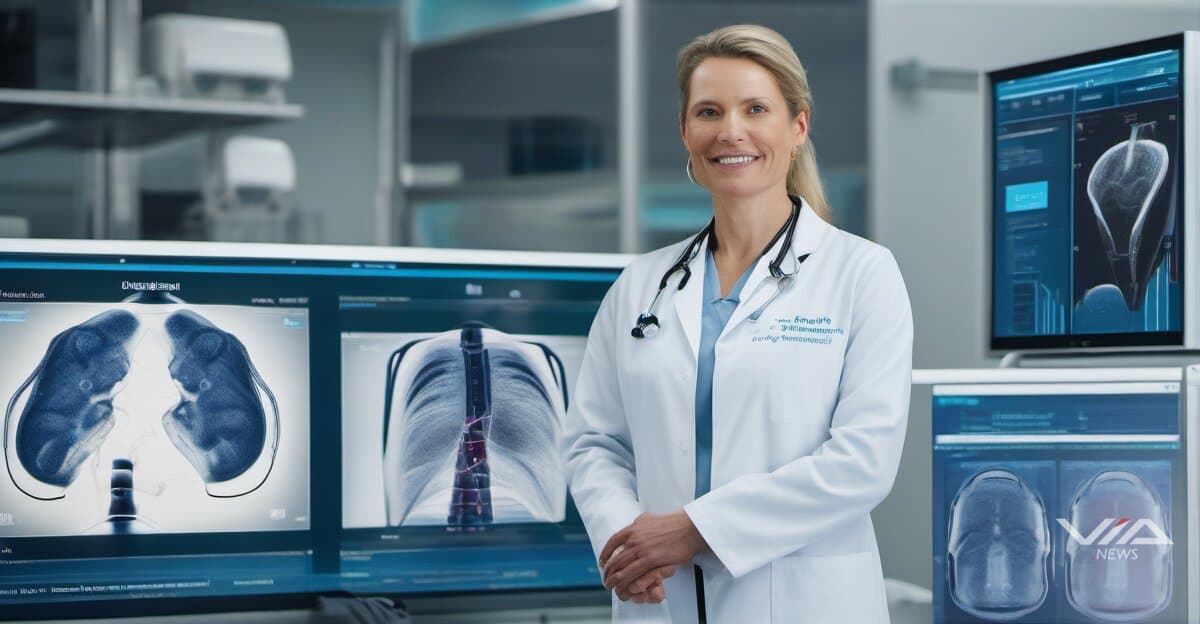
Image generated by AI for illustrative purposes. Not actual footage or photography from the reported events.

Virtual twin-guided medical procedures surpassed 2,000 cases in March 2026, marking a milestone for AI-powered simulation technology that pharmaceutical and medical device companies are using to reduce clinical trial costs.

FDA published its first in silico clinical trial guidelines in August 2024, establishing regulatory standards for computer-simulated trials that test treatments on virtual patient populations instead of human subjects. The agency has been engaged in a five-year in silico clinical trial collaboration since 2019, building on earlier work that began when FDA joined the Living Heart Project in 2015.

That project created the first fully functional virtual heart, enabling researchers to test cardiac devices and treatments in silico before advancing to human trials. The first virtual twin-guided pediatric heart surgery was performed in May 2019, demonstrating clinical viability for procedure planning.

For pharmaceutical companies, in silico trials offer a path to faster regulatory submissions and reduced development costs. Traditional Phase III trials can cost Virtual twin simulations compress that timeline by testing thousands of virtual patients simultaneously, identifying optimal dosing and potential adverse events before manufacturing drugs for human trials.

Medical device manufacturers gain similar advantages. Companies can now submit FDA applications incorporating virtual twin validation data alongside traditional trial results, potentially shortening the 3-7 year approval timeline for Class III devices. The technology is particularly valuable for rare disease treatments, where recruiting sufficient trial participants is often impossible.

The regulatory acceptance addresses a longstanding bottleneck in medical innovation. Devices and treatments that showed promise in animal models often failed in human trials due to physiological differences. Virtual twins built from human patient data eliminate that gap while reducing reliance on animal testing.

Investment implications center on companies with virtual twin platforms and pharmaceutical firms adopting the technology. Regulatory clarity from the August 2024 guidelines reduces adoption risk, while the 2,000-procedure milestone demonstrates clinical acceptance beyond experimental use.

About this analysis

This is a Via News analysis. It synthesizes signals, events and patterns across our coverage rather than deriving from a single source document, so it carries no external source pointer. Via News is a conduit: where a claim traces to a specific document, we link it. How we source

L.M. Salvado
L.M. Salvado

L.M. Salvado is an AI possibilist — he takes the risks of AI seriously, and still sees the route through them. Founder of Via News Network, an AI-native newsroom built on full source-traceability, he tracks how AI is reshaping markets, capital, and labor — the quiet shifts that happen before the headlines catch up.