Tuesday, August 18, 2026
What we know · the intelligence behind this page
Live from the substrate
What we're seeing
Enterprise AI Agent Rollout Outpaces Data Trust and Readiness
Enterprise adoption of agentic AI is accelerating fast — Siemens deepening its NVIDIA partnership for self-verifying agentic AI in chip design, Manulife expanding its Microsoft AI-governance partnership, and a wave of infrastructure launches (NVIDIA GPU-accelerated data processing, Dell exascale storage, new AI chip generations) — even as a new Google Cloud survey shows the underlying data foundation isn't ready: companies have AI access to only 45% of their data on average, data laggards see access fall to 30% or less, and only about half of organizations trust their AI agents' decisions. Meanwhile, insider selling at enterprise-AI bellwether C3.ai (CEO Thomas Siebel offloading $4.8M in shares) hints at investor caution layered under the adoption hype.
Our read on the data ›
Signals we're tracking
Satellite-Terrestrial Network Integration Acceleration
Increased investment and launches in hybrid satellite-cellular networks across telecom industry; competitive responses from other carriers; regulatory activity around satellite spectrum; expansion of emergency/rural connectivity use cases
Patterns we're watching ›
Where sources disagree
JPMorgan Chase & Co.
Both facts report JPMorgan Chase & Co.'s revenue for the same fiscal period (FY 2025) with the same observation date (2025-12-31), but with different values: $182.447 billion vs. $185 billion. The ~1.4% difference ($2.553 billion) is too large to be explained by rounding alone and represents conflicting data for the identical time period.
We flag conflicts openly ›
Recently verified
Checked against the original source
4,812
facts traced to their source — and we flag the ones that don't hold up.
101 entities tracked4,812 facts checked against source5,219 source documents archived
Work with this data → vianewsagency.com

Hanoi's 2030 Fossil Fuel Ban Could Shift $8B Vietnam Motorbike Market to Electric

Hanoi will ban fossil fuel motorbikes in its city center starting January 1, 2030, forcing the replacement of an estimated 5 million gasoline-powered bikes. The policy creates immediate opportunities for electric vehicle manufacturers and battery infrastructure companies targeting Southeast Asia's largest two-wheel market.

Source Trace Score1 source document1 with a live linkVerifiability: Basic
Hanoi's 2030 Fossil Fuel Ban Could Shift $8B Vietnam Motorbike Market to Electric
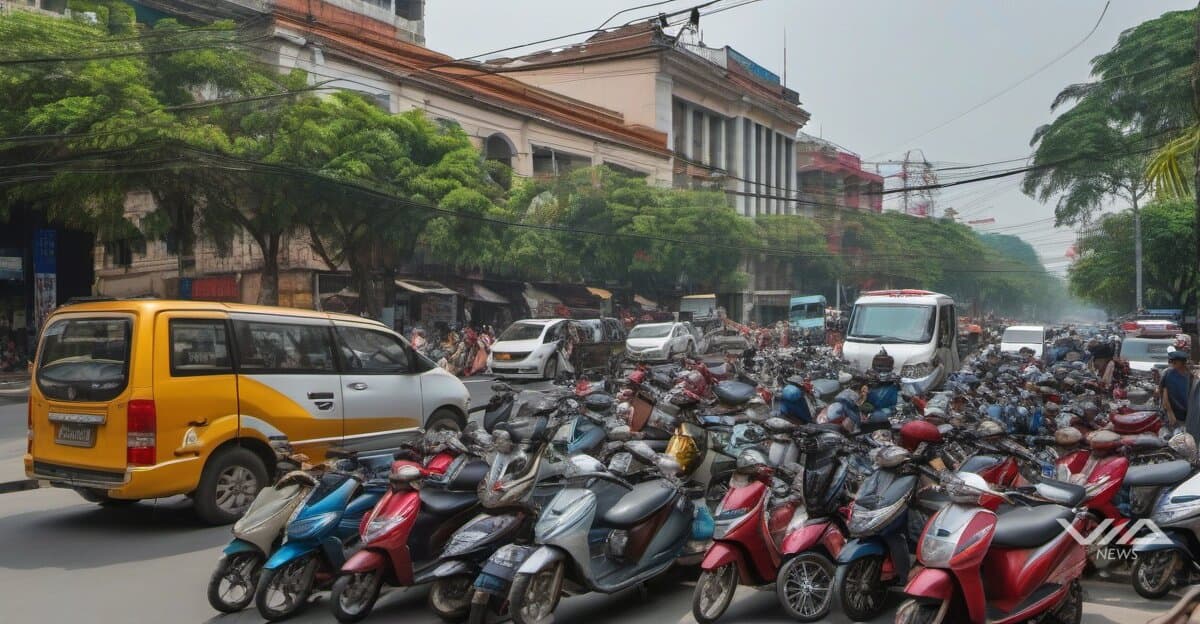
Image generated by AI for illustrative purposes. Not actual footage or photography from the reported events.

Hanoi will ban all fossil fuel motorbikes from its city center starting January 1, 2030, a regulatory shift affecting 5+ million vehicles in Vietnam's capital region. The policy targets the metropolitan core where 80% of commuters rely on two-wheel transport.

Vietnam's motorbike market was valued at $8.2 billion in 2024, with Hanoi representing roughly 20% of national sales. Honda and Yamaha control 75% of current market share through gasoline models priced $800-$1,500. Electric alternatives currently cost $1,200-$2,800, creating a $400-$1,300 price gap the industry must close before 2030.

Battery swapping networks emerge as the critical infrastructure play. Gogoro, Taiwan's electric scooter maker, operates 12,000 battery swap stations across Asia but has zero presence in Vietnam. The Hanoi metro area would require an estimated 800-1,200 swap stations to match gasoline refueling convenience, representing $120-$180 million in infrastructure investment.

Local manufacturers VinFast and Dat Bike gained 8% electric motorbike market share in 2025, up from 2% in 2023. VinFast's Klara model sells for $1,400 with a 75km range. Dat Bike's Weaver model costs $2,100 for 150km range. Both companies raised Series B rounds in 2025—VinFast $200M, Dat Bike $35M—targeting production scale-up before the ban.

Component suppliers face margin pressure as battery costs determine final pricing. Lithium-ion packs represent 40-50% of electric motorbike costs versus 15% for engines in gas bikes. CATL and Samsung SDI already supply Vietnam's electric car sector but have not announced two-wheel battery partnerships.

Investment opportunities cluster around three segments: manufacturers with sub-$1,000 electric models, battery swap infrastructure operators, and lithium iron phosphate battery makers offering cheaper alternatives to lithium-ion. Indonesia and Thailand watch Hanoi's execution closely—both nations have 2035 targets for phasing out gasoline motorbikes in major cities.

The ban's success depends on subsidy programs. Vietnam's government has not announced trade-in incentives, which Thailand used to accelerate 400,000 electric motorbike sales in 2024-2025.

Source documents

Via News is a conduit. We point to the source documents behind this report — we don't replace them. Trace any claim to its source and decide what to trust. How we source

Source Trace Score1 source document1 with a live linkVerifiability: Basic
  1. [1]News articleYahoo Finance· February 12, 2026
    Gogoro (GGR) Q4 2025 Earnings Call Transcript