Tuesday, August 18, 2026
What we know · the intelligence behind this page
Live from the substrate
What we're seeing
Enterprise AI Agent Rollout Outpaces Data Trust and Readiness
Enterprise adoption of agentic AI is accelerating fast — Siemens deepening its NVIDIA partnership for self-verifying agentic AI in chip design, Manulife expanding its Microsoft AI-governance partnership, and a wave of infrastructure launches (NVIDIA GPU-accelerated data processing, Dell exascale storage, new AI chip generations) — even as a new Google Cloud survey shows the underlying data foundation isn't ready: companies have AI access to only 45% of their data on average, data laggards see access fall to 30% or less, and only about half of organizations trust their AI agents' decisions. Meanwhile, insider selling at enterprise-AI bellwether C3.ai (CEO Thomas Siebel offloading $4.8M in shares) hints at investor caution layered under the adoption hype.
Our read on the data ›
Signals we're tracking
Satellite-Terrestrial Network Integration Acceleration
Increased investment and launches in hybrid satellite-cellular networks across telecom industry; competitive responses from other carriers; regulatory activity around satellite spectrum; expansion of emergency/rural connectivity use cases
Patterns we're watching ›
Where sources disagree
JPMorgan Chase & Co.
Both facts report JPMorgan Chase & Co.'s revenue for the same fiscal period (FY 2025) with the same observation date (2025-12-31), but with different values: $182.447 billion vs. $185 billion. The ~1.4% difference ($2.553 billion) is too large to be explained by rounding alone and represents conflicting data for the identical time period.
We flag conflicts openly ›
Recently verified
Checked against the original source
4,812
facts traced to their source — and we flag the ones that don't hold up.
101 entities tracked4,812 facts checked against source5,219 source documents archived
Work with this data → vianewsagency.com

Stellar Trading Systems Links AI Infrastructure to Seven Commodity Exchanges in Five-Month Push

Stellar Trading Systems connected its automated trading platform to seven major commodity exchanges between July and November 2025, ending with Abaxx Exchange integration on November 30. The fintech firm deployed four AI-powered products—Quantum Server, MarketMaker, spreadMachine, and Server API—across exchanges handling gold, oil, and agricultural futures in Singapore, Dubai, India, Thailand, Japan, and China.

Stellar Trading Systems Links AI Infrastructure to Seven Commodity Exchanges in Five-Month Push
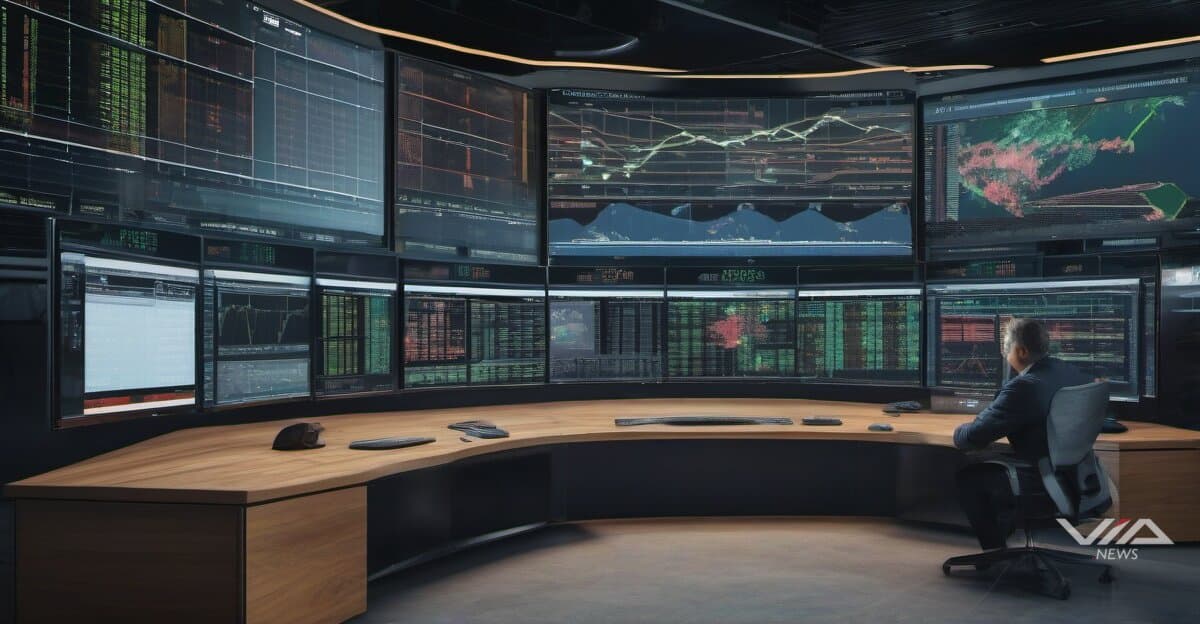
Image generated by AI for illustrative purposes. Not actual footage or photography from the reported events.

Stellar Trading Systems completed connectivity integration with Abaxx Exchange on November 30, 2025, capping a five-month expansion that linked its AI trading infrastructure to seven commodity exchanges across Asia and the Middle East.

The fintech provider now operates on Thailand Futures Exchange, Dubai Gold and Commodities Exchange, Multi Commodity Exchange of India, Comex, Shanghai Futures Exchange, Tokyo Commodity Exchange, and Abaxx. Each integration supports four automated trading products: Quantum Server for execution, MarketMaker for liquidity provision, spreadMachine for arbitrage strategies, and Server API for custom algorithm deployment.

Abaxx launched USD-denominated gold futures contracts in November, backed by Singapore-based Abaxx Spot for physical settlement. The exchange targets institutional traders seeking alternatives to traditional London and New York gold markets. Stellar's connection provides algorithmic trading access from day one, unlike legacy commodity exchanges that added electronic trading infrastructure years after launch.

The integration pattern follows Stellar's deployment model: connect core trading engine first, then roll out specialized products within 60-90 days. Thailand Futures Exchange received the full product suite in July. Dubai Gold and Commodities Exchange integration followed in August, with Multi Commodity Exchange of India and Shanghai Futures Exchange added in September.

LuniCapital, a cryptocurrency-focused algorithmic trading firm, stated its platform architecture was "designed to support real-time interaction with cryptocurrency markets" with "performance-led platform development as cryptocurrency markets evolve." The language mirrors Stellar's positioning for commodity markets, suggesting infrastructure providers see similar adoption curves across asset classes.

Commodity exchanges historically relied on open-outcry trading and manual order execution. CME Group took 12 years to fully transition Comex gold futures to electronic trading after launching Globex in 1992. Abaxx launched with electronic infrastructure and algorithmic connectivity simultaneously.

Trading volume data from exchanges post-integration will show whether AI-driven execution infrastructure accelerates algorithmic adoption rates. Thailand Futures Exchange and Dubai Gold and Commodities Exchange, with July and August connections, provide the earliest test cases for measuring automated trading growth against manual execution volumes.