Tuesday, August 18, 2026
What we know · the intelligence behind this page
Live from the substrate
What we're seeing
Enterprise AI Agent Rollout Outpaces Data Trust and Readiness
Enterprise adoption of agentic AI is accelerating fast — Siemens deepening its NVIDIA partnership for self-verifying agentic AI in chip design, Manulife expanding its Microsoft AI-governance partnership, and a wave of infrastructure launches (NVIDIA GPU-accelerated data processing, Dell exascale storage, new AI chip generations) — even as a new Google Cloud survey shows the underlying data foundation isn't ready: companies have AI access to only 45% of their data on average, data laggards see access fall to 30% or less, and only about half of organizations trust their AI agents' decisions. Meanwhile, insider selling at enterprise-AI bellwether C3.ai (CEO Thomas Siebel offloading $4.8M in shares) hints at investor caution layered under the adoption hype.
Our read on the data ›
Signals we're tracking
Satellite-Terrestrial Network Integration Acceleration
Increased investment and launches in hybrid satellite-cellular networks across telecom industry; competitive responses from other carriers; regulatory activity around satellite spectrum; expansion of emergency/rural connectivity use cases
Patterns we're watching ›
Where sources disagree
JPMorgan Chase & Co.
Both facts report JPMorgan Chase & Co.'s revenue for the same fiscal period (FY 2025) with the same observation date (2025-12-31), but with different values: $182.447 billion vs. $185 billion. The ~1.4% difference ($2.553 billion) is too large to be explained by rounding alone and represents conflicting data for the identical time period.
We flag conflicts openly ›
Recently verified
Checked against the original source
4,812
facts traced to their source — and we flag the ones that don't hold up.
101 entities tracked4,812 facts checked against source5,219 source documents archived
Work with this data → vianewsagency.com

Flow Traders Launches Deep Learning Unit as Crypto Exchanges Build AI Trading Suites

Flow Traders deployed a dedicated deep learning initiative in 2025, joining exchanges like BitMart in building comprehensive AI trading infrastructure. The buildout coincides with regulatory pressure including China's crypto ban reaffirmation and USDT rating downgrades, creating a market where sophisticated algorithmic trading expands despite tightening compliance.

L.M. Salvado
L.M. Salvado

March 21, 2026

Source Trace Score3 source documents3 with a live linkVerifiability: Strong
Flow Traders Launches Deep Learning Unit as Crypto Exchanges Build AI Trading Suites
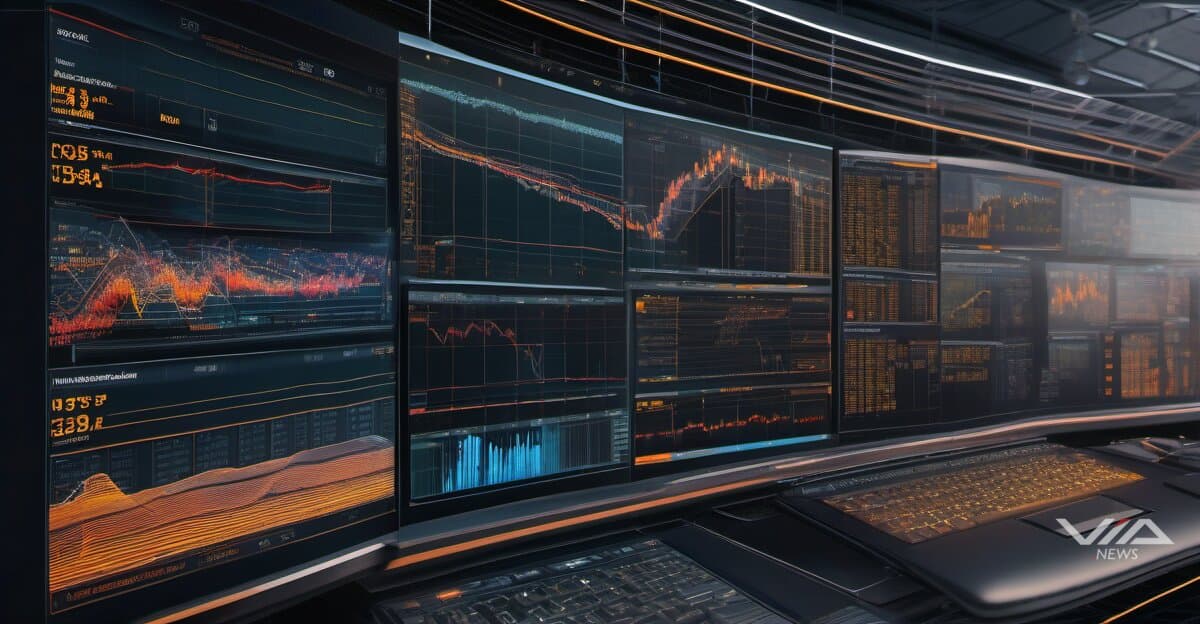
Image generated by AI for illustrative purposes. Not actual footage or photography from the reported events.

Flow Traders launched a deep learning trading initiative during 2025, marking a shift toward AI-driven execution strategies at institutional crypto firms.1 The Amsterdam-based market maker's move reflects broader infrastructure investment across crypto platforms.

BitMart and other exchanges have built AI trading tool suites, offering retail and institutional clients algorithmic strategies previously limited to proprietary trading desks. This democratization of AI trading tools parallels advances in compute capacity, including Google's Gemini 3 Pro and Meta's reported shift toward TPU architectures for AI workloads.

The infrastructure expansion unfolds against intensifying regulatory scrutiny. China reaffirmed its crypto trading ban while USDT faced credit rating downgrades, creating compliance headwinds for exchanges and market makers. Flow Traders reported mixed results for Q4 and full-year 2025, navigating volatile market conditions.1

November 2025 proved particularly challenging for crypto markets, with CoinEx Research labeling the month "Painvember" in its monthly report.2 Sharp price declines tested newly deployed AI trading systems, providing real-world stress tests for algorithmic strategies.

The bifurcation between sophisticated AI-powered trading and tightening regulatory requirements is reshaping the institutional crypto landscape. Firms investing in deep learning capabilities gain execution advantages, while those lacking technical infrastructure face pressure from both algorithmic competitors and compliance costs.

Traditional finance firms entering crypto markets now confront expectations for AI-enhanced trading systems. The infrastructure gap between early crypto-native platforms and legacy institutions creates competitive dynamics favoring technically advanced players.

Market makers like Flow Traders balance AI investment against regulatory uncertainty. Deep learning models require extensive data and compute resources, making them capital-intensive bets on continued crypto market maturation despite periodic regulatory crackdowns.

The trend suggests crypto trading is evolving toward institutional-grade infrastructure standards, with AI capabilities becoming baseline requirements rather than competitive differentiators. Exchanges without AI trading tools risk losing volume to platforms offering algorithmic execution options.

Source documents

Via News is a conduit. We point to the source documents behind this report — we don't replace them. Trace any claim to its source and decide what to trust. How we source

Source Trace Score3 source documents3 with a live linkVerifiability: Strong
  1. [1]Press releaseGlobeNewswire· January 13, 2026
    BitMart 2025 Annual Review: Building a More Complete Financial Infrastructure to Drive Long-Term Sustainable Growth
  2. [2]Press releaseGlobeNewswire· December 5, 2025
    CoinEx Research November 2025 Report: Painvember's Brutal Reality Check
  3. [3]News articleYahoo Finance· February 12, 2026
    Flow Traders 4Q and FY 2025 Results
L.M. Salvado
L.M. Salvado

L.M. Salvado is an AI possibilist — he takes the risks of AI seriously, and still sees the route through them. Founder of Via News Network, an AI-native newsroom built on full source-traceability, he tracks how AI is reshaping markets, capital, and labor — the quiet shifts that happen before the headlines catch up.