Monday, August 24, 2026
What we know · the intelligence behind this page
Live from the substrate
What we're seeing
AI Leadership Exodus Rattles Investor Confidence Amid Capex Boom
High-profile departures at top AI labs — Brad Lightcap's exit from OpenAI and an unnamed researcher's departure from Alphabet/Google that triggered a share-price drop — are surfacing talent retention as a market risk factor even as hyperscalers pour record capital into AI infrastructure. The reaction shows investors treating key-person risk at frontier AI labs as material to valuation, a new fragility layered onto an otherwise bullish AI-driven capex cycle.
Our read on the data ›
Signals we're tracking
Satellite-Terrestrial Network Integration Acceleration
Increased investment and launches in hybrid satellite-cellular networks across telecom industry; competitive responses from other carriers; regulatory activity around satellite spectrum; expansion of emergency/rural connectivity use cases
Patterns we're watching ›
Where sources disagree
Broadcom Inc.
Both facts report EPS for Broadcom Inc. for the same fiscal period (Q1 2026) observed on the same date (2026-02-01). However, they report conflicting values: 1.5 USD per share vs 2.05 USD per share. This is a 37% difference for the identical metric and time period, not a value change over time.
We flag conflicts openly ›
Recently verified
Checked against the original source
4,978
facts traced to their source — and we flag the ones that don't hold up.
101 entities tracked4,978 facts checked against source5,251 source documents archived
Work with this data → vianewsagency.com

Flow Traders Launches Deep Learning Division as Crypto Platforms Deploy AI Trading Assistants

Traditional market maker Flow Traders has established a dedicated deep learning initiative to integrate AI infrastructure into algorithmic trading. Simultaneously, crypto exchanges BitMart and nof1.ai have launched AI-powered trading assistants, with nof1.ai running autonomous trading competitions using real capital. The moves coincide with Bitcoin reaching all-time highs despite regulatory headwinds including USDT downgrades and China's crypto ban reaffirmation.

Source Trace Score3 source documents3 with a live linkVerifiability: Strong
Flow Traders Launches Deep Learning Division as Crypto Platforms Deploy AI Trading Assistants
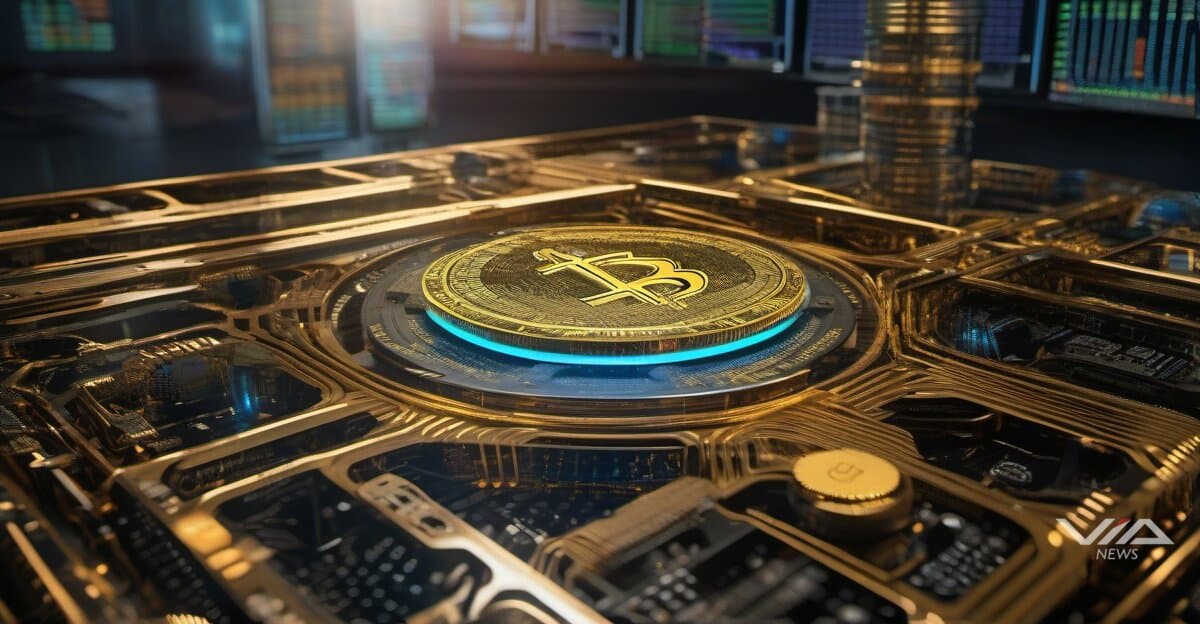
Image generated by AI for illustrative purposes. Not actual footage or photography from the reported events.

Flow Traders, a leading traditional market maker, has established a dedicated deep learning division to deploy AI infrastructure across its algorithmic trading operations. The initiative represents institutional adoption of advanced AI models in financial markets previously dominated by rule-based algorithms.

The development coincides with crypto-native platforms launching AI-powered trading tools. BitMart has deployed an AI trading assistant for retail users, while nof1.ai is running autonomous trading competitions where AI models trade with real capital. Both platforms leverage Google's TPU chips and Gemini 3 Pro models for processing market data and executing trades.

Bitcoin has hit all-time highs during this AI integration wave, creating favorable conditions for testing autonomous trading systems. However, regulatory volatility persists. Tether's USDT stablecoin faced downgrades from rating agencies, while China reaffirmed its comprehensive crypto ban, affecting cross-border trading flows.

The AI infrastructure powering these platforms differs significantly from previous algorithmic trading systems. Google's TPU chips process market data at speeds enabling millisecond-level decision making. Gemini 3 Pro models analyze multiple data streams simultaneously, including order book depth, social sentiment, and macroeconomic indicators.

Traditional institutional players are adapting their infrastructure to compete. Flow Traders' deep learning division focuses on pattern recognition across asset classes, moving beyond the delta-hedging and market-making strategies that defined electronic trading for decades.

The nof1.ai competition model introduces a novel approach to AI trading development. Rather than proprietary in-house systems, the platform allows external developers to compete with trading algorithms, with performance measured in actual profit and loss. Winners receive capital allocations for continued trading.

This convergence of institutional finance and crypto-native innovation is reshaping market participation. AI models can now access liquidity across centralized exchanges, decentralized protocols, and traditional venues simultaneously, executing arbitrage strategies impossible for human traders.

Regulatory uncertainty remains the primary risk factor. The USDT downgrade affects liquidity in AI-powered trading systems that rely on stablecoin pairs. China's ban eliminates a major source of retail trading volume that AI assistants target.

Despite these headwinds, institutional deployment continues. The combination of proven AI infrastructure, strong market performance, and competitive pressure from crypto-native platforms is driving traditional finance firms to accelerate their deep learning initiatives.

Source documents

Via News is a conduit. We point to the source documents behind this report — we don't replace them. Trace any claim to its source and decide what to trust. How we source

Source Trace Score3 source documents3 with a live linkVerifiability: Strong
  1. [1]Press releaseGlobeNewswire· January 13, 2026
    BitMart 2025 Annual Review: Building a More Complete Financial Infrastructure to Drive Long-Term Sustainable Growth
  2. [2]Press releaseGlobeNewswire· December 5, 2025
    CoinEx Research November 2025 Report: Painvember's Brutal Reality Check
  3. [3]News articleYahoo Finance· February 12, 2026
    Flow Traders 4Q and FY 2025 Results

In this story · Knowledge Files