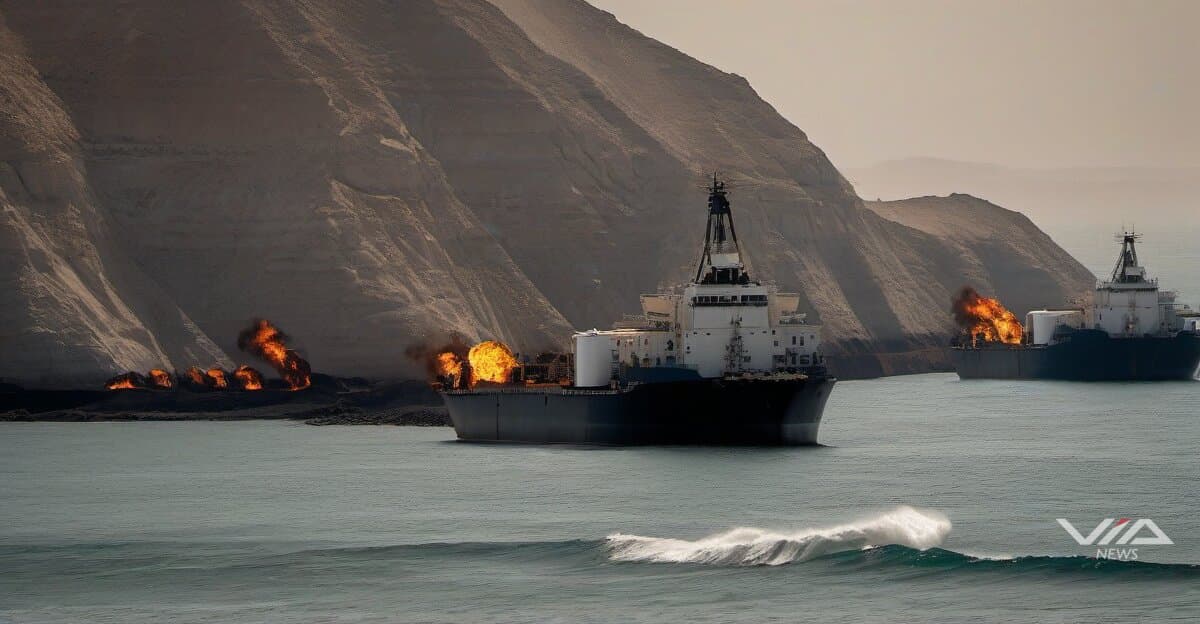
The nine-week Strait of Hormuz closure — triggered by the February 2026 US-Israel strike on Iran — has pushed petrochemical contraction from Asia into Western consumer markets.12 US gasoline is at $4/gallon. The S&P 500 is at yearly lows.
For industrial companies, the earnings calculus is deteriorating. Petrochemicals are feedstocks for plastics, packaging, and manufacturing inputs. As global supply contracts, input costs are rising across the industrial stack. Energy-intensive production faces sustained margin compression.
Supply chain exposure varies by sector. Chemical manufacturers face direct feedstock cost increases. Automotive and electronics producers — dependent on plastic components — face secondary cost pressure. Consumer goods and food companies carry energy costs across production, refrigeration, and transport.
The Federal Reserve is holding rates steady amid stagflationary pressure.1 This removes the monetary buffer. Companies cannot offset rising input costs through cheaper financing — they must absorb or pass through to consumers already squeezed by $4/gallon gasoline.
Demand destruction has hit the largest monthly oil demand decline in five years.1 That metric signals more than reduced consumption. It signals that price transmission is depressing economic activity broadly. For industrials reliant on volume, demand destruction compounds earnings headwinds.
Economist Justin Wolfers said cost pressures on Americans are "very real."1 "If we don't get a satisfactory resolution, then that concern remains," he warned, making conflict resolution the key variable for energy price duration.1 Without resolution, expensive energy could persist for years.1
Economist Pierre-Olivier Gourinchas warned this oil crisis could rival the 1970s shocks.2 Those shocks triggered multi-year stagflation and elevated unemployment across developed economies. Gourinchas warned the current crisis could drive unemployment and food insecurity globally.2
IEA emergency inventory releases have provided short-term relief but have not reversed structural pressure. The petrochemical contraction that started in Asia is moving west, compressing margins for downstream manufacturers and consumer goods producers.
Stagflation constrains policy response. Rate cuts risk stoking already elevated consumer prices. Rate hikes accelerate demand destruction and credit tightening. The Fed's hold is constrained, not stabilizing — leaving industrial earnings fully exposed to energy price transmission through supply chains.