Monday, August 24, 2026
What we know · the intelligence behind this page
Live from the substrate
What we're seeing
AI Leadership Exodus Rattles Investor Confidence Amid Capex Boom
High-profile departures at top AI labs — Brad Lightcap's exit from OpenAI and an unnamed researcher's departure from Alphabet/Google that triggered a share-price drop — are surfacing talent retention as a market risk factor even as hyperscalers pour record capital into AI infrastructure. The reaction shows investors treating key-person risk at frontier AI labs as material to valuation, a new fragility layered onto an otherwise bullish AI-driven capex cycle.
Our read on the data ›
Signals we're tracking
Satellite-Terrestrial Network Integration Acceleration
Increased investment and launches in hybrid satellite-cellular networks across telecom industry; competitive responses from other carriers; regulatory activity around satellite spectrum; expansion of emergency/rural connectivity use cases
Patterns we're watching ›
Where sources disagree
Broadcom Inc.
Both facts report EPS for Broadcom Inc. for the same fiscal period (Q1 2026) observed on the same date (2026-02-01). However, they report conflicting values: 1.5 USD per share vs 2.05 USD per share. This is a 37% difference for the identical metric and time period, not a value change over time.
We flag conflicts openly ›
Recently verified
Checked against the original source
4,978
facts traced to their source — and we flag the ones that don't hold up.
101 entities tracked4,978 facts checked against source5,251 source documents archived
Work with this data → vianewsagency.com

Hormuz Blockade Removes 20M Barrels Daily, Threatens Demand Destruction

The Strait of Hormuz blockade has removed approximately 20 million barrels per day from global markets, marking the largest supply disruption on record. Analysts warn that sustained high energy prices could shift from a supply tailwind to a demand destruction headwind, adding reflationary pressure to an economy already strained by tariff headwinds.

LM Salvado
LM Salvado

March 18, 2026

Source Trace Score6 source documents6 with a live linkVerifiability: Strong
Hormuz Blockade Removes 20M Barrels Daily, Threatens Demand Destruction
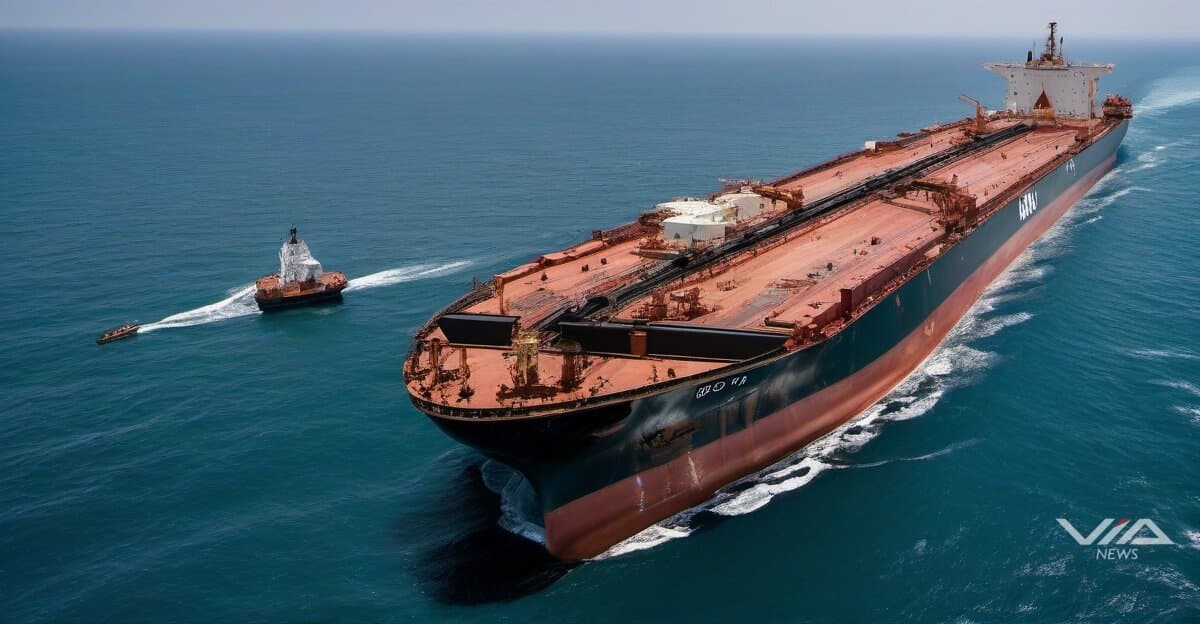
Image generated by AI for illustrative purposes. Not actual footage or photography from the reported events.

A blockade in the Strait of Hormuz has removed approximately 20 million barrels per day from global markets, the largest supply disruption ever measured.1 The shock drove WTI crude oil prices sharply higher on March 6, 2026, triggering elevated volatility across commodity and equity markets.

Nikos Tzabouras warns that the supply disruption tailwind could ultimately turn into a demand destruction headwind.2 The US has signaled a four-to-five-week military campaign to address the crisis,2 but sustained high energy prices during this period may trigger reflationary pressures that weigh on global growth already facing tariff headwinds.2

The dual squeeze of rising input costs and trade barriers threatens to compress corporate margins and dampen consumer spending power. Energy-intensive industries face immediate cost pressures, while broader inflation could force central banks to maintain restrictive policy longer than markets anticipated.

Scott Wren notes that geopolitical situations affecting oil prices, particularly in the Middle East and Ukraine-Russia theaters, will have the largest impact on financial markets.3 The current crisis exemplifies this dynamic, with the Hormuz chokepoint controlling roughly one-fifth of global oil flows under normal conditions.

Market participants are weighing two competing forces: short-term supply constraints that benefit energy producers against medium-term demand erosion as high prices slow economic activity. The transition point between these phases will determine whether the crisis remains a sector-specific shock or metastasizes into a broader growth slowdown.

Banks and investment firms are adjusting portfolio allocations in response to the dual risks of inflation resurgence and growth deceleration. The path forward depends largely on how quickly the Hormuz situation resolves and whether oil prices retreat before inflicting lasting damage on consumption patterns.

Source documents

Via News is a conduit. We point to the source documents behind this report — we don't replace them. Trace any claim to its source and decide what to trust. How we source

Source Trace Score6 source documents6 with a live linkVerifiability: Strong
  1. [1]News articleYahoo Finance· March 9, 2026
    Iran conflict exposes America’s Achilles’ heel
  2. [2]News articleUk· March 11, 2026
    Top oil and energy stocks to watch as crude swings wildly amid Iran war
  3. [3]News articleYahoo Finance· December 7, 2025
    What bubble? Asset managers in risk-on mode stick with stocks
  4. [4]News articleNasdaq· March 6, 2026
    Stocks Retreat on Inflation Concerns and a Weak US Job Market
  5. [5]News articleYahoo Finance· March 10, 2026
    Tech stocks today: Nvidia CEO Jensen Huang blogs about AI's impact, Anthropic sues Defense Department over ban
  6. [6]News articleYahoo Finance· March 16, 2026
    Zefiro Methane Corp. Provides Update on Recent Strategic Execution and Milestones Achieved

In this story · Knowledge Files

LM Salvado
LM Salvado

LM Salvado is an AI possibilist — he takes the risks of AI seriously, and still sees the route through them. Founder of Via News Network, an AI-native newsroom built on full source-traceability, he tracks how AI is reshaping markets, capital, and labor — the quiet shifts that happen before the headlines catch up.