Saturday, October 10, 2026

Jack Ma-Backed Yunfeng Financial Faces Catastrophic Vault Risk in Hong Kong Gold Token Program

Yunfeng Financial Group Ltd., the Hong Kong-listed insurer backed by Jack Ma, has identified catastrophic operational risk in its tokenized gold product on the Yunfeng Youyu platform. The token's entire value rests on verified 1:1 physical gold backing held in Hong Kong vaults. Audit failures, custodian insolvency, or vault breaches could expose the firm to legal liability from token holders.

LM Salvado
LM Salvado

May 16, 2026

Jack Ma-Backed Yunfeng Financial Faces Catastrophic Vault Risk in Hong Kong Gold Token Program
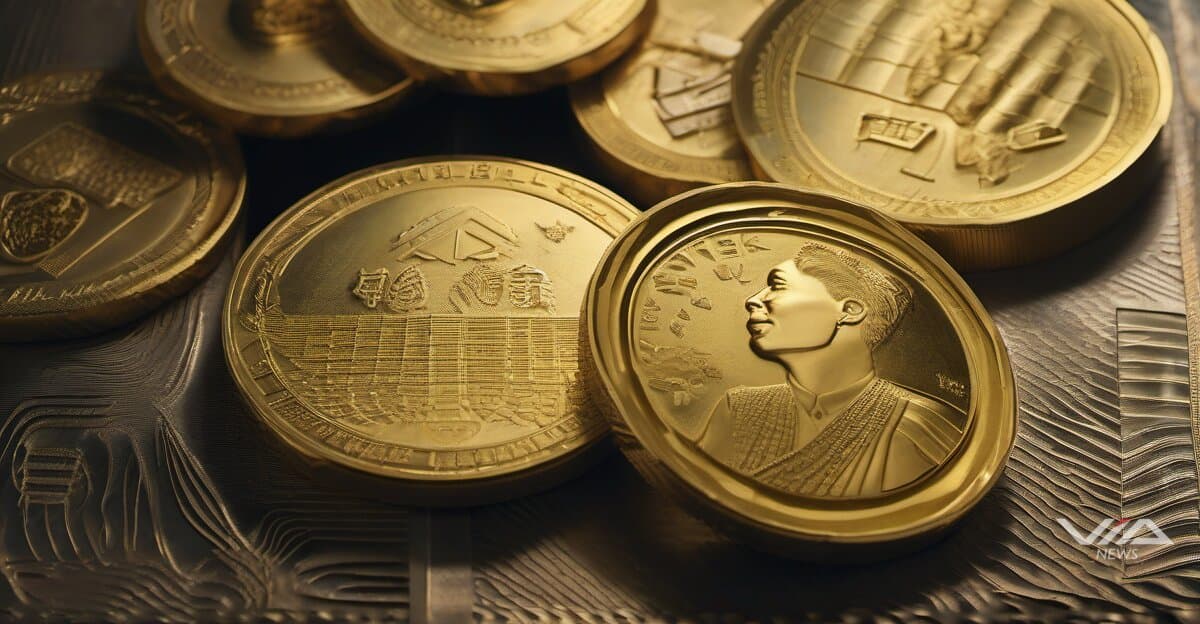
Image generated by AI for illustrative purposes. Not actual footage or photography from the reported events.

Yunfeng Financial Group Ltd. faces catastrophic operational risk in its tokenized gold program, according to a risk assessment dated May 2026.1 The Hong Kong-listed insurer, backed by Jack Ma, operates the Yunfeng Youyu digital platform, where gold tokens are issued against physical gold held in Hong Kong vaults.

The token's core promise is a 1:1 ratio between digital tokens and physical gold.1 That promise is the product. Without verifiable, unimpeachable custody, there is no product — only liability.

Where the Risk Lives

Four failure scenarios each carry the same outcome: loss of credibility and legal exposure from token holders.1

First, a vault security breach. Physical gold in a Hong Kong facility can be stolen, misappropriated, or rehypothecated without adequate controls. Second, custodian insolvency. If the vault operator fails, gold held on behalf of token holders enters a claims process — not an automatic return. Third, audit failure. Third-party verification of gold reserves must be continuous and transparent; gaps in audit coverage destroy the 1:1 claim. Fourth, inability to verify backing. Even without a breach, if holders cannot independently confirm that gold exists in the stated quantity, trust evaporates.

Industry-Wide Custody Problem

Tokenized gold is not unique in facing these risks. The broader asset tokenization market — spanning real estate, commodities, and debt instruments — shares a structural vulnerability: the digital layer cannot self-verify what happens in the physical layer.

Vault security standards in the tokenized gold sector remain uneven globally. Hong Kong, as a financial hub, has regulatory frameworks for custodians, but no unified international standard governs proof-of-reserve frequency, audit firm qualifications, or token holder rights in insolvency proceedings.

For Yunfeng Financial, the severity of this risk is rated catastrophic, though likelihood is assessed as low.1 That asymmetry is common in custody risk: rare events with total-loss consequences. Low probability does not mean low priority.

What Adequate Standards Require

Credible tokenized gold programs require real-time or near-real-time proof-of-reserve audits, segregated custody accounts that sit outside custodian balance sheets, and clear contractual priority for token holders in insolvency events.

Yunfeng Financial's gold token program operates at the intersection of two industries — insurance and digital assets — each with distinct regulatory expectations. Meeting both simultaneously is the core operational challenge.

About this analysis

This is a Via News analysis. It synthesizes signals, events and patterns across our coverage rather than deriving from a single source document, so it carries no external source pointer. Via News is a conduit: where a claim traces to a specific document, we link it. How we source

LM Salvado
LM Salvado

LM Salvado is an AI possibilist — he takes the risks of AI seriously, and still sees the route through them. Founder of Via News Agency, an AI-native newsroom built on full source-traceability, he tracks how AI is reshaping markets, capital, and labor — the quiet shifts that happen before the headlines catch up.

What we know · the intelligence behind this page
Live from the substrate
What we're seeing
Agentic Enterprise Software Consolidates: Big Platforms Push Autonomy While Startups Get Absorbed
Enterprise software is shifting toward autonomous, AI-agent-driven products. SAP (Autonomous Enterprise, Joule), Meta (a new Enterprise Platform led by ex-MongoDB CEO Chirantan Desai) and UiPath (raised guidance) are pushing from the top. Meanwhile AI-security and governance startups are being acquired (Fortinet–Virtue AI, Harvey–Guardrails AI, Tiny–Oso Cloud) and seed-stage agent companies keep raising capital (Dextr, Latitude, Groq). Investors such as Norwest's Sean Jacobsohn see finance and ERP back-office software as the easier area to disrupt. Trust and enforced governance are treated as preconditions for regulated sectors like finance, and AI is judged unreliable for calculations.
Our read on the data ›
Signals we're tracking
EPKINLY Regulatory-Clinical Success Cascade
High probability of expanded label indications, additional combination approvals, and competitive positioning strength in follicular lymphoma market. Predicts positive commercial uptake and potential accelerated review for related indications.
Patterns we're watching ›
Where sources disagree
ING Group
Both facts record the same metric (shares_outstanding) for ING Group at the identical observation date (2025-12-31). FACT A states 2,902,437,688 shares; FACT B states 2,902 million shares (2,902,000,000). The difference is 437,688 shares (~0.015%). This is a genuine value conflict, though the discrepancy appears to result from FACT B rounding to the nearest million while FACT A provides the precise count.
We flag conflicts openly ›
Recently verified
✓ Checked against the original source
4,986
facts traced to their source — and we flag the ones that don't hold up.
101 entities tracked4,986 facts checked against source5,365 source documents archived
Query this data → isubstrate.com