Wednesday, September 16, 2026

Naval AI Infrastructure Deal Signals Defense Cybersecurity Consolidation Wave

Nvidia's DGX GB300 deployment to U.S. Naval Postgraduate School during heightened military tensions marks accelerated AI infrastructure investment in defense sector. The move coincides with cybersecurity M&A activity, pointing toward defense tech consolidation focused on AI-powered security solutions and federal cloud infrastructure.

LM Salvado
LM Salvado

April 21, 2026

Naval AI Infrastructure Deal Signals Defense Cybersecurity Consolidation Wave
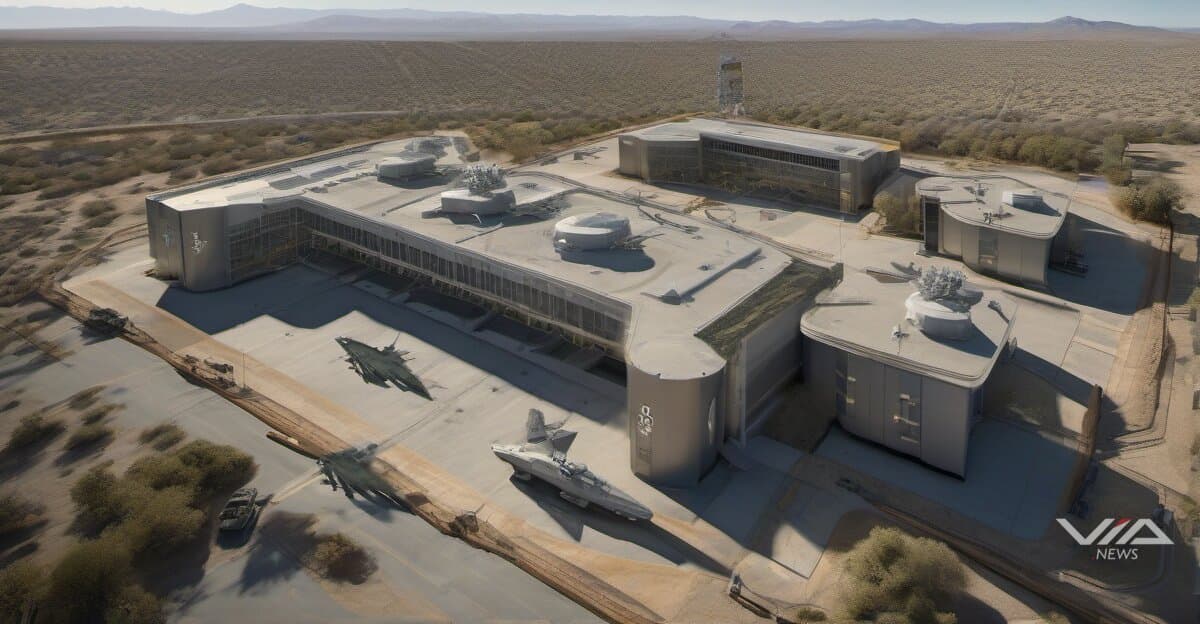
Image generated by AI for illustrative purposes. Not actual footage or photography from the reported events.

The U.S. Naval Postgraduate School received Nvidia DGX GB300 AI systems as military AI infrastructure deployment accelerates during active conflict with Iran. The timing signals defense sector prioritization of advanced computing capabilities for national security applications.

Defense technology procurement patterns show convergence between AI infrastructure buildout and cybersecurity consolidation. Recent M&A activity in the Palo Alto Networks-CyberArk space suggests major defense contractors are positioning for integrated AI-security platforms required by federal agencies.

Government cloud spending authorization through FedRAMP High certification creates demand for AI-powered cybersecurity solutions in classified environments. Defense contractors face procurement cycles favoring vendors who combine advanced AI capabilities with security clearances and federal compliance frameworks.

Military AI infrastructure contracts differ from commercial deployments in classification requirements and operational security standards. The Naval Postgraduate School deployment establishes a template for defense sector AI adoption that prioritizes on-premise systems over cloud alternatives in sensitive applications.

Defense sector consolidation through cybersecurity acquisitions follows established patterns where major primes absorb specialized technology firms. AI-powered threat detection and automated security response systems command premium valuations when paired with existing defense contractor relationships and security clearances.

Federal procurement budgets increasingly allocate funds toward AI infrastructure that meets Department of Defense security standards. Contractors offering turnkey AI systems with integrated cybersecurity features gain competitive advantage in bidding cycles, driving further M&A activity in the defense technology sector.

The convergence of military AI deployment, cybersecurity consolidation, and federal cloud authorization creates market conditions favoring defense technology integrators. Companies holding both AI infrastructure capabilities and high-level security clearances position themselves for accelerated contract awards as defense agencies modernize computing infrastructure.

In this story · Knowledge Files

About this analysis

This is a Via News analysis. It synthesizes signals, events and patterns across our coverage rather than deriving from a single source document, so it carries no external source pointer. Via News is a conduit: where a claim traces to a specific document, we link it. How we source

LM Salvado
LM Salvado

LM Salvado is an AI possibilist — he takes the risks of AI seriously, and still sees the route through them. Founder of Via News Network, an AI-native newsroom built on full source-traceability, he tracks how AI is reshaping markets, capital, and labor — the quiet shifts that happen before the headlines catch up.

What we know · the intelligence behind this page
Live from the substrate
What we're seeing
AI's 'Show-Me' Reckoning: Earnings Divergence, Executive Exodus, and Regulatory Tightening
Investors are shifting from rewarding AI narratives to demanding tangible results, evidenced by Adobe's weak guidance despite user-growth emphasis, Palantir's stock decline even after winning the Army's TITAN contract, and UiPath's contrasting guidance raise. Simultaneously, high-profile safety-driven departures from Anthropic and Google, plus new regulatory actions (California's under-16 social media ban, Anthropic's misuse-blocking disclosures), signal mounting scrutiny of AI's societal and financial risk profile even as fintech-adjacent funding (Socure) continues.
Our read on the data ›
Signals we're tracking
Satellite-Terrestrial Network Integration Acceleration
Increased investment and launches in hybrid satellite-cellular networks across telecom industry; competitive responses from other carriers; regulatory activity around satellite spectrum; expansion of emergency/rural connectivity use cases
Patterns we're watching ›
Where sources disagree
ING Group
Both facts record the same metric (shares_outstanding) for ING Group at the identical observation date (2025-12-31). FACT A states 2,902,437,688 shares; FACT B states 2,902 million shares (2,902,000,000). The difference is 437,688 shares (~0.015%). This is a genuine value conflict, though the discrepancy appears to result from FACT B rounding to the nearest million while FACT A provides the precise count.
We flag conflicts openly ›
Recently verified
Checked against the original source
4,981
facts traced to their source — and we flag the ones that don't hold up.
101 entities tracked4,981 facts checked against source5,288 source documents archived
Query this data → isubstrate.com