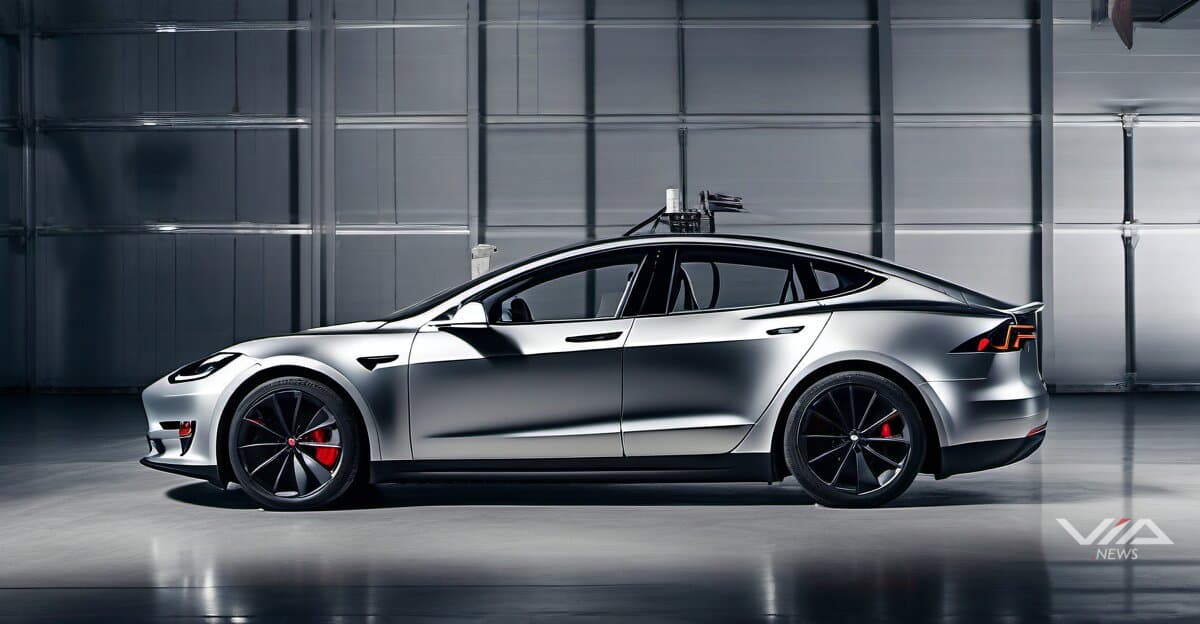
Tesla's premium valuation stems from market pricing of AI opportunities beyond its automotive business, according to recent analyst assessments.1 The disconnect between the company's traditional EV metrics and stock performance highlights how investors weigh future optionality in autonomous driving, robotics, and energy AI.
Joseph Spak stated Tesla stock trades more on sentiment, narrative, and momentum than fundamentals.1 He warned the stock may continue to exhibit high volatility given this dynamic.1 This trading pattern separates Tesla from conventional automakers, where delivery volumes and production costs typically drive valuations.
UBS Group upgraded Tesla after raising its price target, finding the current valuation better reflects the balance between immediate EV demand challenges and long-term opportunities.1 The upgrade signals growing recognition that Tesla's market position cannot be assessed purely through automotive industry lenses.
The valuation framework creates measurable gaps. Traditional auto analysts focus on EV delivery numbers and production efficiency. Tech-focused research shops emphasize Full Self-Driving development progress, AI compute infrastructure, and robotics potential. This split drives recommendation divergence across Wall Street.
Tesla's multiple relative to revenue exceeds traditional automakers by significant margins. The premium persists despite EV demand headwinds because investors price in software licensing potential, autonomous fleet economics, and energy management AI. Each FSD or robotics announcement tends to move the stock independent of quarterly delivery figures.
The explanatory hypothesis—that non-automotive AI optionality justifies the premium—remains difficult to test with standard automotive metrics. Sum-of-parts analysis would require separating automotive value from software, AI development, and energy businesses. Correlating stock movements with FSD announcements versus delivery reports could quantify which narrative drives pricing.
For momentum-driven investors, Tesla remains a bet on AI commercialization timelines. For fundamental analysts applying auto industry frameworks, the valuation appears disconnected from near-term cash flows. UBS's position suggests major institutions are shifting toward hybrid frameworks that incorporate both automotive fundamentals and technology optionality.