Wednesday, September 16, 2026

Defense AI Contracts Signal Shift to Enterprise Hierarchical Systems

The U.S. Army signed a framework agreement with Appian for enterprise AI solutions, while VisionWave deployed its Evolved Intelligence hierarchical system for air and ground defense. An aerospace manufacturer closed a seven-figure AI deal in January 2025, as Intel and NVIDIA launched custom Xeon partnerships for specialized AI workloads.

Defense AI Contracts Signal Shift to Enterprise Hierarchical Systems
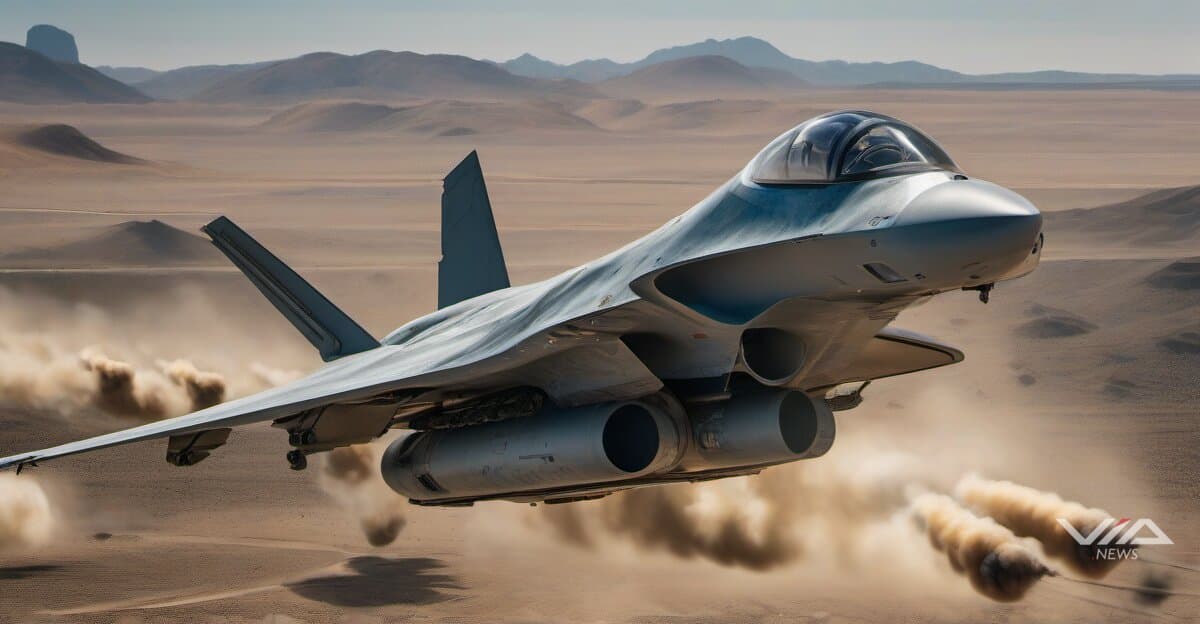
Image generated by AI for illustrative purposes. Not actual footage or photography from the reported events.

The U.S. Army has signed a framework agreement with Appian to deploy enterprise AI solutions across defense operations, marking the latest government commitment to large-scale AI infrastructure. The deal follows VisionWave's rollout of its Evolved Intelligence system, a hierarchical AI platform designed for air and ground defense applications.

An aerospace manufacturer secured a seven-figure contract in January 2025 for AI defense systems, pushing enterprise AI adoption beyond software into hardware partnerships. Intel and NVIDIA announced a custom Xeon collaboration targeting specialized AI workloads, a sign that chip makers are shifting resources toward defense and government-specific computing demands.

Hierarchical AI systems—which layer multiple AI models to handle complex, multi-domain tasks—are gaining traction in defense because they allow compartmentalized security and specialized processing. VisionWave's Evolved Intelligence architecture uses this approach to coordinate surveillance, threat assessment, and response protocols across air and ground units simultaneously.

The defense AI market is projected to reach $18.6 billion by 2028, growing at 13.4% annually, according to industry analysts. Government contracts now account for 42% of enterprise AI spending in the U.S., up from 31% in 2023. The shift is driven by national security priorities and the need for AI systems that can operate in restricted, high-stakes environments.

Custom chip partnerships like the Intel-NVIDIA Xeon deal reflect the hardware demands of hierarchical AI. These systems require processors that can handle parallel workloads—running multiple AI models at once—without bottlenecks. Standard consumer chips lack the processing power and security features needed for defense applications.

The Appian-Army agreement includes provisions for AI-driven logistics, predictive maintenance, and decision support systems. Appian's platform integrates with existing military software, a key requirement for government buyers who need AI that works with legacy systems. The company did not disclose contract value but confirmed multi-year deployment timelines.

For investors, defense AI contracts signal sustained enterprise demand beyond the consumer AI boom. Companies building hierarchical systems, custom processors, and secure AI infrastructure are positioned to capture government spending as agencies accelerate digital transformation.

In this story · Knowledge Files

What we know · the intelligence behind this page
Live from the substrate
What we're seeing
AI's 'Show-Me' Reckoning: Earnings Divergence, Executive Exodus, and Regulatory Tightening
Investors are shifting from rewarding AI narratives to demanding tangible results, evidenced by Adobe's weak guidance despite user-growth emphasis, Palantir's stock decline even after winning the Army's TITAN contract, and UiPath's contrasting guidance raise. Simultaneously, high-profile safety-driven departures from Anthropic and Google, plus new regulatory actions (California's under-16 social media ban, Anthropic's misuse-blocking disclosures), signal mounting scrutiny of AI's societal and financial risk profile even as fintech-adjacent funding (Socure) continues.
Our read on the data ›
Signals we're tracking
Satellite-Terrestrial Network Integration Acceleration
Increased investment and launches in hybrid satellite-cellular networks across telecom industry; competitive responses from other carriers; regulatory activity around satellite spectrum; expansion of emergency/rural connectivity use cases
Patterns we're watching ›
Where sources disagree
ING Group
Both facts record the same metric (shares_outstanding) for ING Group at the identical observation date (2025-12-31). FACT A states 2,902,437,688 shares; FACT B states 2,902 million shares (2,902,000,000). The difference is 437,688 shares (~0.015%). This is a genuine value conflict, though the discrepancy appears to result from FACT B rounding to the nearest million while FACT A provides the precise count.
We flag conflicts openly ›
Recently verified
Checked against the original source
4,981
facts traced to their source — and we flag the ones that don't hold up.
101 entities tracked4,981 facts checked against source5,288 source documents archived
Query this data → isubstrate.com