Tuesday, August 18, 2026
What we know · the intelligence behind this page
Live from the substrate
What we're seeing
Enterprise AI Agent Rollout Outpaces Data Trust and Readiness
Enterprise adoption of agentic AI is accelerating fast — Siemens deepening its NVIDIA partnership for self-verifying agentic AI in chip design, Manulife expanding its Microsoft AI-governance partnership, and a wave of infrastructure launches (NVIDIA GPU-accelerated data processing, Dell exascale storage, new AI chip generations) — even as a new Google Cloud survey shows the underlying data foundation isn't ready: companies have AI access to only 45% of their data on average, data laggards see access fall to 30% or less, and only about half of organizations trust their AI agents' decisions. Meanwhile, insider selling at enterprise-AI bellwether C3.ai (CEO Thomas Siebel offloading $4.8M in shares) hints at investor caution layered under the adoption hype.
Our read on the data ›
Signals we're tracking
Satellite-Terrestrial Network Integration Acceleration
Increased investment and launches in hybrid satellite-cellular networks across telecom industry; competitive responses from other carriers; regulatory activity around satellite spectrum; expansion of emergency/rural connectivity use cases
Patterns we're watching ›
Where sources disagree
JPMorgan Chase & Co.
Both facts report JPMorgan Chase & Co.'s revenue for the same fiscal period (FY 2025) with the same observation date (2025-12-31), but with different values: $182.447 billion vs. $185 billion. The ~1.4% difference ($2.553 billion) is too large to be explained by rounding alone and represents conflicting data for the identical time period.
We flag conflicts openly ›
Recently verified
Checked against the original source
4,812
facts traced to their source — and we flag the ones that don't hold up.
101 entities tracked4,812 facts checked against source5,219 source documents archived
Work with this data → vianewsagency.com

Memory Chip Makers Hit Record Margins as AI Hardware Demand Drives Component Shortage

Micron Technology projects record revenue and margins in Q2 2026 as AI systems triple memory chip requirements. Applied Materials and Analog Devices stocks gained January 7th while Microchip Technology raised Q3 sales forecasts, signaling supply chain pressure in specialized semiconductor components.

Memory Chip Makers Hit Record Margins as AI Hardware Demand Drives Component Shortage
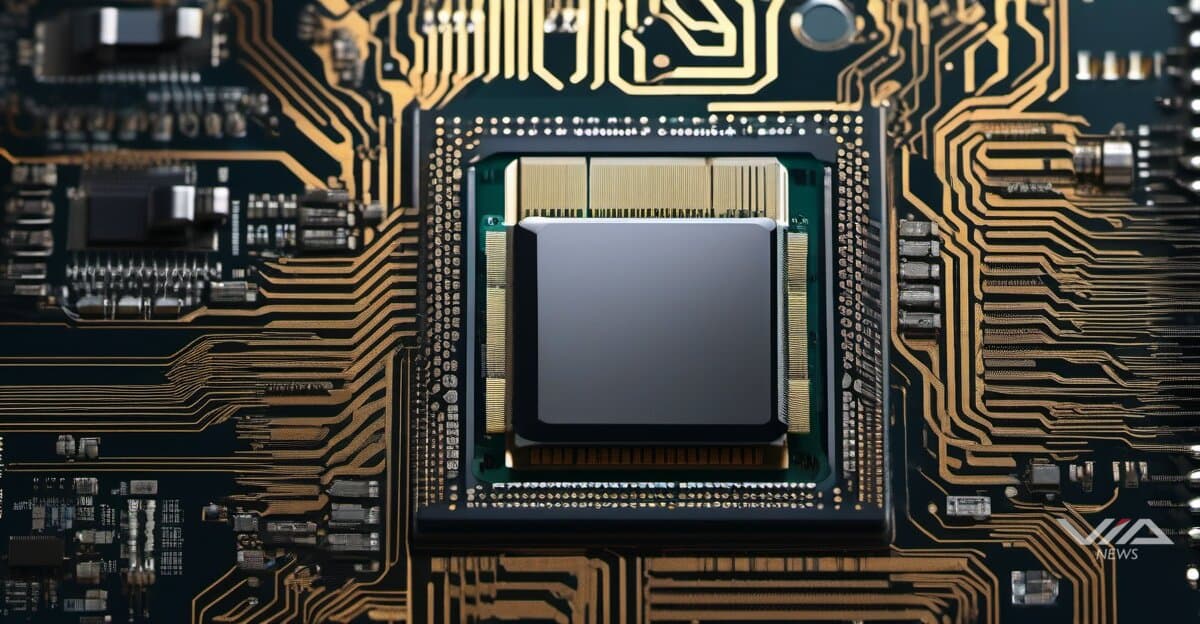
Image generated by AI for illustrative purposes. Not actual footage or photography from the reported events.

Micron Technology expects "substantial records across revenue, gross margin, EPS and free cash flow" in Q2 2026, according to company outlook released this week. The guidance comes as AI hardware manufacturers consume memory chips at unprecedented rates.

Satya Kumar, a semiconductor industry analyst, stated systems shipping in 2026 will contain triple the LPDDR (low-power double data rate) memory content compared to 2025 models. This surge is straining supply chains for specialized components used in AI accelerators and edge computing devices.

Microchip Technology raised its Q3 sales forecast January 7th, the same day Applied Materials and Analog Devices stocks posted gains. The coordinated moves suggest broadening demand across the semiconductor equipment and analog chip sectors that support AI hardware production.

The supply squeeze is creating bifurcated performance in semiconductor stocks. Memory manufacturers benefit from pricing power and capacity constraints, while chipmakers facing production bottlenecks experience valuation volatility. Lead times for advanced packaging materials and high-bandwidth memory modules have extended 30-40% over six months.

Capital expenditure by semiconductor equipment makers is accelerating to meet demand. Applied Materials, which produces deposition and etching systems for chip fabrication, is expanding manufacturing capacity for tools used in advanced memory production. The company's stock performance reflects investor confidence in multi-year spending cycles.

Analog chip makers like Analog Devices are seeing increased orders for power management ICs and signal processing components required in AI server racks. These chips regulate voltage and convert signals in systems that consume 500-700 watts per GPU, compared to 200-300 watts in previous generation servers.

The supply chain pressure extends beyond leading-edge chips. Legacy node capacity for supporting components—voltage regulators, clock generators, interface chips—is fully allocated through Q3 2026. Automotive and industrial customers are competing with AI hardware makers for the same manufacturing capacity.

Memory chip spot prices rose 15% in Q4 2025 and remain elevated. Analysts expect pricing discipline to continue as manufacturers prioritize margin expansion over volume growth. Micron's record margin guidance suggests suppliers maintain leverage despite adding production capacity in 2025-2026.

In this story · Knowledge Files