Tuesday, August 18, 2026
What we know · the intelligence behind this page
Live from the substrate
What we're seeing
Enterprise AI Agent Rollout Outpaces Data Trust and Readiness
Enterprise adoption of agentic AI is accelerating fast — Siemens deepening its NVIDIA partnership for self-verifying agentic AI in chip design, Manulife expanding its Microsoft AI-governance partnership, and a wave of infrastructure launches (NVIDIA GPU-accelerated data processing, Dell exascale storage, new AI chip generations) — even as a new Google Cloud survey shows the underlying data foundation isn't ready: companies have AI access to only 45% of their data on average, data laggards see access fall to 30% or less, and only about half of organizations trust their AI agents' decisions. Meanwhile, insider selling at enterprise-AI bellwether C3.ai (CEO Thomas Siebel offloading $4.8M in shares) hints at investor caution layered under the adoption hype.
Our read on the data ›
Signals we're tracking
Satellite-Terrestrial Network Integration Acceleration
Increased investment and launches in hybrid satellite-cellular networks across telecom industry; competitive responses from other carriers; regulatory activity around satellite spectrum; expansion of emergency/rural connectivity use cases
Patterns we're watching ›
Where sources disagree
JPMorgan Chase & Co.
Both facts report JPMorgan Chase & Co.'s revenue for the same fiscal period (FY 2025) with the same observation date (2025-12-31), but with different values: $182.447 billion vs. $185 billion. The ~1.4% difference ($2.553 billion) is too large to be explained by rounding alone and represents conflicting data for the identical time period.
We flag conflicts openly ›
Recently verified
Checked against the original source
4,812
facts traced to their source — and we flag the ones that don't hold up.
101 entities tracked4,812 facts checked against source5,219 source documents archived
Work with this data → vianewsagency.com

Steak and Ale faces 70% failure risk reviving brand after 16-year closure

The casual steakhouse chain reopened its first location in 2024 after shutting all 280 restaurants in 2008. Consumer memory gaps and trust erosion create severe customer acquisition challenges for the 59-year-old brand founded by Norman Brinker.

Steak and Ale faces 70% failure risk reviving brand after 16-year closure
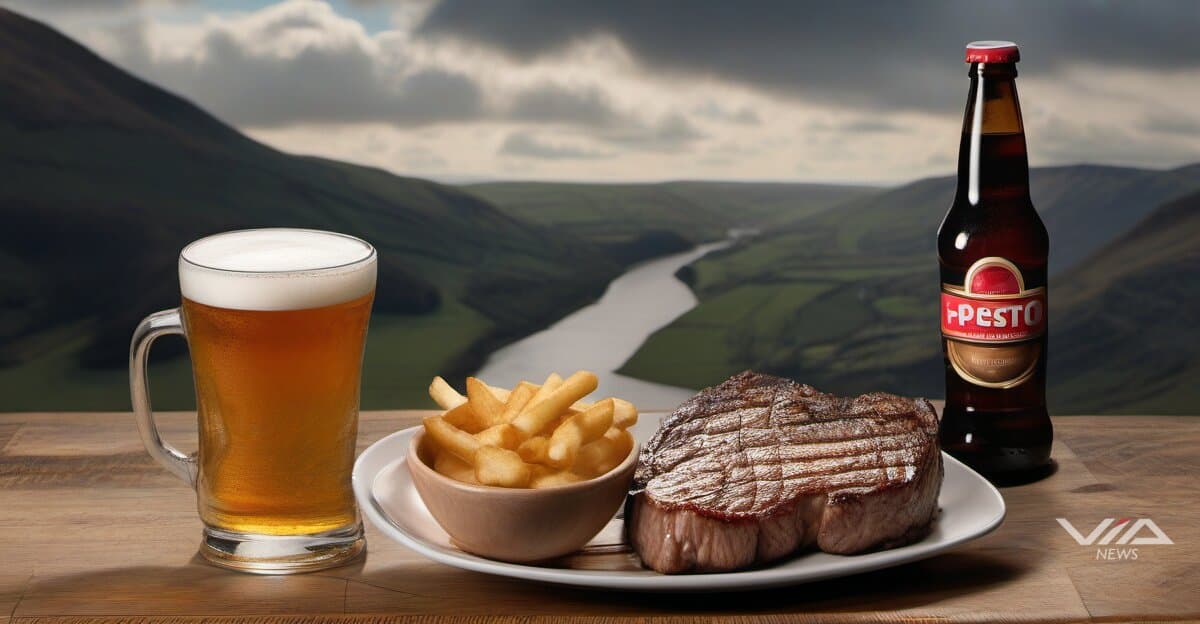
Image generated by AI for illustrative purposes. Not actual footage or photography from the reported events.

Steak and Ale confronts catastrophic brand recognition risks as it attempts to resurrect operations 16 years after total closure. The chain opened its first new location in 2024, betting consumers will recall a brand that disappeared in 2008.

Norman Brinker founded the casual steakhouse concept in 1966. The chain peaked at 280 locations before closing entirely during the 2008 financial crisis. Management now faces customer acquisition costs typical of startup brands while lacking the venture capital backing modern restaurant concepts enjoy.

Brand strategists assess the revival failure probability at 70%. Consumers aged 35 and younger have no memory of dining at Steak and Ale locations. The target demographic that patronized restaurants in 2008 is now 16 years older with shifted dining preferences.

The casual dining sector contracted 15% since 2008 as fast-casual chains captured market share. Steak and Ale must compete against Outback Steakhouse, Texas Roadhouse, and LongHorn Steakhouse chains that maintained continuous operations and brand awareness.

Restaurant industry analysts note that dormant brand revivals require three times typical marketing spending to achieve baseline recognition. The polished casual segment faces additional pressure from inflation-conscious consumers trading down to quick-service options or trading up to full-service fine dining.

Previous resurrection attempts in the restaurant sector show mixed results. Howard Johnson's failed to regain traction after extended closure. Bennigan's achieved limited success with 15 locations after bankruptcy, far below its 150-location peak.

The chain must rebuild supplier relationships, staff training programs, and quality control systems from zero. Menu pricing must balance nostalgia expectations against 2024 food costs that increased 28% since 2008.

Real estate selection presents additional operational risk. Prime casual dining locations now command lease rates 40% higher than 2008 levels. The brand lacks negotiating leverage that established chains use to secure favorable terms.