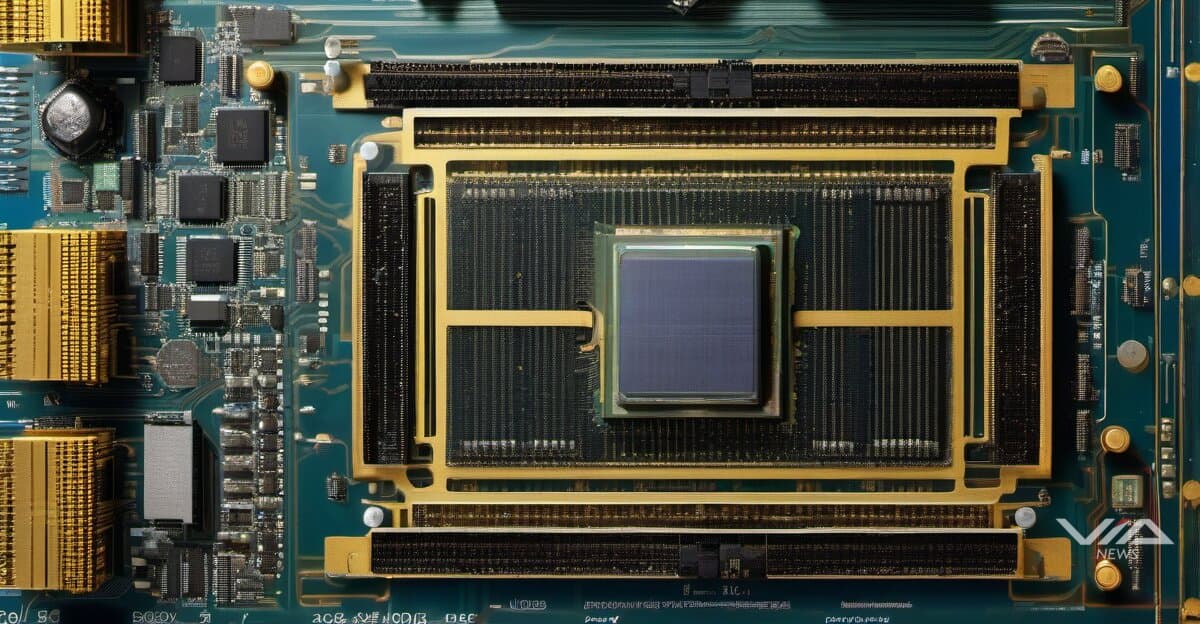
SOXX, the iShares Semiconductor ETF, gained 79% year-to-date as of June 5, 2026.1 Over twelve months, the fund returned 152%.1 AI hardware investment has become the defining equity trade of the current cycle.
Western chipmakers are moving fast to capture that momentum. Phison Electronics and Intel have deployed aiDAPTIV technology to expand memory capacity for AI workloads on Intel AI PC platforms.2 The system targets OEMs, developers, and enterprises running agentic applications and large mixture-of-experts models.3 These use cases require memory headroom that conventional hardware cannot supply.
Inspire Semiconductor's Thunderbird I targets a different segment. Positioned as a "supercomputer-cluster-on-a-chip," it is a datacenter accelerator for financial services, energy, climate modeling, cybersecurity, and drug discovery.4 Inspire describes these sectors as underserved by current AI silicon. The company completed a related-party financing round in June 2026. Its lead investor crossed 10% ownership, triggering disclosure requirements under Multilateral Instrument 61-101.4
On the supply chain's other side, Chinese chipmakers are targeting AI silicon independence by 2027-2028. U.S. rare earth export restrictions and defense procurement bans limit their access to advanced materials and manufacturing tools.
Infrastructure consolidation is accelerating. Chips, satellites, and energy are converging around a small number of vertically integrated players. Tesla and SpaceX represent the clearest expression of this pattern, with a potential SpaceX IPO adding further weight to the AI infrastructure stack.
The academic-to-industry design gap adds structural pressure. Academic chip programs typically receive 40-unit prototype runs from TSMC's prototyping service.5 Success is declared after just 5-10 functional chips — a yield tolerance incompatible with commercial production. Companies are building proprietary design pipelines to compensate.
The competition has shifted from raw compute to efficiency and ecosystem depth. Memory innovations like aiDAPTIV and purpose-built accelerators like Thunderbird I reflect that shift. SOXX's 152% one-year return signals that investors have already priced in the new battleground.1