
Three deals. One unmistakable signal.
In the span of weeks, the U.S. defense industrial base has delivered a coordinated — if unintentional — statement about where capital and strategy are converging: physical AI, embedded at the platform level, is moving from pilot program to procurement line item.
The most structurally significant development is the memorandum of understanding between Huntington Ingalls Industries (HII), the nation's largest military shipbuilder, and Path Robotics, a Columbus, Ohio-based autonomous welding and fabrication company. The MOU targets naval shipbuilding specifically — one of the most labor-intensive, technically demanding, and chronically backlogged segments of the defense industrial base. HII has publicly acknowledged workforce constraints as a bottleneck to meeting Navy shipbuilding targets. Integrating autonomous robotic welding directly into hull fabrication is not an efficiency play at the margins; it is a structural capacity intervention.
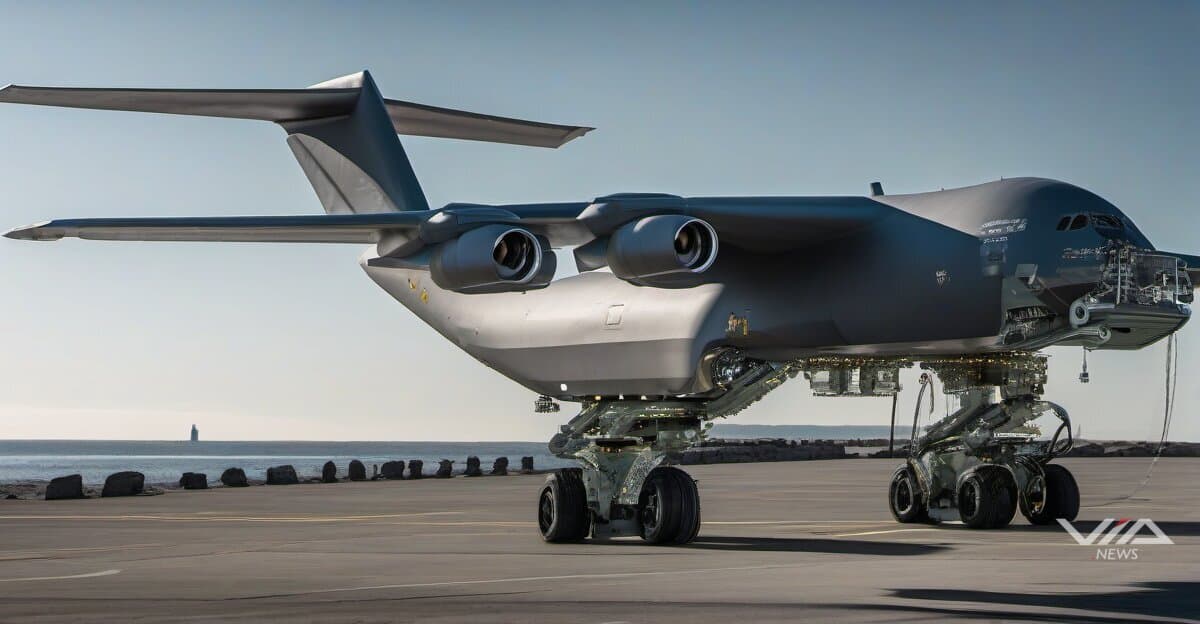
Simultaneously, Curtiss-Wright secured a contract with Boeing to supply mission computers for the C-17 Globemaster III — the Air Force's primary strategic airlifter. Mission computers sit at the nerve center of platform operations, processing sensor data, managing subsystems, and increasingly, running AI inference workloads at the edge. Curtiss-Wright's win underscores how AI-enabled compute is migrating from ground stations into the aircraft itself, a trend with compounding implications for both upgrade cycles and new platform specifications.
Anchoring both deals is Path Robotics' $300 million-plus funding round, which vaults the company into rare territory for industrial robotics startups. The scale of the raise — and the timing alongside the HII MOU — suggests investors are pricing in not just commercial manufacturing contracts, but a sustained defense procurement relationship. Path's core technology, which uses computer vision and machine learning to autonomously plan and execute complex welds without pre-programming, maps directly onto the Navy's need for flexible, high-throughput fabrication capacity.
Investment Implications
For equity investors, the pattern warrants attention. Defense procurement cycles are long and bureaucratic, but the clustering of these announcements in early 2026 is consistent with the early phases of a multi-year budget commitment. FY2026-2027 defense appropriations are expected to reflect heightened emphasis on industrial base resilience — a legislative priority that has bipartisan support and is directly accelerated by shipbuilding backlogs and aging platform fleets.
The clearest near-term beneficiaries sit in two categories. First, tier-1 integrators with established physical AI partnerships — HII and Curtiss-Wright among them — are positioned to convert R&D relationships into recurring contract revenue. Second, small- and mid-cap defense tech companies with defensible physical AI capabilities (autonomous manufacturing, robotic assembly, edge AI compute) are likely to see accelerated contract award timelines as primes seek to de-risk their supply chains.
Broader market context matters here. The convergence of constrained defense labor markets, elevated geopolitical threat perception, and maturing robotics technology has compressed what would normally be a decade-long adoption curve. The confidence signal from institutional investors — evidenced by Path Robotics' raise — suggests the market is already pricing this transition, but execution risk at the platform integration level remains the key variable to watch.
For portfolio managers tracking aerospace and defense, the question is no longer whether physical AI enters the defense industrial base. It already has. The question is which companies own the integration layer — and whether their valuations have caught up to that reality.