Monday, October 12, 2026

Armanino Foods Faces Catastrophic Risk with 50% Revenue Tied to Limited Customer Base

Armanino Foods of Distinction derives 50% of its revenue from a concentrated customer base, creating catastrophic operational risk. The food manufacturer, known for its U.S. pesto franchise and frozen pasta products, faces severe financial vulnerability if a single major customer is lost or forces contract renegotiation.

Armanino Foods Faces Catastrophic Risk with 50% Revenue Tied to Limited Customer Base
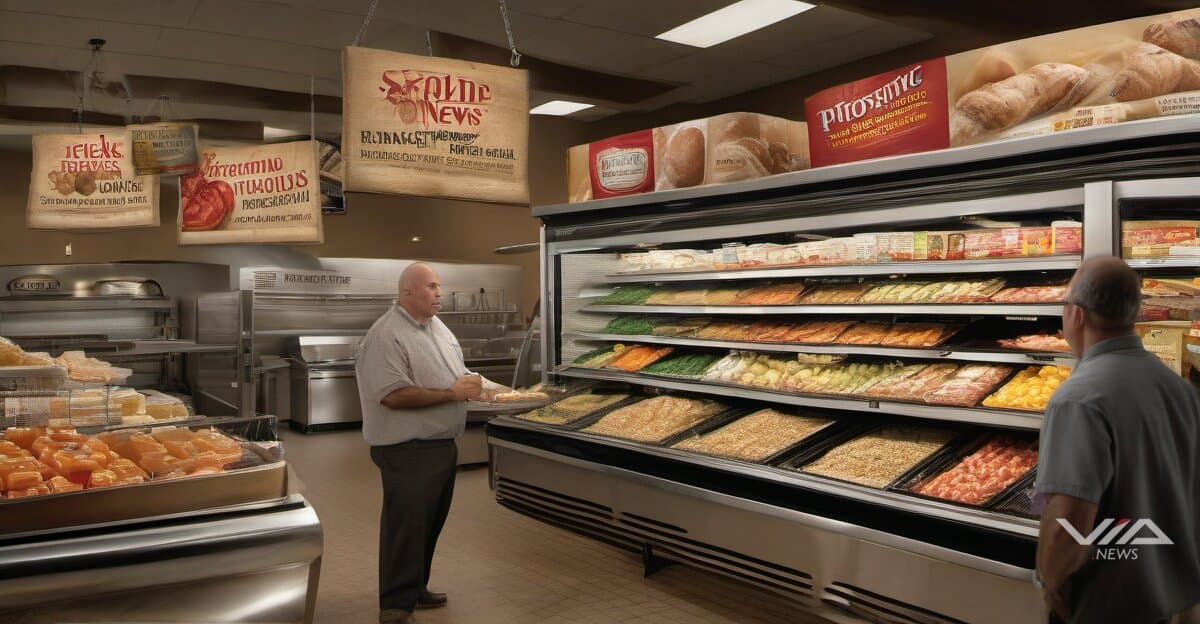
Image generated by AI for illustrative purposes. Not actual footage or photography from the reported events.

Armanino Foods of Distinction has 50% of its revenue dependent on a limited customer base, exposing the company to catastrophic risk if any major customer relationship deteriorates. The concentration level puts the frozen food manufacturer in a precarious position where losing one account or facing unfavorable contract renegotiation could destroy half its revenue stream.

The company operates in the foodservice sector with a leading U.S. pesto franchise and frozen pasta product lines. This customer concentration creates a power imbalance where major buyers can dictate terms, squeeze margins, or shift orders to competitors with minimal negotiation leverage for Armanino.

Food manufacturers face unique supply chain vulnerabilities when customer bases narrow. Unlike diversified revenue models, concentrated dependencies create operational fragility where production capacity, inventory management, and staffing levels align to specific customer demands. A single customer departure requires rapid operational restructuring that often proves financially devastating.

The risk assessment shows 70% confidence in this catastrophic threat, indicating analysts have identified concrete evidence of the revenue concentration through financial disclosures or industry data. High likelihood ratings suggest conditions exist where customer loss or contract renegotiation could materialize, not merely theoretical exposure.

Corporate risk managers classify customer concentration above 40% as severe, triggering enhanced monitoring protocols. Armanino's 50% threshold exceeds this benchmark, placing the company in a category where diversification becomes a strategic imperative rather than an optimization goal.

Food manufacturing contracts typically run multi-year terms with annual renegotiation clauses. Major buyers increasingly demand price concessions, exclusivity arrangements, or operational investments as conditions for renewal. Concentrated suppliers have limited ability to refuse these demands without risking relationship termination.

The frozen food sector has seen consolidation among both manufacturers and buyers, intensifying concentration risks. Large retailers and foodservice distributors control market access, forcing smaller manufacturers into dependent relationships that create operational vulnerability and margin compression over time.

What we know · the intelligence behind this page
Live from the substrate
What we're seeing
Agentic AI Rewires Enterprise Software: Platform Incumbents, Governance, and a Funded Startup Wave
Enterprise software is being rebuilt around autonomous AI agents. Incumbents and large platforms (SAP with its Autonomous Suite and Joule, Zeta with AthenaOS/AIM/Athena MCP, Meta with its new Enterprise Platform) are racing to own the agent layer. Meanwhile, seed and Series A money flows to finance-office and vertical startups (Dextr, Latitude, Dentira, Light), and consolidation continues through acquisitions (Tiny–Oso Cloud, Harvey–Guardrails AI). Investor commentary stresses that AI is better at disrupting around the edges of systems of record than at replacing them, that it should not be trusted with finance calculations, and that governance must be enforced by the system rather than left to agents.
Our read on the data ›
Signals we're tracking
EPKINLY Regulatory-Clinical Success Cascade
High probability of expanded label indications, additional combination approvals, and competitive positioning strength in follicular lymphoma market. Predicts positive commercial uptake and potential accelerated review for related indications.
Patterns we're watching ›
Where sources disagree
ING Group
Both facts record the same metric (shares_outstanding) for ING Group at the identical observation date (2025-12-31). FACT A states 2,902,437,688 shares; FACT B states 2,902 million shares (2,902,000,000). The difference is 437,688 shares (~0.015%). This is a genuine value conflict, though the discrepancy appears to result from FACT B rounding to the nearest million while FACT A provides the precise count.
We flag conflicts openly ›
Recently verified
✓ Checked against the original source
4,986
facts traced to their source — and we flag the ones that don't hold up.
101 entities tracked4,986 facts checked against source5,371 source documents archived
Query this data → isubstrate.com