Tuesday, August 18, 2026
What we know · the intelligence behind this page
Live from the substrate
What we're seeing
Enterprise AI Agent Rollout Outpaces Data Trust and Readiness
Enterprise adoption of agentic AI is accelerating fast — Siemens deepening its NVIDIA partnership for self-verifying agentic AI in chip design, Manulife expanding its Microsoft AI-governance partnership, and a wave of infrastructure launches (NVIDIA GPU-accelerated data processing, Dell exascale storage, new AI chip generations) — even as a new Google Cloud survey shows the underlying data foundation isn't ready: companies have AI access to only 45% of their data on average, data laggards see access fall to 30% or less, and only about half of organizations trust their AI agents' decisions. Meanwhile, insider selling at enterprise-AI bellwether C3.ai (CEO Thomas Siebel offloading $4.8M in shares) hints at investor caution layered under the adoption hype.
Our read on the data ›
Signals we're tracking
Satellite-Terrestrial Network Integration Acceleration
Increased investment and launches in hybrid satellite-cellular networks across telecom industry; competitive responses from other carriers; regulatory activity around satellite spectrum; expansion of emergency/rural connectivity use cases
Patterns we're watching ›
Where sources disagree
JPMorgan Chase & Co.
Both facts report JPMorgan Chase & Co.'s revenue for the same fiscal period (FY 2025) with the same observation date (2025-12-31), but with different values: $182.447 billion vs. $185 billion. The ~1.4% difference ($2.553 billion) is too large to be explained by rounding alone and represents conflicting data for the identical time period.
We flag conflicts openly ›
Recently verified
Checked against the original source
4,812
facts traced to their source — and we flag the ones that don't hold up.
101 entities tracked4,812 facts checked against source5,219 source documents archived
Work with this data → vianewsagency.com

Serve Robotics Raises 2026 Guidance Following AI Acquisition as Commercial Robotics Sector Consolidates

Serve Robotics increased its 2026 revenue guidance after acquiring AI foundation model capabilities, signaling commercial robotics' shift toward embodied AI. The security robotics segment shows 35%-80% cost advantages over traditional guarding in the $50B US market. Competing priorities between commercial expansion and defense AI applications are creating strategic tensions across the sector.

Source Trace Score3 source documents3 with a live linkVerifiability: Strong
Serve Robotics Raises 2026 Guidance Following AI Acquisition as Commercial Robotics Sector Consolidates
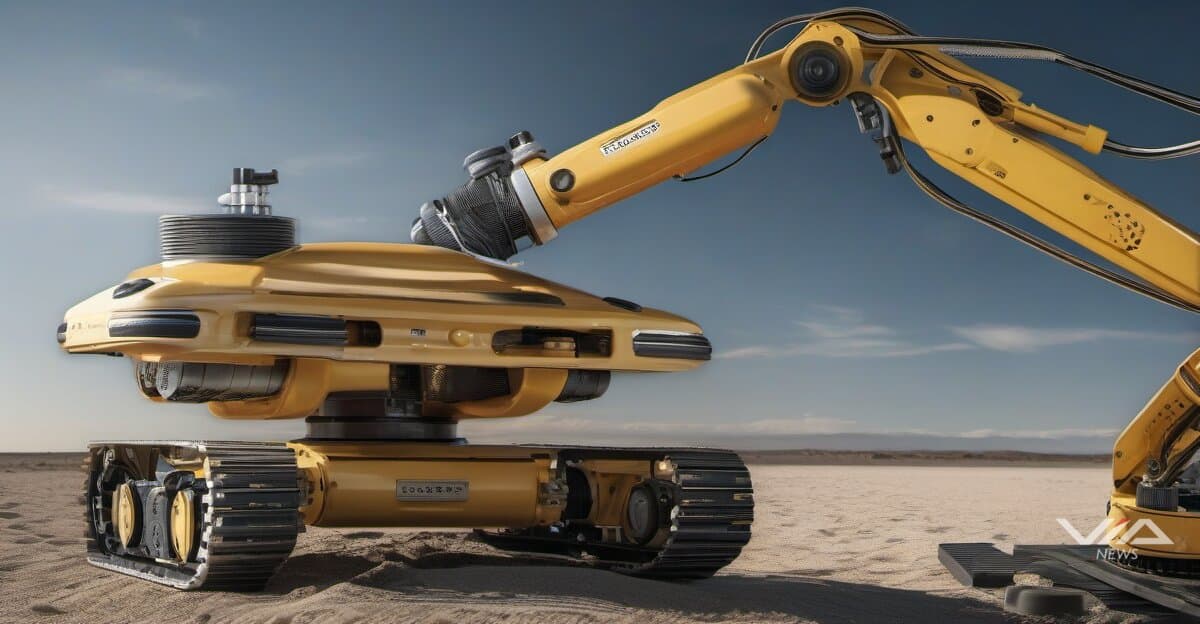
Image generated by AI for illustrative purposes. Not actual footage or photography from the reported events.

Serve Robotics raised its full-year guidance following an acquisition that adds AI foundation model capabilities to its autonomous delivery platform. The company's upward revision reflects growing investor confidence in commercial robotics firms integrating advanced AI architectures.

The broader commercial robotics market is experiencing consolidation as companies pursue embodied AI strategies. Artificial Intelligence Technology Solutions announced RADSight 2.0, cutting power consumption by over 50% compared to previous security robot configurations. The company targets the $50B US security and guarding services industry with solutions offering 35%-80% cost savings versus manned alternatives.

RAD's recurring revenue model centers on Fortune 500 deployments, where individual clients generate multiple reorders over time. The company is converting sales pipeline opportunities into active deployments as enterprises shift security budgets from personnel to autonomous systems.

Market dynamics show robotics companies racing to embed foundation models directly into hardware platforms rather than relying on cloud-based AI. This architectural shift reduces latency and operational costs while enabling offline functionality. Serve's acquisition positions it to compete in delivery robotics with on-device intelligence rather than constant connectivity requirements.

The commercial sector's momentum contrasts with tensions in defense AI applications. OpenAI's expanded Pentagon partnerships triggered executive departures over ethical concerns about military deployments. These frictions highlight diverging paths: commercial robotics pursues enterprise efficiency gains while defense applications face internal resistance.

Valuation impacts are emerging as investors price the commercial robotics opportunity. Companies demonstrating recurring revenue conversion and reduced unit economics through AI integration command premium multiples. RAD's power efficiency gains and Serve's raised guidance exemplify operational metrics driving investor appetite.

The security robotics segment particularly benefits from labor cost pressures. With 35%-80% savings potential, enterprise adoption accelerates as return-on-investment timelines compress. Fortune 500 pilots are transitioning to volume deployments, validating the commercial model.

Foundation model integration represents the next competitive battleground. Companies acquiring AI capabilities in-house versus licensing external models are betting on long-term margin advantages and intellectual property control as embodied AI becomes table stakes in commercial robotics.

Source documents

Via News is a conduit. We point to the source documents behind this report — we don't replace them. Trace any claim to its source and decide what to trust. How we source

Source Trace Score3 source documents3 with a live linkVerifiability: Strong
  1. [1]News articleYahoo Finance· January 26, 2026
    AITX's RAD Unveils RADSight 2.0 as the Next Evolution of Its Video Management Platform
  2. [2]News articleYahoo Finance· March 11, 2026
    Serve Robotics Announces Fourth Quarter and Full Year 2025 Results
  3. [3]News articleYahoo Finance· March 9, 2026
    Tech stocks today: OpenAI's robotics leader resigns after Pentagon deal, Anthropic prepares to battle ban

In this story · Knowledge Files