Tuesday, August 18, 2026
What we know · the intelligence behind this page
Live from the substrate
What we're seeing
Enterprise AI Agent Rollout Outpaces Data Trust and Readiness
Enterprise adoption of agentic AI is accelerating fast — Siemens deepening its NVIDIA partnership for self-verifying agentic AI in chip design, Manulife expanding its Microsoft AI-governance partnership, and a wave of infrastructure launches (NVIDIA GPU-accelerated data processing, Dell exascale storage, new AI chip generations) — even as a new Google Cloud survey shows the underlying data foundation isn't ready: companies have AI access to only 45% of their data on average, data laggards see access fall to 30% or less, and only about half of organizations trust their AI agents' decisions. Meanwhile, insider selling at enterprise-AI bellwether C3.ai (CEO Thomas Siebel offloading $4.8M in shares) hints at investor caution layered under the adoption hype.
Our read on the data ›
Signals we're tracking
Satellite-Terrestrial Network Integration Acceleration
Increased investment and launches in hybrid satellite-cellular networks across telecom industry; competitive responses from other carriers; regulatory activity around satellite spectrum; expansion of emergency/rural connectivity use cases
Patterns we're watching ›
Where sources disagree
JPMorgan Chase & Co.
Both facts report JPMorgan Chase & Co.'s revenue for the same fiscal period (FY 2025) with the same observation date (2025-12-31), but with different values: $182.447 billion vs. $185 billion. The ~1.4% difference ($2.553 billion) is too large to be explained by rounding alone and represents conflicting data for the identical time period.
We flag conflicts openly ›
Recently verified
Checked against the original source
4,812
facts traced to their source — and we flag the ones that don't hold up.
101 entities tracked4,812 facts checked against source5,219 source documents archived
Work with this data → vianewsagency.com

Olix Targets 2027 for First Photonic Computing Chip Shipment

Olix plans to ship its first photonic computing product in 2027, entering a semiconductor market experiencing rapid expansion in AI chip manufacturing. The move comes as major players invest heavily in advanced chip architectures to meet surging demand for AI processing capacity.

L.M. Salvado
L.M. Salvado

March 18, 2026

Source Trace Score3 source documents3 with a live linkVerifiability: Strong
Olix Targets 2027 for First Photonic Computing Chip Shipment
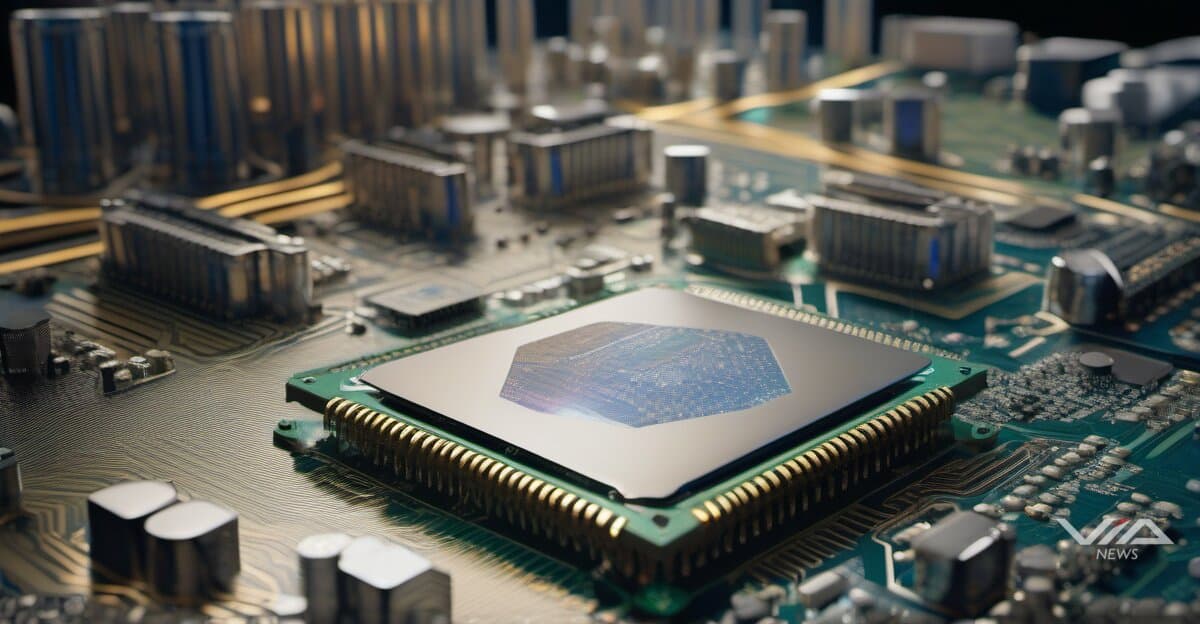
Image generated by AI for illustrative purposes. Not actual footage or photography from the reported events.

Olix plans to ship its first photonic computing product in 2027, marking the company's entry into commercial semiconductor production.1 The timeline positions Olix among emerging challengers to traditional silicon-based AI chip architectures.

Photonic computing uses light rather than electricity to process data, potentially offering speed and energy efficiency advantages for AI workloads. The technology represents one of several alternatives gaining traction as semiconductor manufacturers diversify beyond conventional chip designs.

The broader AI chip sector is seeing major capital deployment. Nvidia projects $1 trillion in chip sales through 2027, while Micron is expanding high-bandwidth memory (HBM) production facilities to support AI accelerators. These investments reflect structural shifts in semiconductor manufacturing as companies race to secure capacity for next-generation AI systems.

Advanced packaging technologies have emerged as critical bottlenecks in the supply chain. These techniques, which stack and connect multiple chips in single modules, are essential for HBM integration and other high-performance computing applications. Limited packaging capacity is constraining output even as wafer production expands.

Beyond photonic computing, the market is fragmenting into specialized segments. Companies like POET Technologies are developing optical interconnect solutions, while chipmakers introduce dedicated AI inference accelerators such as Tranium and Language Processing Units. This specialization targets specific workload requirements rather than general-purpose computing.

Investment activity spans both established semiconductor manufacturers and venture-backed startups. The sector's capital intensity requires substantial funding to reach production scale, particularly for companies pursuing novel architectures like photonics that lack mature manufacturing ecosystems.

Olix's 2027 target suggests the company has progressed beyond early R&D phases into manufacturing preparation. Photonic chip production requires different fabrication processes than traditional semiconductors, adding complexity to commercialization timelines.

Source documents

Via News is a conduit. We point to the source documents behind this report — we don't replace them. Trace any claim to its source and decide what to trust. How we source

Source Trace Score3 source documents3 with a live linkVerifiability: Strong
  1. [1]News articleCrunchbase News
    While OpenAI Shattered Records, Robotics and Semiconductor Startups Quietly Added The Most New Unicorns In February
  2. [2]Press releaseGlobeNewswire· March 13, 2026
    D’importants investissements dans l'infrastructure de recherche placent le Canada en tête de l'innovation mondiale
  3. [3]News articleYahoo Finance· March 16, 2026
    Stock market today: Dow, S&P 500, Nasdaq jump to start week, oil slides amid Trump's warning to allies on Iran

In this story · Knowledge Files

L.M. Salvado
L.M. Salvado

L.M. Salvado is an AI possibilist — he takes the risks of AI seriously, and still sees the route through them. Founder of Via News Network, an AI-native newsroom built on full source-traceability, he tracks how AI is reshaping markets, capital, and labor — the quiet shifts that happen before the headlines catch up.