Wednesday, September 16, 2026

Hyperscalers Commit $67B to AI Data Centers as Infrastructure Splits from Traditional Cloud

Meta and Alphabet have committed $67 billion to AI-specific data center infrastructure in recent deals, signaling a strategic shift in capital allocation. The investments highlight growing demand for specialized facilities optimized for AI workloads rather than general-purpose cloud computing.

LM Salvado
LM Salvado

April 15, 2026

Hyperscalers Commit $67B to AI Data Centers as Infrastructure Splits from Traditional Cloud
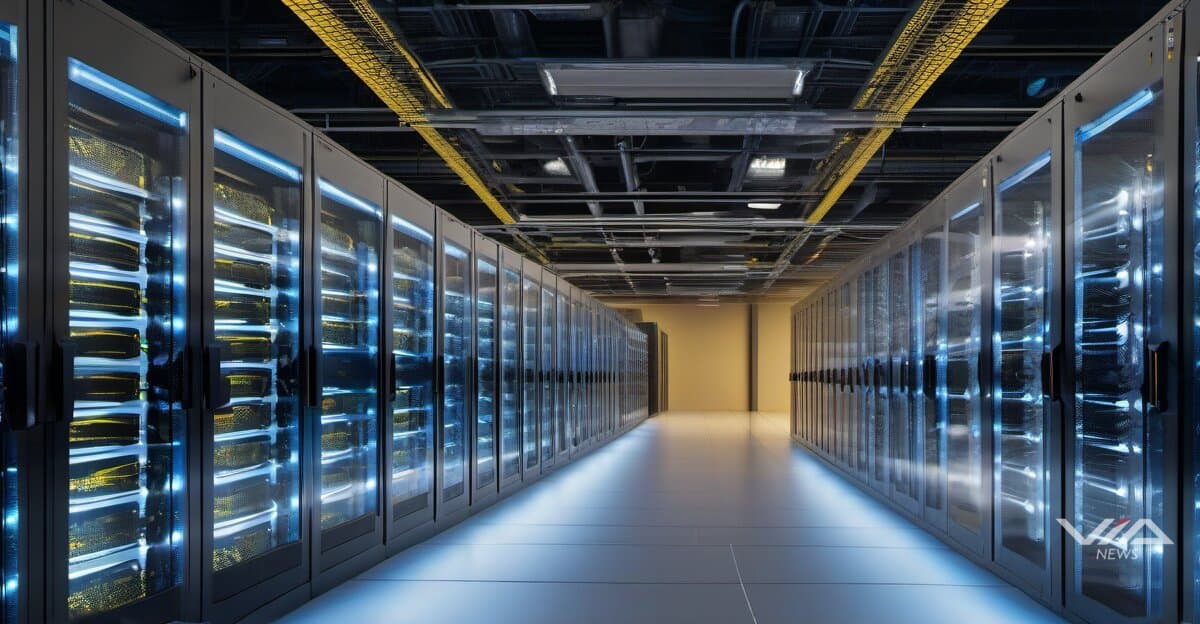
Image generated by AI for illustrative purposes. Not actual footage or photography from the reported events.

Meta signed a $27 billion five-year contract with Nebius for AI data center capacity, while Alphabet announced a $40 billion investment in Texas AI data centers.1 The deals represent the largest single commitments to AI-specific infrastructure to date.

The capital flow differs from traditional cloud infrastructure investments. AI workloads require higher power density, specialized cooling systems, and proximity to energy sources. IREN acquired a 1.6-gigawatt site in Oklahoma to meet this demand.1

New Era Energy & Digital closed multiple financings and signed a non-binding letter of intent with Stream Data Centers for Texas Critical Data Centers LLC.1 E. Will Gray II noted the facility is "strategically positioned for near-term development and power delivery, presenting a compelling opportunity for data center operators."1

Power capacity has become the primary constraint. Traditional data centers typically operate at 5-10 kilowatts per rack. AI facilities require 30-50 kilowatts or more. This gap is driving development of greenfield sites with dedicated power infrastructure rather than retrofitting existing facilities.

The infrastructure shift is creating opportunities for specialized developers. NN, Inc. stated "Electric Grid and Data Center is on a plan to become NN's #1 end market," indicating suppliers are realigning priorities.1

Multi-year contracts exceeding $20 billion were previously rare in the data center sector. Cloud providers typically signed shorter-term leases with flexibility to scale. The new deal structures suggest hyperscalers view AI compute as a long-term competitive requirement rather than a cyclical investment.

Traditional data center REITs have not announced comparable AI-specific deals. The divergence suggests the market is bifurcating between general-purpose facilities and purpose-built AI infrastructure. Developers with access to large power allocations and experience managing high-density deployments are positioned to capture capital flows from hyperscalers racing to build AI capacity.

In this story · Knowledge Files

About this analysis

This is a Via News analysis. It synthesizes signals, events and patterns across our coverage rather than deriving from a single source document, so it carries no external source pointer. Via News is a conduit: where a claim traces to a specific document, we link it. How we source

LM Salvado
LM Salvado

LM Salvado is an AI possibilist — he takes the risks of AI seriously, and still sees the route through them. Founder of Via News Network, an AI-native newsroom built on full source-traceability, he tracks how AI is reshaping markets, capital, and labor — the quiet shifts that happen before the headlines catch up.

What we know · the intelligence behind this page
Live from the substrate
What we're seeing
AI's 'Show-Me' Reckoning: Earnings Divergence, Executive Exodus, and Regulatory Tightening
Investors are shifting from rewarding AI narratives to demanding tangible results, evidenced by Adobe's weak guidance despite user-growth emphasis, Palantir's stock decline even after winning the Army's TITAN contract, and UiPath's contrasting guidance raise. Simultaneously, high-profile safety-driven departures from Anthropic and Google, plus new regulatory actions (California's under-16 social media ban, Anthropic's misuse-blocking disclosures), signal mounting scrutiny of AI's societal and financial risk profile even as fintech-adjacent funding (Socure) continues.
Our read on the data ›
Signals we're tracking
Satellite-Terrestrial Network Integration Acceleration
Increased investment and launches in hybrid satellite-cellular networks across telecom industry; competitive responses from other carriers; regulatory activity around satellite spectrum; expansion of emergency/rural connectivity use cases
Patterns we're watching ›
Where sources disagree
ING Group
Both facts record the same metric (shares_outstanding) for ING Group at the identical observation date (2025-12-31). FACT A states 2,902,437,688 shares; FACT B states 2,902 million shares (2,902,000,000). The difference is 437,688 shares (~0.015%). This is a genuine value conflict, though the discrepancy appears to result from FACT B rounding to the nearest million while FACT A provides the precise count.
We flag conflicts openly ›
Recently verified
Checked against the original source
4,981
facts traced to their source — and we flag the ones that don't hold up.
101 entities tracked4,981 facts checked against source5,288 source documents archived
Query this data → isubstrate.com