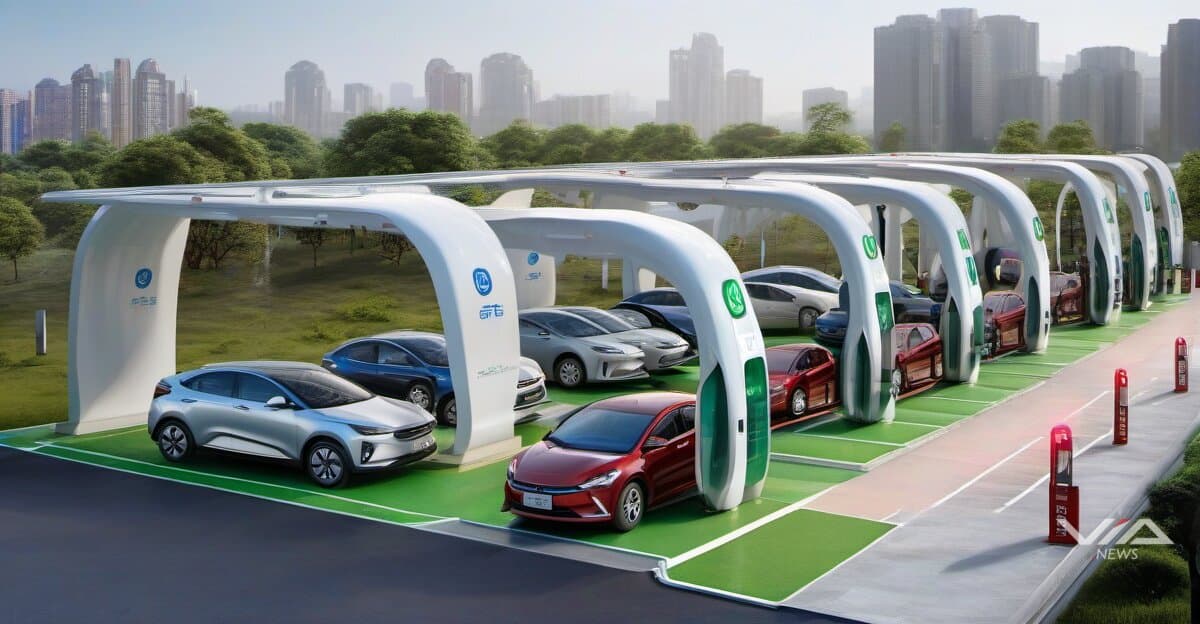
BYD is targeting 20,000 Flash Charging stations in China by the end of 2026, each rated at up to 1,500 kW.1 Tesla's Superchargers deliver roughly 500 kW. That three-to-one speed gap, combined with BYD's faster network rollout, reshapes the competitive calculus in China's EV market.
The infrastructure push follows BYD's overtaking of Tesla in global full-year EV sales in 2025.1 The charging network represents a deliberate capital allocation shift: building an energy ecosystem around the vehicle, not just the vehicle itself.
BYD partnered with Sinopec, China's state-owned oil giant, to accelerate deployment.1 The deal gives BYD access to Sinopec's existing nationwide fuel station real estate, cutting land acquisition costs and compressing build timelines. Leveraging incumbent infrastructure is a capital-efficient way to scale a greenfield network.
Tesla's Supercharger count in China is growing at approximately 18% annually.1 At BYD's current expansion rate, analysts project the company will match Tesla's China station count within the year. If BYD reaches 15,000+ stations by Q4 2026, it effectively ends Tesla's charging network advantage in the market.1
The revenue logic is straightforward. A proprietary charging network generates fees per session, data on driver behavior, and deeper ecosystem lock-in. For BYD, which already dominates vehicle sales in China, infrastructure adds a recurring revenue layer that vehicle transactions alone cannot provide.
Speed matters commercially. At 1,500 kW, BYD's Flash Chargers can add significant range in minutes, reducing the dwell-time cost for drivers. Faster charging makes the network more attractive to non-BYD EV owners, broadening the potential revenue base beyond BYD's own customer fleet.
Tesla's China market position is the variable to watch. If BYD's network parity coincides with continued Tesla share erosion in H2 2026, infrastructure will have proved as decisive as product in determining market leadership. The Sinopec partnership is the structural bet: China's energy transition running through BYD's charging rails, not a foreign competitor's.