Sunday, September 27, 2026

AI Datacenter Optical Switching Orders Surge as Tech Giants Race to Scale Training Clusters

Major purchase orders for co-packaged optics lasers and optical circuit switches signal accelerating enterprise investment in AI infrastructure. The scaling reflects growing demand for high-bandwidth interconnects capable of supporting exponentially larger AI training clusters and inference systems.

AI Datacenter Optical Switching Orders Surge as Tech Giants Race to Scale Training Clusters
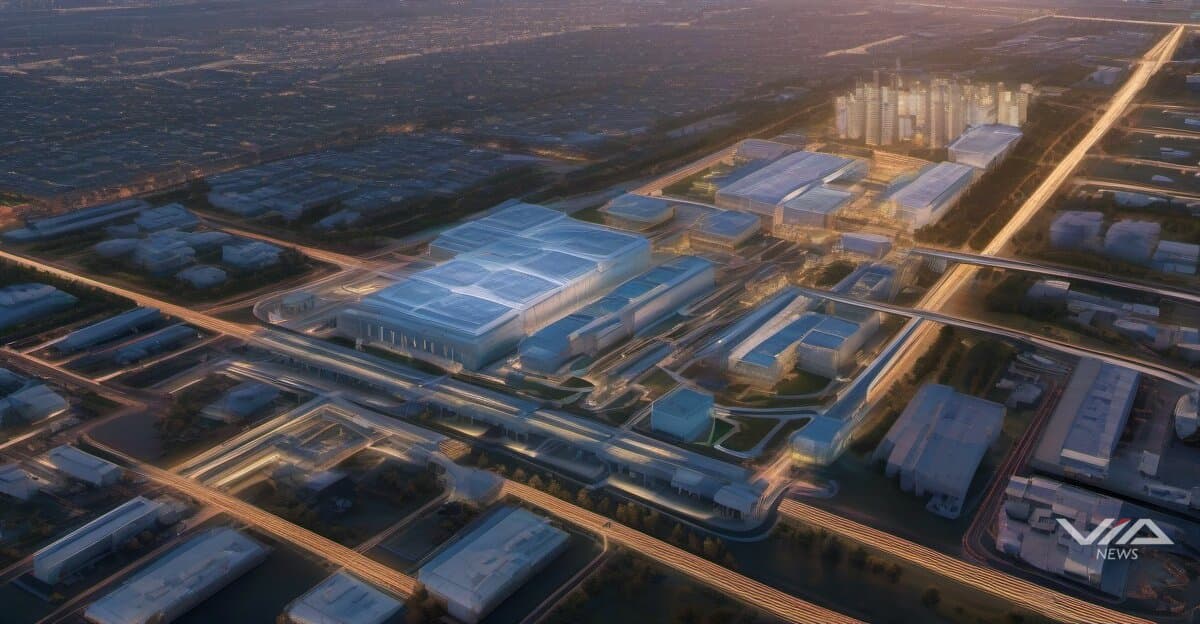
Image generated by AI for illustrative purposes. Not actual footage or photography from the reported events.

Technology companies are placing significant purchase orders for optical circuit switch equipment and co-packaged optics lasers, indicating a major capital cycle in AI datacenter infrastructure.

The procurement wave centers on optical switching fabrics designed to connect GPUs in large-scale training clusters. Co-packaged optics technology integrates laser components directly with switch silicon, reducing power consumption and latency compared to traditional pluggable transceivers.

Industry analysts note the purchases align with announced expansions of AI training infrastructure by hyperscale cloud providers. Current-generation AI models require thousands of interconnected GPUs, creating bandwidth bottlenecks that optical switching addresses.

The commercial deployment represents a shift from research prototypes to volume production. Optical circuit switches can reconfigure datacenter network topology in microseconds, enabling dynamic bandwidth allocation across training workloads.

Purchase orders for CPO lasers specifically suggest buyers are moving toward next-generation optical interconnect standards. The technology enables terabit-per-second link speeds while reducing the physical footprint and energy costs of datacenter networking equipment.

Network equipment suppliers report customer interest spans both new datacenter construction and retrofit projects. Existing facilities face constraints upgrading to larger GPU clusters without optical switching infrastructure.

The procurement pattern indicates enterprise AI spending is accelerating beyond compute hardware into supporting infrastructure. Optical interconnects represent 15-20% of total datacenter capital expenditure for large AI training facilities.

Several major technology companies have disclosed plans to increase AI infrastructure investment through 2026. The optical switching orders provide concrete evidence of capital deployment following those announcements.

Supply chain contacts report lead times for optical switching equipment extending to 6-9 months due to order volumes. Laser component manufacturers are expanding production capacity to meet demand projections.

What we know · the intelligence behind this page
Live from the substrate
What we're seeing
Vertical AI Agents Attract a Funding Wave Across Fintech-Adjacent Industries
A cluster of AI-native startups applying autonomous agents to narrow, operational problems — hotel front-desk staffing (Dextr AI), identity/fraud risk for financial institutions (Baselayer), insurance distribution (Napo, Connie Health, MGT Insurance) — closed seed-to-Series A rounds within days of each other in September 2026, with CB Insights running a coordinated CEO interview series to spotlight them. The pattern points to agentic AI maturing from generic chat tools into vertical, revenue-generating products, with identity verification for AI agents themselves (Baselayer) emerging as a new fintech infrastructure category responding directly to AI-driven fraud risk.
Our read on the data ›
Signals we're tracking
Satellite-Terrestrial Network Integration Acceleration
Increased investment and launches in hybrid satellite-cellular networks across telecom industry; competitive responses from other carriers; regulatory activity around satellite spectrum; expansion of emergency/rural connectivity use cases
Patterns we're watching ›
Where sources disagree
ING Group
Both facts record the same metric (shares_outstanding) for ING Group at the identical observation date (2025-12-31). FACT A states 2,902,437,688 shares; FACT B states 2,902 million shares (2,902,000,000). The difference is 437,688 shares (~0.015%). This is a genuine value conflict, though the discrepancy appears to result from FACT B rounding to the nearest million while FACT A provides the precise count.
We flag conflicts openly ›
Recently verified
✓ Checked against the original source
4,984
facts traced to their source — and we flag the ones that don't hold up.
101 entities tracked4,984 facts checked against source5,306 source documents archived
Query this data → isubstrate.com