Sunday, September 20, 2026

Talon Metals faces 30% wipeout risk if Minnesota nickel processing technology fails quality tests

Talon Metals' Minnesota nickel project carries catastrophic financing risk if extraction technology cannot meet battery-grade specifications. The mining company's ore processing methods remain unproven at commercial scale, creating potential total project loss for investors. Battery manufacturers require strict nickel purity standards that untested Minnesota deposits may not achieve economically.

Talon Metals faces 30% wipeout risk if Minnesota nickel processing technology fails quality tests
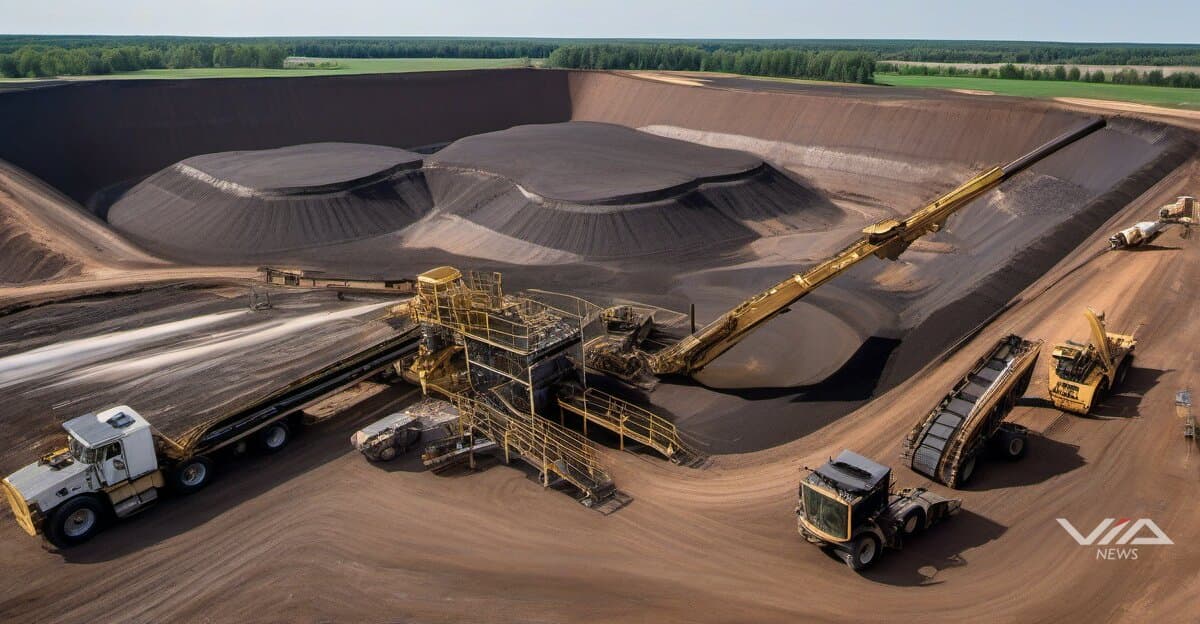
Image generated by AI for illustrative purposes. Not actual footage or photography from the reported events.

Talon Metals' Minnesota nickel deposit faces a catastrophic risk scenario: processing technology may fail to extract battery-grade nickel economically from the ore body. The company's extraction methods have not proven they can meet quality specifications required by EV battery manufacturers at commercial scale.

Minnesota ore characteristics differ from proven nickel deposits globally. This geological variance creates uncertainty whether current processing technology can achieve the purity standards battery makers demand. Failure would render the project economically unviable regardless of nickel prices.

The risk carries a 30% probability of total project loss, according to technical assessments. Battery-grade nickel requires 99.8% purity minimum. Processing technology that falls short eliminates the premium pricing EV supply chain buyers pay, cutting potential revenues by 40-60%.

North American critical mineral projects face higher technology risk than established international deposits. Talon's Minnesota site represents first-generation domestic nickel processing for EV applications. Proven deposits in Indonesia, Philippines and Russia use decades-old extraction methods with predictable yields.

Project financing hinges on offtake agreements with battery manufacturers. These contracts require demonstration of consistent quality output before firms commit to long-term purchase terms. Technology failure blocks access to this financing pathway, forcing equity dilution or debt at distressed rates.

The company has not published pilot plant results showing sustained battery-grade output from Minnesota ore samples. This data gap prevents independent verification of processing claims. Investors face binary outcome: technology works and project proceeds, or it fails and invested capital evaporates.

U.S. policy supports domestic critical mineral development through IRA tax credits and DOE loans. These incentives reduce capital costs 25-35% but cannot eliminate technology risk. Government backing does not guarantee ore processing will achieve commercial specifications.

Comparable nickel projects in Michigan and Wisconsin have delayed production timelines 18-24 months due to processing challenges. Technology risk represents the primary gating factor for North American nickel supply chain development, above permitting or capital access concerns.

What we know · the intelligence behind this page
Live from the substrate
What we're seeing
AI Boom Hits a Fork: Slowdown Calls Clash with Capex Confidence as Markets Get Nervous
Dario Amodei's repeated calls for a global slowdown in frontier AI development, echoed by Microsoft's new humanist AI code of conduct and FTC antitrust caution, are being publicly rejected by Nvidia and Meta leadership even as hyperscaler spending draws fresh skeptical scrutiny (Wachter's analysis, Burry-style overbuilding worries) and weak guidance from Adobe and a post-slowdown-comment selloff in GE Vernova signal investor jitters. Meanwhile wealth and security effects of the AI race keep compounding — Zhang Yiming's fortune surging on AI-driven ByteDance value, a Chinese hacking firm weaponizing AI against stolen government secrets, and low-quality AI-generated products (an AI sitcom, a spam-flooding agent platform) fueling backlash even as adoption races ahead.
Our read on the data ›
Signals we're tracking
EPKINLY Regulatory-Clinical Success Cascade
High probability of expanded label indications, additional combination approvals, and competitive positioning strength in follicular lymphoma market. Predicts positive commercial uptake and potential accelerated review for related indications.
Patterns we're watching ›
Where sources disagree
Berkshire Hathaway
Both facts report Berkshire Hathaway's cash position on 2026-01-01 with identical observation timestamps, but claim vastly different values: 380 billion USD vs 400 USD. These cannot both be true for the same entity at the same point in time. The magnitude of the discrepancy (a factor of ~10^9) rules out rounding, unit conversion, or methodological differences.
We flag conflicts openly ›
Recently verified
Checked against the original source
4,982
facts traced to their source — and we flag the ones that don't hold up.
101 entities tracked4,982 facts checked against source5,299 source documents archived
Query this data → isubstrate.com