Tuesday, August 18, 2026
What we know · the intelligence behind this page
Live from the substrate
What we're seeing
Enterprise AI Agent Rollout Outpaces Data Trust and Readiness
Enterprise adoption of agentic AI is accelerating fast — Siemens deepening its NVIDIA partnership for self-verifying agentic AI in chip design, Manulife expanding its Microsoft AI-governance partnership, and a wave of infrastructure launches (NVIDIA GPU-accelerated data processing, Dell exascale storage, new AI chip generations) — even as a new Google Cloud survey shows the underlying data foundation isn't ready: companies have AI access to only 45% of their data on average, data laggards see access fall to 30% or less, and only about half of organizations trust their AI agents' decisions. Meanwhile, insider selling at enterprise-AI bellwether C3.ai (CEO Thomas Siebel offloading $4.8M in shares) hints at investor caution layered under the adoption hype.
Our read on the data ›
Signals we're tracking
Satellite-Terrestrial Network Integration Acceleration
Increased investment and launches in hybrid satellite-cellular networks across telecom industry; competitive responses from other carriers; regulatory activity around satellite spectrum; expansion of emergency/rural connectivity use cases
Patterns we're watching ›
Where sources disagree
JPMorgan Chase & Co.
Both facts report JPMorgan Chase & Co.'s revenue for the same fiscal period (FY 2025) with the same observation date (2025-12-31), but with different values: $182.447 billion vs. $185 billion. The ~1.4% difference ($2.553 billion) is too large to be explained by rounding alone and represents conflicting data for the identical time period.
We flag conflicts openly ›
Recently verified
Checked against the original source
4,812
facts traced to their source — and we flag the ones that don't hold up.
101 entities tracked4,812 facts checked against source5,219 source documents archived
Work with this data → vianewsagency.com

Semiconductor Stocks Fall on Weak Q1 Guidance From Chipmakers

Semiconductor manufacturers issued weak earnings guidance for early 2026, sending chip stocks lower and dragging the S&P 500 to a two-week low on November 6, 2025. Microchip Technology forecast Q3 adjusted EPS of 40 cents, while Lattice Semiconductor projected Q1 revenue of $158-172 million and AXT Inc estimated Q4 revenue of $22.5-23.5 million.

Semiconductor Stocks Fall on Weak Q1 Guidance From Chipmakers
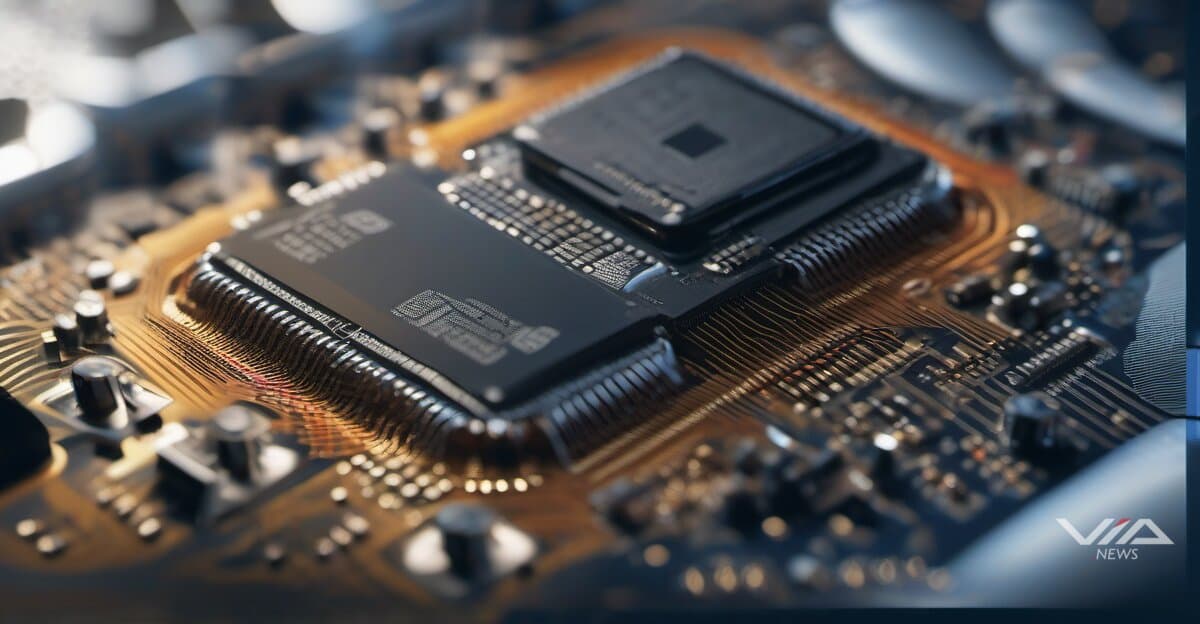
Image generated by AI for illustrative purposes. Not actual footage or photography from the reported events.

Semiconductor stocks declined sharply on November 6, 2025, pulling the S&P 500 to a two-week low as chipmakers issued conservative earnings forecasts.

Microchip Technology projected Q3 adjusted earnings per share of 40 cents. Lattice Semiconductor forecast Q1 2026 revenue between $158 million and $172 million. AXT Inc estimated Q4 revenue of $22.5 million to $23.5 million.

The weak guidance suggests semiconductor demand may be cooling after two years of AI-driven growth. Industry analysts are monitoring whether the downturn reflects cyclical demand patterns or emerging overcapacity in AI infrastructure.

Major AI chip stocks face scrutiny through Q1 2026. NVIDIA, AMD, and Intel valuations could shift if revenue warnings spread beyond smaller chipmakers. Corporate spending on AI infrastructure has driven semiconductor growth since 2023, but overcapacity concerns are mounting.

The November selloff marks a potential inflection point for tech sector financial health. Semiconductor stocks have outperformed broader markets since early 2023 on AI infrastructure buildout. Any sustained weakness could signal reduced corporate capital expenditure on data center hardware.

Investment analysts are tracking correlation between AI infrastructure spending announcements and semiconductor valuations. If major cloud providers reduce chip orders, the sector could face extended pressure on margins and revenue growth.

The guidance pattern across multiple chipmakers strengthens the case for cyclical headwinds rather than company-specific issues. Microchip, Lattice, and AXT operate in different semiconductor segments, suggesting broader demand softness.

Tech sector earnings through Q1 2026 will test whether AI hardware demand remains robust or if the market has overestimated deployment timelines. Corporate earnings from semiconductor manufacturers will provide leading indicators for AI infrastructure investment trends.

In this story · Knowledge Files