
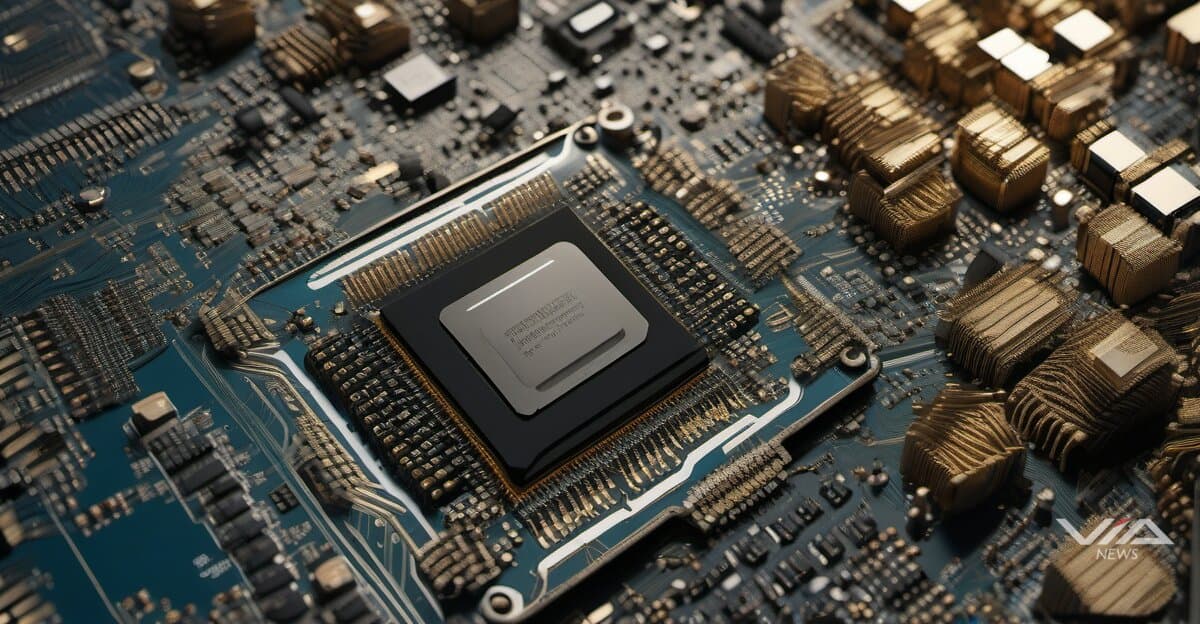
The semiconductor industry faces DRAM and NAND shortages of 3-4% persisting through 2026, driven by AI infrastructure demand outstripping production capacity. High-bandwidth memory requirements for AI workloads are the primary constraint as companies race to deploy data center hardware.
New fabrication plants cost $15 billion or more and require 18 months minimum to construct and operationalize. This timeline gap ensures capacity arrives after demand peaks, exacerbating cyclical supply crunches. DRAM manufacturers remain cautious about expansion, typically investing only during boom periods when cash flow supports massive capital outlays.
Nvidia's AI infrastructure buildout anchors current demand, pushing semiconductor indices to record highs despite supply constraints. The company's data center GPU platforms require increasingly sophisticated memory architectures, intensifying pressure on DRAM and HBM (high-bandwidth memory) suppliers.
Intel's 18A process node represents a strategic shift to secure advanced packaging and memory integration capabilities. The technology targets AI accelerator production, positioning Intel to capture infrastructure spending as hyperscalers expand capacity. Intel's Core Ultra Series 3 processors will ship in over 200 PC designs globally, marking the company's broadest AI PC platform launch.
Micron's US fab expansion directly addresses supply security concerns for domestic tech companies. The investment diversifies production geography while adding capacity specifically designed for AI-optimized memory products. Lead times for specialized AI memory components now extend 12-18 months, forcing companies to commit capital earlier in product cycles.
Camtek Ltd. reported record Q4 results and projects double-digit revenue growth in 2026, expecting around $120 million in Q1 with acceleration in the second half. The inspection equipment supplier's guidance reflects sustained capital spending across semiconductor manufacturing.
Thomas Coughlin, industry analyst, notes DRAM's cyclical nature creates boom-bust patterns that new capacity cannot smooth. Firms lack both capital and willingness to expand during downturns, guaranteeing supply constraints when demand recovers.
Tech companies navigating this environment face strategic choices: secure long-term supply agreements at premium pricing, invest in memory architecture efficiency to reduce per-unit requirements, or accept product launch delays. The 3-4% gap appears modest but translates to billions in constrained AI infrastructure deployment through 2026.