Saturday, October 10, 2026

Gulfport Energy leans on balance sheet for Ohio land deal as gas prices swing

Gulfport Energy's Utica bolt-on strategy, including a recent Ohio state land lease acquisition, depends on CEO Nick Dell'Osso's balance sheet strength. Natural gas price volatility threatens the cash flow that funds it, a risk assessment rates as major severity with medium likelihood.

LM Salvado
LM Salvado

July 4, 2026

Gulfport Energy leans on balance sheet for Ohio land deal as gas prices swing
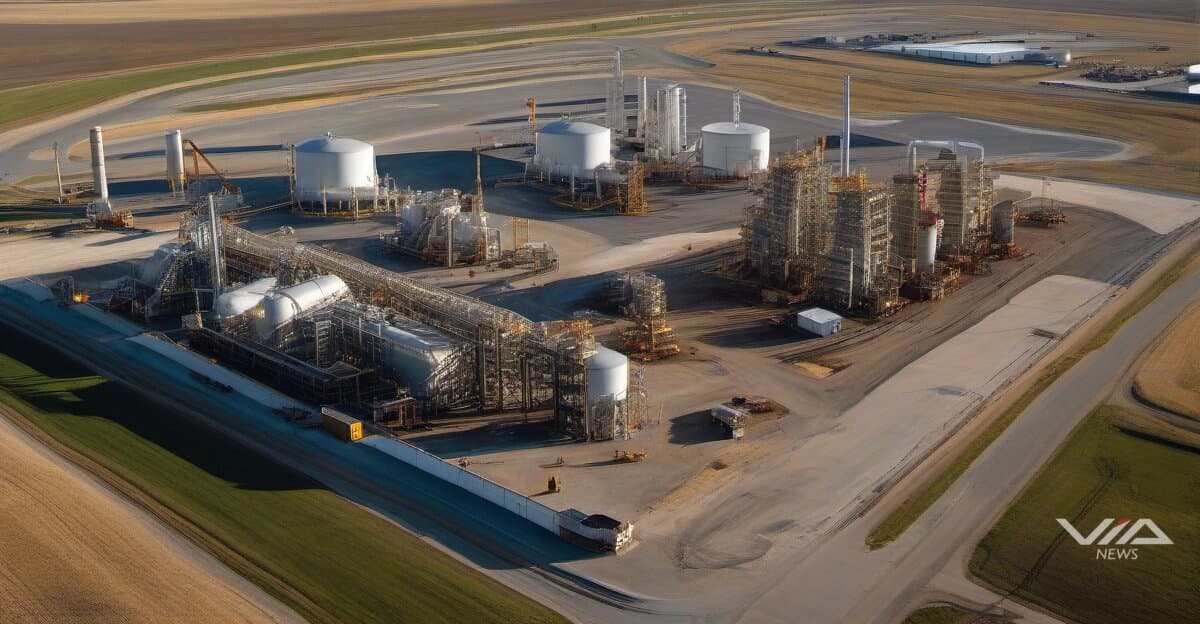
Image generated by AI for illustrative purposes. Not actual footage or photography from the reported events.

Gulfport Energy's balance sheet is the funding engine behind CEO Nick Dell'Osso's continued Utica bolt-on acquisitions, including its Ohio state land lease deal.1 Natural gas price volatility now threatens that engine, according to a risk assessment rating the exposure as major severity with medium likelihood.1

Dell'Osso has publicly tied Gulfport's acquisition capacity to its balance sheet strength.1 That strategy assumes steady cash flow from gas production to keep funding bolt-on deals without adding debt or diluting shareholders.1

Natural gas prices swing sharply with weather, storage levels, and export demand. Gulfport's revenue is directly exposed to those swings because it produces primarily gas, not oil.1 A sustained price drop would cut operating cash flow, the same cash flow Dell'Osso says backs further Utica acquisitions.1

The Ohio state land lease acquisition adds acreage to Gulfport's core Utica Shale position.1 Its value depends on future gas prices remaining high enough to justify the drilling economics underlying the deal.1 If gas prices fall, the lease could generate lower returns than modeled at acquisition.1

Assessors flagged the risk at 0.7 confidence, citing Gulfport's stated reliance on balance sheet strength as the mechanism connecting commodity price risk to acquisition capacity.1 A cash flow squeeze would not just hurt near-term earnings. It would constrain Gulfport's ability to pursue additional Utica bolt-on deals, the growth strategy Dell'Osso has centered his tenure on.1

For investors, the read-through is straightforward: Gulfport's acquisition pipeline is not insulated from commodity cycles. Balance sheet resilience, the company's stated advantage, is itself a function of gas price levels the company does not control.1 Capital allocation decisions on future bolt-ons will likely track gas price trends closely, not just deal availability.

In this story · Knowledge Files

About this analysis

This is a Via News analysis. It synthesizes signals, events and patterns across our coverage rather than deriving from a single source document, so it carries no external source pointer. Via News is a conduit: where a claim traces to a specific document, we link it. How we source

LM Salvado
LM Salvado

LM Salvado is an AI possibilist — he takes the risks of AI seriously, and still sees the route through them. Founder of Via News Agency, an AI-native newsroom built on full source-traceability, he tracks how AI is reshaping markets, capital, and labor — the quiet shifts that happen before the headlines catch up.

What we know · the intelligence behind this page
Live from the substrate
What we're seeing
Agentic Enterprise Software Consolidates: Big Platforms Push Autonomy While Startups Get Absorbed
Enterprise software is shifting toward autonomous, AI-agent-driven products. SAP (Autonomous Enterprise, Joule), Meta (a new Enterprise Platform led by ex-MongoDB CEO Chirantan Desai) and UiPath (raised guidance) are pushing from the top. Meanwhile AI-security and governance startups are being acquired (Fortinet–Virtue AI, Harvey–Guardrails AI, Tiny–Oso Cloud) and seed-stage agent companies keep raising capital (Dextr, Latitude, Groq). Investors such as Norwest's Sean Jacobsohn see finance and ERP back-office software as the easier area to disrupt. Trust and enforced governance are treated as preconditions for regulated sectors like finance, and AI is judged unreliable for calculations.
Our read on the data ›
Signals we're tracking
EPKINLY Regulatory-Clinical Success Cascade
High probability of expanded label indications, additional combination approvals, and competitive positioning strength in follicular lymphoma market. Predicts positive commercial uptake and potential accelerated review for related indications.
Patterns we're watching ›
Where sources disagree
ING Group
Both facts record the same metric (shares_outstanding) for ING Group at the identical observation date (2025-12-31). FACT A states 2,902,437,688 shares; FACT B states 2,902 million shares (2,902,000,000). The difference is 437,688 shares (~0.015%). This is a genuine value conflict, though the discrepancy appears to result from FACT B rounding to the nearest million while FACT A provides the precise count.
We flag conflicts openly ›
Recently verified
✓ Checked against the original source
4,986
facts traced to their source — and we flag the ones that don't hold up.
101 entities tracked4,986 facts checked against source5,365 source documents archived
Query this data → isubstrate.com