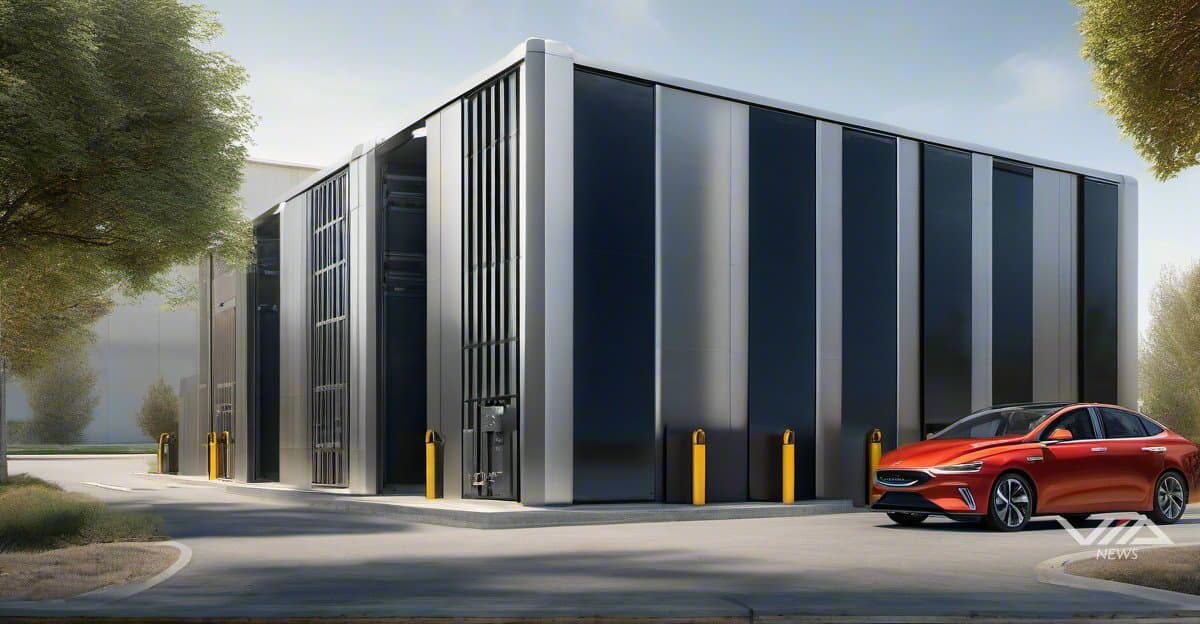
Bloom Energy signed a $1.7 billion fuel-cell supply agreement with Nebius AI, one of the largest single contracts in the company's history.1 The deal signals that AI compute operators are treating on-site power generation as a hedge against grid connection delays, not just a backup option.
Bloom Energy also struck a strategic agreement with American Electric Power (AEP), a major U.S. utility, aimed at AI-focused fuel-cell deployment.2 A utility partnering directly with a distributed-generation vendor suggests grid operators see fuel cells as a near-term supplement, not a competitor, to transmission buildout.
For hyperscale operators, these contracts function like long-term power-purchase agreements (PPAs): they fix capacity and, indirectly, cost exposure years before a data center needs to go live. Grid interconnection queues in many U.S. regions now run multiple years, making on-site generation a way to control both timeline and energy cost risk simultaneously.
Bloom Energy is also scaling internationally. The company expanded its South Korea distribution footprint through partnerships with SK Ecoplant and SK Eternix, giving it a manufacturing and sales channel in one of Asia's largest data-center markets.3 Bloom Energy already supplies fuel cells to Oracle, an existing hyperscale customer relationship that predates the Nebius deal.4
The pattern across these agreements is that fuel-cell orders are tracking AI capex commitments, not general utility demand growth. Amazon alone has flagged roughly $220 billion in 2026 capital spending, much of it tied to data-center and AI infrastructure buildout. If Bloom Energy's backlog and revenue disclosures over the next two to four quarters show fuel-cell orders scaling alongside hyperscaler capex announcements, rather than moving with broader electricity demand, it would confirm that on-site generation has become a binding constraint on AI data-center construction, independent of how fast utilities can expand the grid.
For investors, the read-through is that distributed energy suppliers now sit inside the AI infrastructure cost stack, alongside chipmakers and data-center REITs, as hyperscalers pay a premium to skip the grid queue.