Tuesday, August 18, 2026
What we know · the intelligence behind this page
Live from the substrate
What we're seeing
Enterprise AI Agent Rollout Outpaces Data Trust and Readiness
Enterprise adoption of agentic AI is accelerating fast — Siemens deepening its NVIDIA partnership for self-verifying agentic AI in chip design, Manulife expanding its Microsoft AI-governance partnership, and a wave of infrastructure launches (NVIDIA GPU-accelerated data processing, Dell exascale storage, new AI chip generations) — even as a new Google Cloud survey shows the underlying data foundation isn't ready: companies have AI access to only 45% of their data on average, data laggards see access fall to 30% or less, and only about half of organizations trust their AI agents' decisions. Meanwhile, insider selling at enterprise-AI bellwether C3.ai (CEO Thomas Siebel offloading $4.8M in shares) hints at investor caution layered under the adoption hype.
Our read on the data ›
Signals we're tracking
Satellite-Terrestrial Network Integration Acceleration
Increased investment and launches in hybrid satellite-cellular networks across telecom industry; competitive responses from other carriers; regulatory activity around satellite spectrum; expansion of emergency/rural connectivity use cases
Patterns we're watching ›
Where sources disagree
JPMorgan Chase & Co.
Both facts report JPMorgan Chase & Co.'s revenue for the same fiscal period (FY 2025) with the same observation date (2025-12-31), but with different values: $182.447 billion vs. $185 billion. The ~1.4% difference ($2.553 billion) is too large to be explained by rounding alone and represents conflicting data for the identical time period.
We flag conflicts openly ›
Recently verified
Checked against the original source
4,812
facts traced to their source — and we flag the ones that don't hold up.
101 entities tracked4,812 facts checked against source5,219 source documents archived
Work with this data → vianewsagency.com

Alpha Metallurgical Resources faces $2B+ revenue risk as steel industry shifts from coal

Alpha Metallurgical Resources, Inc. confronts catastrophic transition risk as steel producers accelerate decarbonization efforts away from metallurgical coal. The Appalachian coal miner's core business model faces medium-likelihood disruption as green steel technologies gain commercial traction. ESG-focused investors are repricing coal assets amid regulatory pressure.

Alpha Metallurgical Resources faces $2B+ revenue risk as steel industry shifts from coal
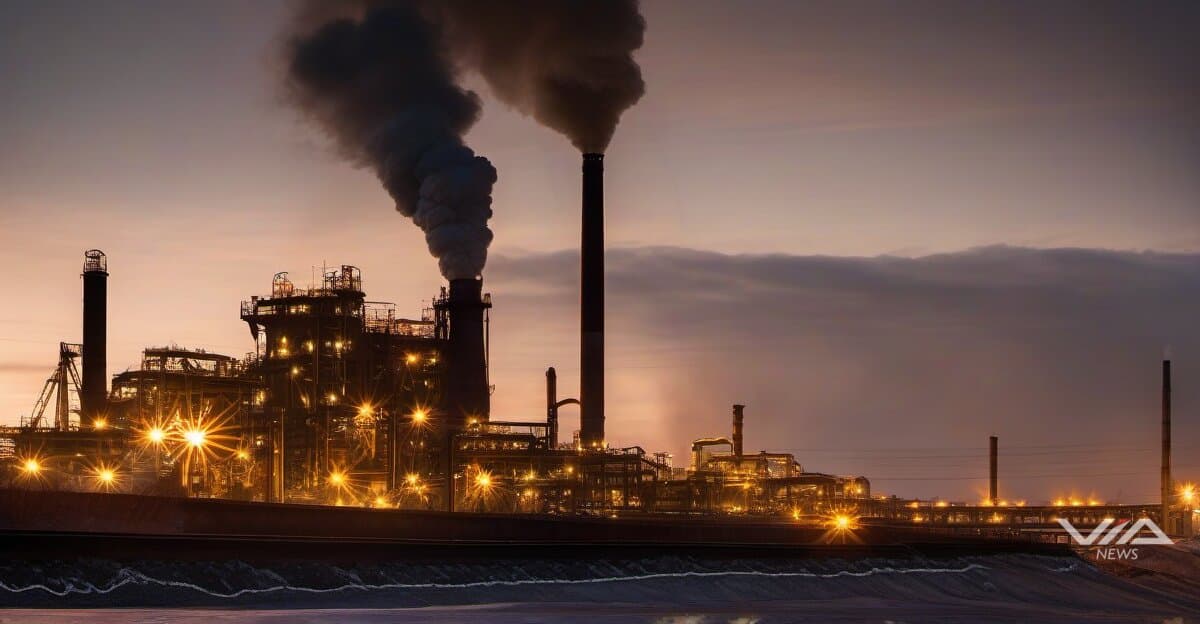
Image generated by AI for illustrative purposes. Not actual footage or photography from the reported events.

Alpha Metallurgical Resources, Inc. faces a catastrophic regulatory risk assessment as the steel industry accelerates its shift away from metallurgical coal, the company's primary product. This represents a significant threat as the energy sector continues decarbonization.

Metallurgical coal, used in traditional blast furnace steelmaking, accounts for the majority of Alpha's revenue stream from its Appalachian mining operations. Steel producers globally are now investing billions in hydrogen-based direct reduction and electric arc furnace technologies that eliminate coal dependency entirely.

European steelmakers lead the transition. SSAB targets fossil-free steel by 2026, while ArcelorMittal plans 35% emissions cuts by 2030. China, consuming 54% of global met coal, has mandated peak steel emissions before 2030 under its dual carbon goals.

The regulatory environment is tightening. The EU's Carbon Border Adjustment Mechanism, effective 2026, will impose tariffs on high-carbon steel imports. This pressures steel buyers to source from low-emission producers, reducing met coal demand.

Alpha emphasizes cost discipline and operational efficiency in its positioning. However, efficiency gains cannot offset demand destruction if steel customers abandon coal-based processes. The company's asset base in coal-rich Appalachia becomes stranded if transition accelerates faster than depreciation schedules allow.

ESG-focused institutional investors are reassessing coal mining holdings. BlackRock and Vanguard have reduced thermal coal exposure by 90% since 2020. Metallurgical coal faces similar scrutiny despite its industrial use case, as green steel alternatives mature.

Credit rating agencies flag transition risk. Moody's places coal miners on negative watch, citing demand uncertainty beyond 2030. Debt refinancing costs rise as lenders price in stranded asset probability.

Alpha's strategic options narrow. Diversification into battery metals or renewable energy requires capital the coal business may not generate if margins compress. Maintaining current operations risks value destruction if steel decarbonization accelerates on the higher end of forecast ranges.

The steel industry's decarbonization timeline remains uncertain, but directional momentum is clear. Alpha operates in a sector where regulatory tailwinds have reversed to headwinds, with limited pathway to pivot.

In this story · Knowledge Files