
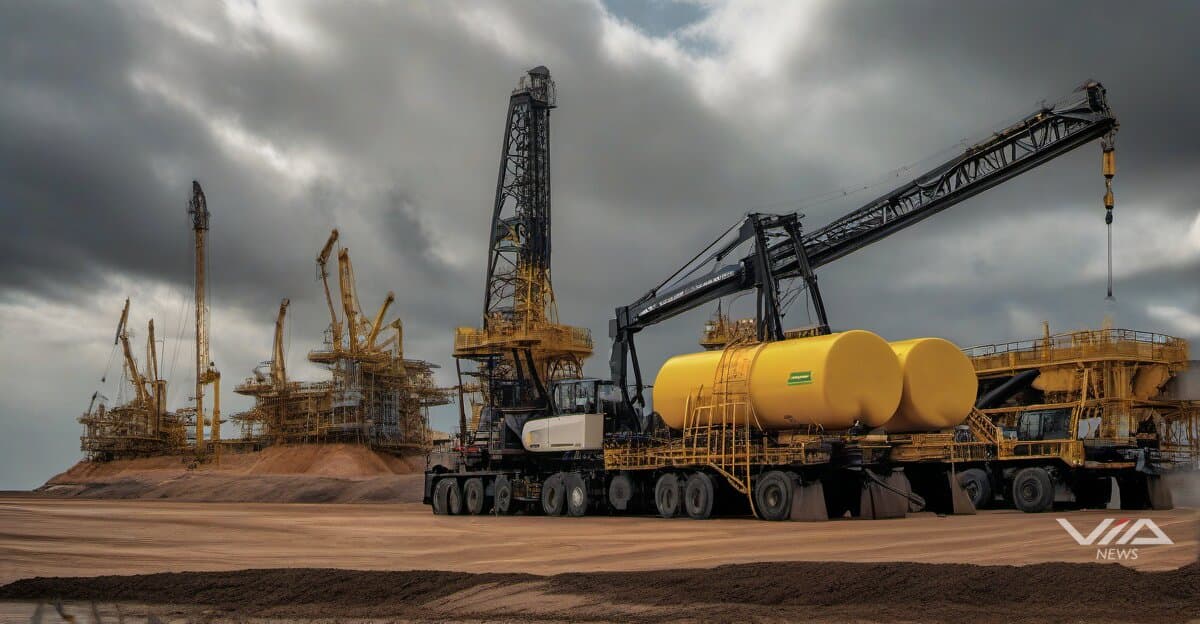
Petrobras has committed $109 billion to pre-salt deepwater development through 2030, but the Brazilian national oil company faces catastrophic stranded asset risk if energy transition accelerates faster than current International Energy Agency base-case scenarios.
The core vulnerability lies in project economics. Pre-salt developments carry multi-decade lifecycles extending well beyond 2030, requiring sustained oil prices above breakeven thresholds for high-cost deepwater production. Accelerated demand destruction would push these barrels into uneconomic territory against cheaper marginal supply sources.
Capital allocation presents a binding constraint. Most of Petrobras' investment plan flows into ongoing projects rather than new exploration, limiting strategic flexibility to pivot if market conditions deteriorate. The company operates deepwater assets in Brazil's offshore basins, where operational complexity and capital intensity create high fixed-cost structures.
IEA baseline scenarios currently project gradual oil demand decline through mid-century. Faster-than-expected electrification of transport, policy acceleration in major economies, or breakthrough clean technologies could compress demand timelines significantly. Under such scenarios, high-cost producers face margin compression first.
The risk carries a 70% confidence assessment with low current likelihood but catastrophic potential impact. Deepwater breakeven costs typically range $40-60 per barrel depending on field characteristics, above onshore and shallow-water alternatives. A scenario where sustained prices fall below these thresholds would strand significant capital.
Petrobras faces limited hedging options. The company cannot easily redeploy deepwater infrastructure to alternative uses. Sunk costs in existing projects force continued production even at marginal profitability to recover partial capital outlays.
The technological risk category reflects uncertainty around transition pace rather than operational execution. Pre-salt fields deliver strong technical performance, but market demand determines ultimate asset values. Long-dated investments made today must generate returns across decades of uncertain energy market evolution.
Investors evaluating Petrobras exposure should model multiple demand scenarios beyond IEA baselines, stress-testing portfolio resilience against faster transition pathways that could materially impair deepwater asset valuations before technical field life expires.