Tuesday, August 18, 2026
What we know · the intelligence behind this page
Live from the substrate
What we're seeing
Enterprise AI Agent Rollout Outpaces Data Trust and Readiness
Enterprise adoption of agentic AI is accelerating fast — Siemens deepening its NVIDIA partnership for self-verifying agentic AI in chip design, Manulife expanding its Microsoft AI-governance partnership, and a wave of infrastructure launches (NVIDIA GPU-accelerated data processing, Dell exascale storage, new AI chip generations) — even as a new Google Cloud survey shows the underlying data foundation isn't ready: companies have AI access to only 45% of their data on average, data laggards see access fall to 30% or less, and only about half of organizations trust their AI agents' decisions. Meanwhile, insider selling at enterprise-AI bellwether C3.ai (CEO Thomas Siebel offloading $4.8M in shares) hints at investor caution layered under the adoption hype.
Our read on the data ›
Signals we're tracking
Satellite-Terrestrial Network Integration Acceleration
Increased investment and launches in hybrid satellite-cellular networks across telecom industry; competitive responses from other carriers; regulatory activity around satellite spectrum; expansion of emergency/rural connectivity use cases
Patterns we're watching ›
Where sources disagree
JPMorgan Chase & Co.
Both facts report JPMorgan Chase & Co.'s revenue for the same fiscal period (FY 2025) with the same observation date (2025-12-31), but with different values: $182.447 billion vs. $185 billion. The ~1.4% difference ($2.553 billion) is too large to be explained by rounding alone and represents conflicting data for the identical time period.
We flag conflicts openly ›
Recently verified
Checked against the original source
4,812
facts traced to their source — and we flag the ones that don't hold up.
101 entities tracked4,812 facts checked against source5,219 source documents archived
Work with this data → vianewsagency.com

Generation Mining faces cash crisis as Marathon Project stalls pre-production

Generation Mining Limited confronts going concern risk with depleted working capital and no production revenue. The copper-palladium developer's low stock price and mounting operational expenses threaten viability before Marathon Project financing materializes. Investor confidence in pre-production mining ventures faces renewed scrutiny.

Generation Mining faces cash crisis as Marathon Project stalls pre-production
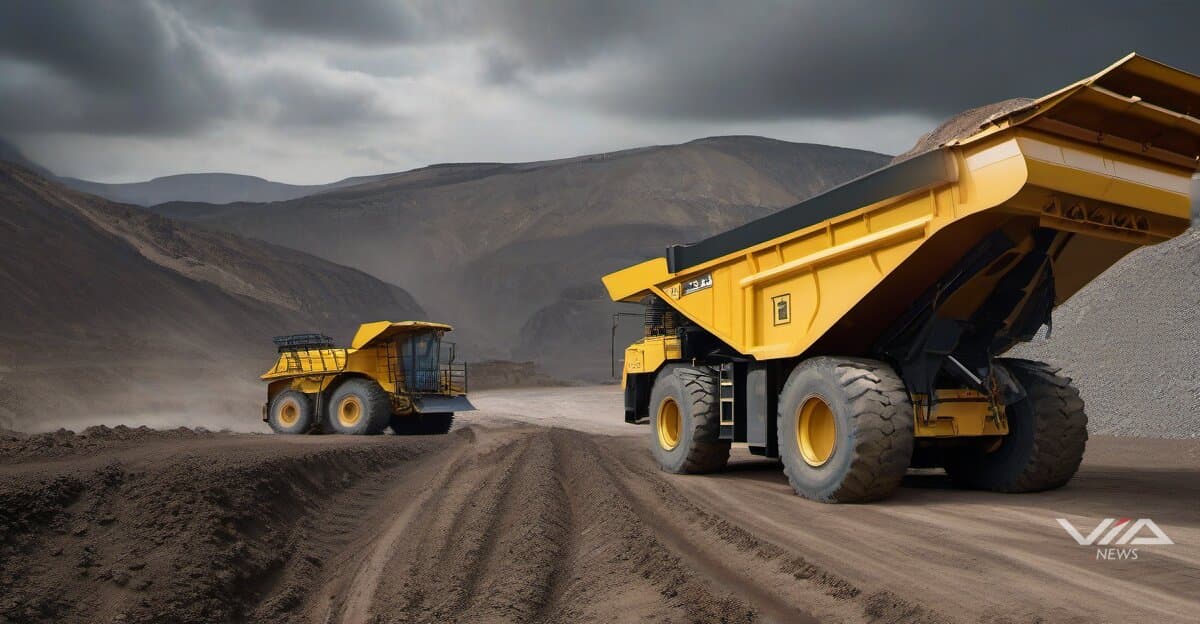
Image generated by AI for illustrative purposes. Not actual footage or photography from the reported events.

Generation Mining Limited faces critical liquidity shortfall as operational expenses drain working capital ahead of production at its Marathon Project copper-palladium deposit in Northwestern Ontario.

The mining developer operates in pre-production stage with zero revenue while maintaining full operational costs. Risk assessment shows 70% confidence in medium-likelihood catastrophic financial failure without immediate capital injection or project financing.

Going concern warnings in mining development typically emerge 12-18 months before insolvency. Generation Mining's compressed timeline leaves narrow window for capital raise or strategic partnership to bridge funding gap.

Marathon Project holds significance as one of Canada's largest undeveloped copper-palladium deposits. Copper demand projections show 40% supply deficit by 2030 driven by electrification and grid infrastructure. Project economics remain sound long-term despite short-term capital crisis.

Stock price decline compounds capital access challenges. Equity raises at suppressed valuations trigger shareholder dilution exceeding 50% in distressed scenarios. Debt financing options narrow for pre-revenue miners following 2024-2025 commodity market volatility.

Mining sector shows 23% failure rate for projects between feasibility study and production. Capital structure gaps kill projects with proven reserves when working capital depletes before production cash flows begin.

Generation Mining requires estimated $50-100 million bridge financing based on typical pre-production burn rates. Strategic options include offtake agreements with end-users, streaming deals with precious metal buyers, or joint venture with major mining operator.

Palladium market dynamics add complexity. Prices dropped 45% from 2022 peaks as automotive catalytic converter demand declined. Copper exposure provides project hedge but dual-metal economics complicate financing discussions.

Investor implications extend beyond Generation Mining. Junior mining sector trades at 15-year valuation lows as capital markets reassess pre-production risk premiums. Fund managers reduce exposure to development-stage miners lacking 24-month cash runways.

Marathon Project's technical merit remains intact. Liquidity crisis reflects capital markets dysfunction rather than asset quality deterioration. Resolution requires management execution on financing within 6-9 month window before going concern becomes acute.