
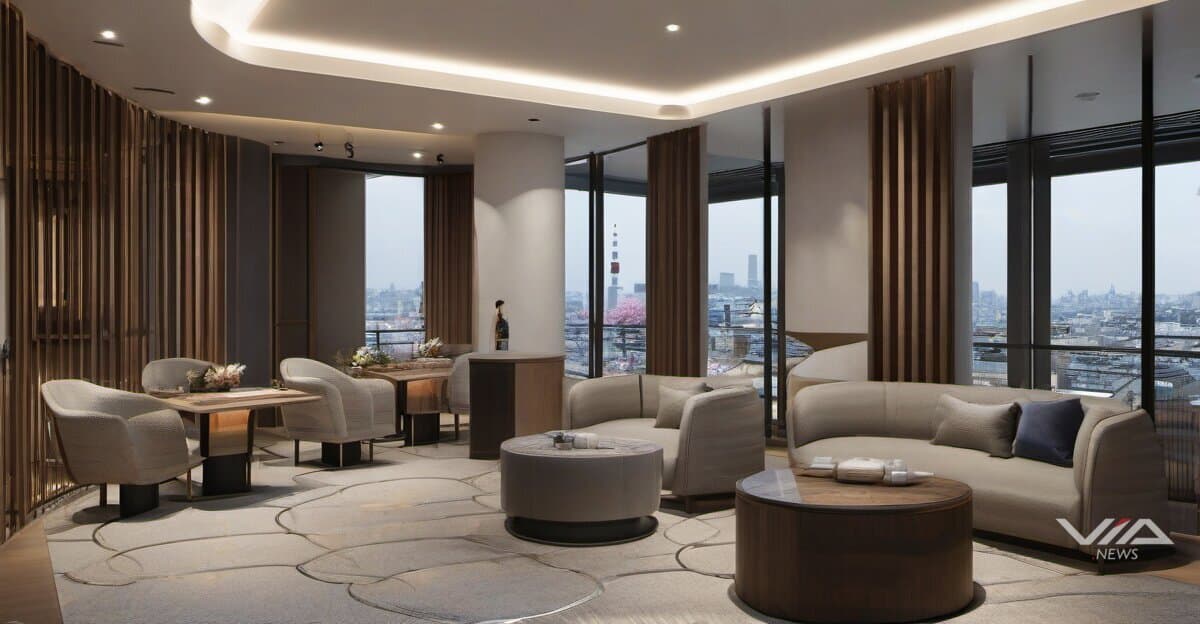
LogProstyle, the Tokyo-listed hospitality and real estate developer, is pressing forward with an aggressive multi-property expansion strategy, with a second hotel in the Asakusa district scheduled to open in October 2028. The addition will bring the company's operated portfolio to five hotels, each positioned within Japan's most commercially active tourism markets.
The decision to deepen the company's footprint in Asakusa — rather than diversify into a new geography — reflects a calculated bet on brand clustering. By operating two hotels within the same high-density cultural district, LogProstyle gains operational leverage: shared back-office infrastructure, consolidated supplier relationships, and the ability to cross-sell inventory between properties during peak demand periods. For asset-light investors tracking return on deployed capital, the model reduces marginal cost per additional room while maintaining exposure to one of Tokyo's most consistently trafficked tourist neighborhoods.
Asakusa's appeal as an investment location is well-supported by macro data. The district anchors Tokyo's Shitamachi cultural corridor and draws both domestic and international visitors to landmarks including Senso-ji Temple and Nakamise-dori shopping street. Japan's National Tourism Agency reported that inbound visitor spending surpassed ¥8 trillion in 2024, with Tokyo consistently capturing the largest share of overnight stays. Against that backdrop, a second Asakusa property is not merely a geographic bet — it is a bet on the structural durability of inbound tourism as a revenue driver.
LogProstyle's broader five-hotel footprint spans what the company describes as Japan's leading tourism markets, a portfolio architecture designed to capture demand across multiple visitor segments without overextending into secondary cities where occupancy volatility is higher. The strategy mirrors playbooks used by boutique operators in high-demand European markets, where clustering around anchor attractions allows for yield management across a micro-portfolio rather than relying on a single flagship asset.
From a capital deployment perspective, the timing of the Asakusa opening aligns with a wider industry trend of hospitality developers front-loading capacity additions ahead of projected demand peaks. Japan is positioning itself for a sustained inbound tourism supercycle, supported by the weak yen making the country an exceptionally cost-competitive destination for dollar- and euro-denominated travelers. For operators with shovel-ready projects, the window to open inventory before demand normalization is commercially significant.
The company reported the expansion details as part of its first-half fiscal results disclosure, suggesting the project is tracking within previously communicated timelines and financial parameters. While full capital expenditure figures for the Asakusa property were not separately itemized in available disclosures, the pipeline milestone reinforces management's stated commitment to controlled geographic concentration over rapid, dilutive expansion.
For equity analysts covering the Japanese mid-cap hospitality space, LogProstyle's five-hotel portfolio represents a test case for whether disciplined cluster-based expansion can generate superior RevPAR — revenue per available room — compared to more dispersed multi-city operators. If the second Asakusa property stabilizes occupancy rates consistent with the first, the company will have demonstrated a replicable playbook with implications for how investors value its future site acquisitions.