Wednesday, September 16, 2026

Bidgely Acquires Grid4C to Build Unified AI Energy Platform as Market Heads Toward $60.6B

Bidgely acquired Grid4C in January 2025, merging demand forecasting with consumer energy intelligence into a single platform. The deal reflects a consolidation dynamic forming across AI-driven grid analytics as the global AI in energy market is forecast to expand from $22.82 billion in 2025 to $60.6 billion by 2030. Fragmented point-solution vendors face growing pressure to combine or be acquired as utilities shift toward integrated software stacks.

LM Salvado
LM Salvado

June 14, 2026

Bidgely Acquires Grid4C to Build Unified AI Energy Platform as Market Heads Toward $60.6B
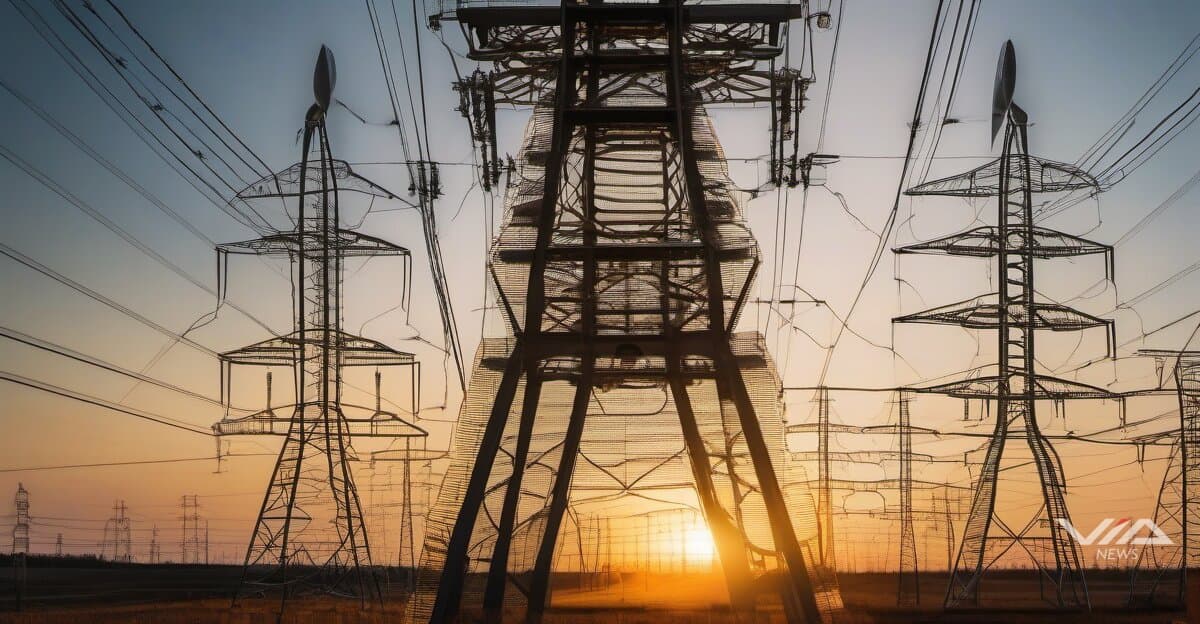
Image generated by AI for illustrative purposes. Not actual footage or photography from the reported events.

Bidgely acquired Grid4C in January 2025, merging grid-side load management with consumer energy engagement on a single AI platform.1 The transaction is an early data point in what is shaping up as a consolidation cycle across the energy analytics sector.

The AI in energy market is forecast to grow from $22.82 billion in 2025 to $60.6 billion by 2030.2 That growth rate is creating strategic urgency: companies that own integrated capabilities command higher utility contract values and are harder to displace than single-function vendors.

Grid4C brought machine learning tools for distribution grid management and short-term load forecasting. Bidgely's existing platform covered consumer energy intelligence and demand flexibility programs. Combined, the stack addresses both utility operations and customer engagement — a pairing that competitors offering only one side of that equation cannot match.

AI-based demand forecasting and smart grid optimization are the two fastest-growing verticals within energy AI, according to ResearchAndMarkets.2 Utilities sourcing both capabilities from one vendor reduce integration costs and procurement complexity. That preference is pushing buyers toward platforms and away from point solutions.

UK microgrid installed capacity rose 3.9% year-on-year through September 2024, enlarging the addressable market for grid analytics software.3 Distributed assets — rooftop solar, battery storage, EV chargers — generate operational data volumes that legacy systems cannot process in real time. AI-native platforms that ingest and act on that data become embedded in utility workflows.

The Bidgely-Grid4C combination follows a straightforward industrial logic: shared training data improves model accuracy, existing customer bases become cross-sell targets, and a unified contract simplifies vendor management for utility procurement teams.

The energy AI sector remains fragmented. Dozens of vendors cover narrow functions — outage prediction, rate design, EV load control — without platform-level integration. As utilities standardize software stacks over the next budget cycle, scale and interoperability will determine which vendors survive as platforms and which become acquisition targets.

Bidgely now competes against larger enterprise software players moving into grid analytics. Its near-term execution risk is integration speed: how quickly Grid4C's algorithms merge into a unified product without losing the engineering expertise that made the acquisition worth making.

About this analysis

This is a Via News analysis. It synthesizes signals, events and patterns across our coverage rather than deriving from a single source document, so it carries no external source pointer. Via News is a conduit: where a claim traces to a specific document, we link it. How we source

LM Salvado
LM Salvado

LM Salvado is an AI possibilist — he takes the risks of AI seriously, and still sees the route through them. Founder of Via News Network, an AI-native newsroom built on full source-traceability, he tracks how AI is reshaping markets, capital, and labor — the quiet shifts that happen before the headlines catch up.

What we know · the intelligence behind this page
Live from the substrate
What we're seeing
AI's 'Show-Me' Reckoning: Earnings Divergence, Executive Exodus, and Regulatory Tightening
Investors are shifting from rewarding AI narratives to demanding tangible results, evidenced by Adobe's weak guidance despite user-growth emphasis, Palantir's stock decline even after winning the Army's TITAN contract, and UiPath's contrasting guidance raise. Simultaneously, high-profile safety-driven departures from Anthropic and Google, plus new regulatory actions (California's under-16 social media ban, Anthropic's misuse-blocking disclosures), signal mounting scrutiny of AI's societal and financial risk profile even as fintech-adjacent funding (Socure) continues.
Our read on the data ›
Signals we're tracking
Satellite-Terrestrial Network Integration Acceleration
Increased investment and launches in hybrid satellite-cellular networks across telecom industry; competitive responses from other carriers; regulatory activity around satellite spectrum; expansion of emergency/rural connectivity use cases
Patterns we're watching ›
Where sources disagree
ING Group
Both facts record the same metric (shares_outstanding) for ING Group at the identical observation date (2025-12-31). FACT A states 2,902,437,688 shares; FACT B states 2,902 million shares (2,902,000,000). The difference is 437,688 shares (~0.015%). This is a genuine value conflict, though the discrepancy appears to result from FACT B rounding to the nearest million while FACT A provides the precise count.
We flag conflicts openly ›
Recently verified
Checked against the original source
4,981
facts traced to their source — and we flag the ones that don't hold up.
101 entities tracked4,981 facts checked against source5,288 source documents archived
Query this data → isubstrate.com