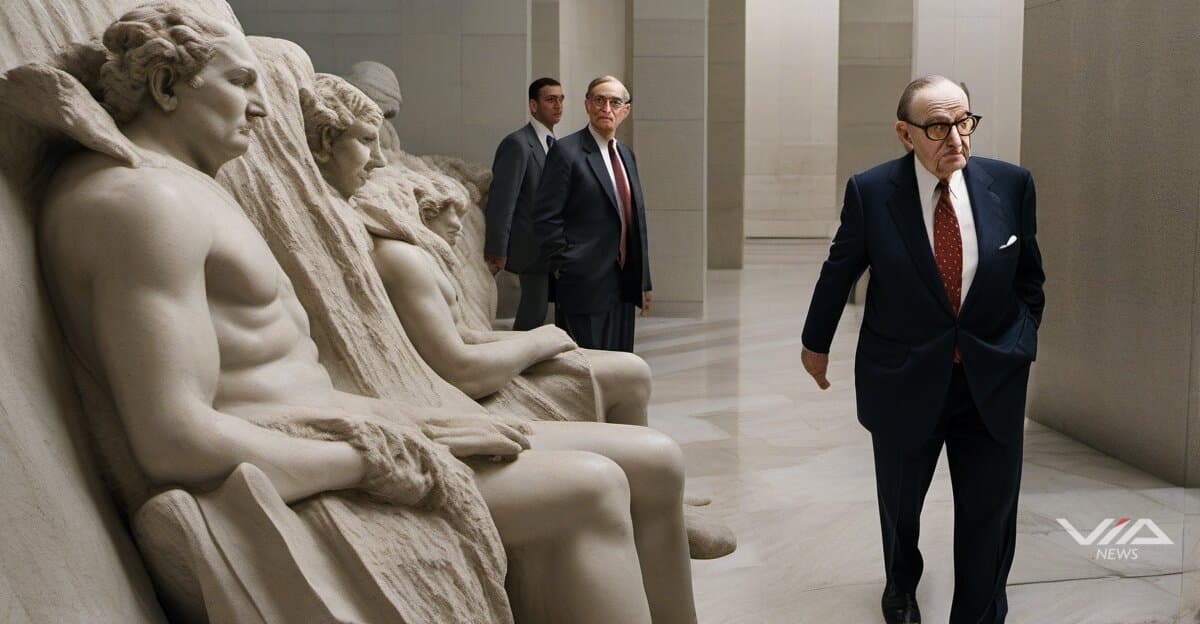
Kevin Warsh was sworn in as Federal Reserve Chairman this week, inheriting a central bank under acute stress. Inflation has reached a three-year high. An Iran-driven energy price shock is pushing costs higher. Treasury markets are selling off simultaneously.
The timing carries symbolic weight. Alan Greenspan, who chaired the Fed across five presidencies, died June 22 at age 100. Warsh served as a Fed Governor under Greenspan from 2006 to 2011. Now he occupies the same chair, facing a strikingly similar convergence of crises.
Greenspan's 2007 memoir was titled The Age of Turbulence. The phrase fits Warsh's opening chapter precisely.
Markets expect the Fed to hold rates at its current meeting. Yet investors are pricing in cuts as early as December — a split signal that defines the policy bind Warsh now owns.
"It's just a very difficult position for him all the way around," said analyst James Clouse, citing Warsh's dual exposure to conflicting demands from the White House and bond markets.1
The White House has been explicit about wanting lower borrowing costs. Bond markets are betting the opposite — that inflation persistence will force the Fed's hand upward. Warsh must choose a lane quickly.
For banking and financial regulation, the stakes extend beyond rates. A new Fed chair shapes supervisory posture, stress test design, and capital requirements for the largest institutions. Warsh's background as a former Morgan Stanley dealmaker suggests less appetite for expansive regulatory frameworks than recent predecessors.
The energy shock compounds the dilemma. Iran-linked supply disruptions are feeding import price pressures at the producer level. That narrows the Fed's room to cut even if broader growth slows — a stagflationary scenario central banks are least equipped to manage cleanly.
A fresh variable has also entered the monetary policy calculus. A US government order forcing Anthropic to shut down access to its Mythos system signals that AI regulatory intervention can now ripple into financial stability assessments the Fed must monitor.
Warsh has not publicly outlined his full policy framework since taking the chair. His early positioning on the rate path and regulatory posture will set the trajectory for banks, bond markets, and borrowers through at least 2027. The first press conference signal is the market's next focal point.