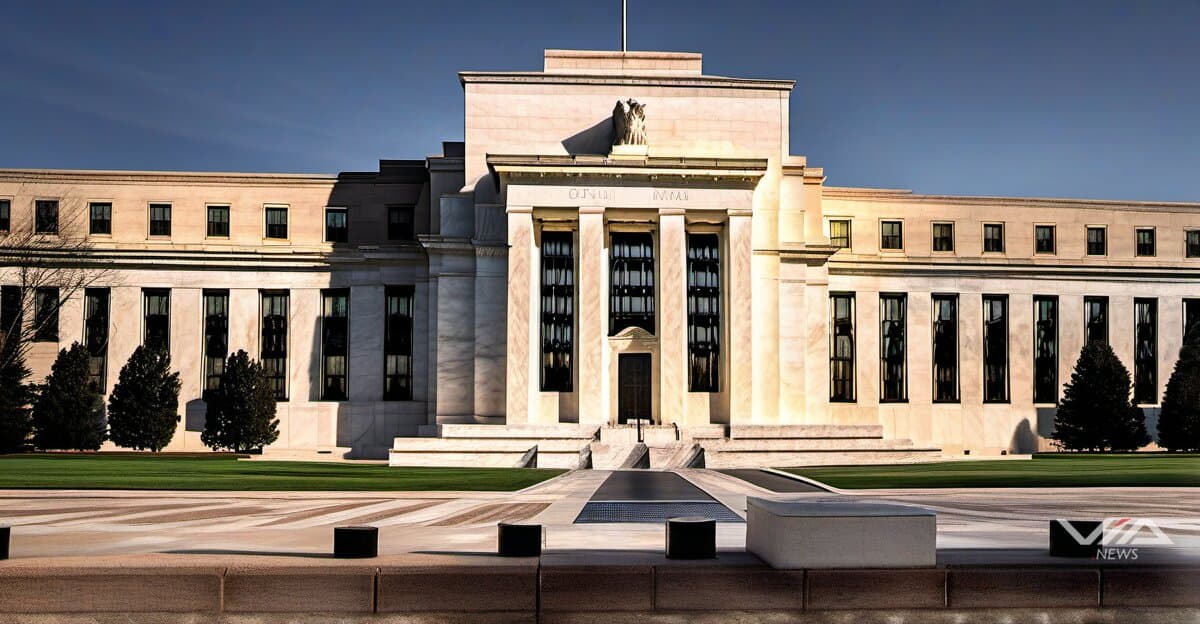
Interest rate traders have reversed course on Federal Reserve policy expectations for 2026, with nearly 64% now anticipating rates to hold steady at 3.5-3.75% through December—a sharp departure from December polling that forecast two rate cuts.1
Only 0.2% of traders expect rates to fall to 3.25-3.5% by year-end, while 36% bet on increases: 31% project rates rising to 3.75-4%, and 5% see a 50-basis-point hike from current levels.1 The hawkish recalibration reflects mounting inflation concerns as geopolitical shocks compound existing pressures.
The policy uncertainty intensifies as Jerome Powell's Fed chairmanship ends in May 2026, with Kevin Warsh nominated to replace him during a period of exceptional market stress.4 Iran's recent closure of the Strait of Hormuz—a chokepoint for 21% of global petroleum flows—threatens oil price spikes that could force the incoming Fed leadership into restrictive policy just as the transition occurs.
National debt surpassing $39 trillion constrains fiscal policy options, placing greater burden on monetary tools to manage inflation expectations. Retail investors have already responded to the deteriorating outlook, with trading activity collapsing 30% and investors turning net sellers as major indices declined 4%.1
The leadership transition creates additional complexity for banking sector stability. Warsh, if confirmed, inherits an institution navigating simultaneous challenges: managing inflation without triggering recession, maintaining financial system liquidity amid geopolitical disruption, and preserving credibility during a contested policy handoff.4
Market participants face dual uncertainty—not just whether the Fed will tighten, but who will make that decision and under what framework. The 64% of traders betting on steady rates may reflect less confidence in stable conditions than hedging against unpredictable leadership dynamics during crisis.1
Commodity markets signal freight demand concerns, with materials indicators posting mixed signals in February data—suggesting the real economy may already be responding to tighter financial conditions before any official policy shift.3
The convergence of leadership transition, geopolitical crisis, and shifting rate expectations creates conditions unlike any Fed handoff since Paul Volcker's inflation battle in the early 1980s. Banking institutions and investors alike are pricing in not just policy outcomes, but governance uncertainty itself.