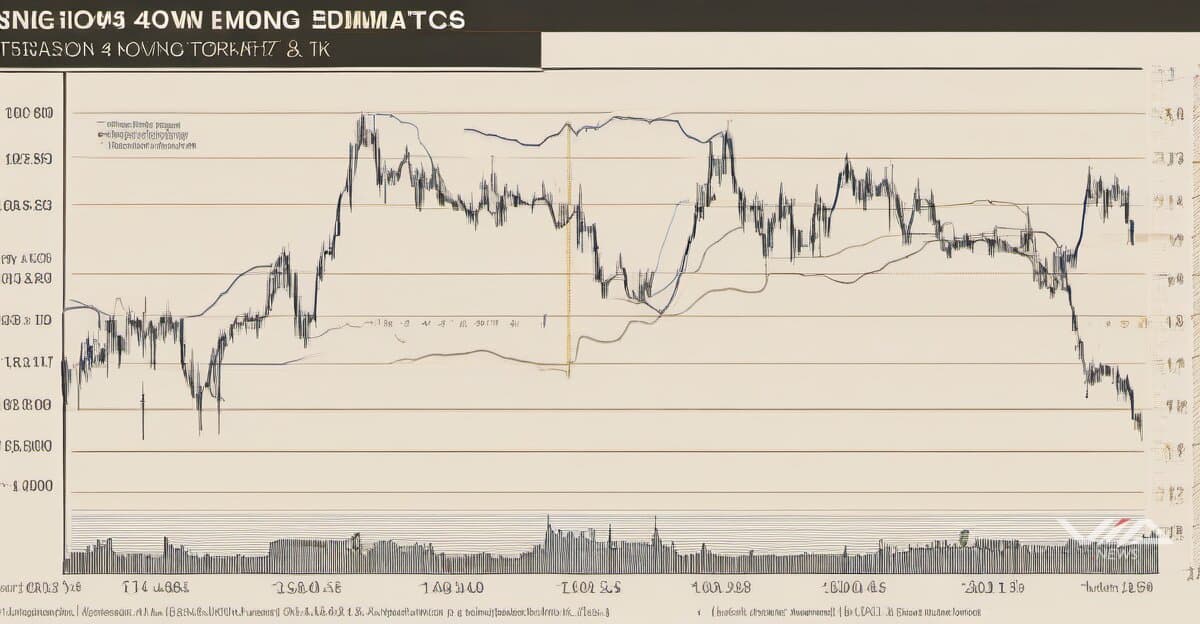
The 10-year Treasury yield climbed from 3.97% to 4.32%, compressing valuations for growth stocks carrying elevated price-to-earnings-growth ratios.1 The shift is forcing financial institutions to reprice borrowing costs, discount rates, and capital allocation across both fixed-income and equity books.
Lightspeed Commerce (LSPD) fell 5.58% on May 12 while the broader market gained.1 Autodesk declined 3.45% the same session.1 CI&T underperformed the S&P 500 year-to-date as of May 12.1 All three carry elevated PEG ratios, making their priced-in future cash flows more expensive to hold as the risk-free rate rises.
The mechanism is direct. Higher Treasury yields raise the discount rate applied to long-dated earnings. Stocks trading at high PEG multiples face steeper haircuts when rates move. Dick's Sporting Goods holds a PEG ratio of 3.21; Booz Allen Hamilton's stands at 4.45 — both well above industry averages, and both rate-sensitive as a result.1
The 10-year Treasury Constant Maturity Rate moved from 4.29 to 4.34 in the same period.1 Above the 4.3% threshold, compression on high-PEG names tends to accelerate. Treasury bonds now offer returns that compete directly with the equity risk premium on growth stocks.
For financial institutions, the yield move creates a three-way pressure. Corporate borrowing costs rise as Treasuries set the floor for credit spreads. Long-duration equity holdings face mark-to-market losses. Capital allocation teams must raise return hurdles across the portfolio as the risk-free rate reprices upward.
Banks and asset managers that overweighted AI and high-multiple technology names earlier in 2026 are reassessing position sizing. The broader market's resilience during the May 12 session suggests rotation rather than wholesale retreat — capital moving toward lower-multiple, near-term cash-flow names where duration risk is contained.
For corporate treasurers at high-growth firms, the implication is concrete. New debt issuance costs more. Equity-based financing faces a tougher valuation environment. Locking in fixed-rate debt before yields climb further is the rational hedge for firms with significant capital expenditure pipelines.