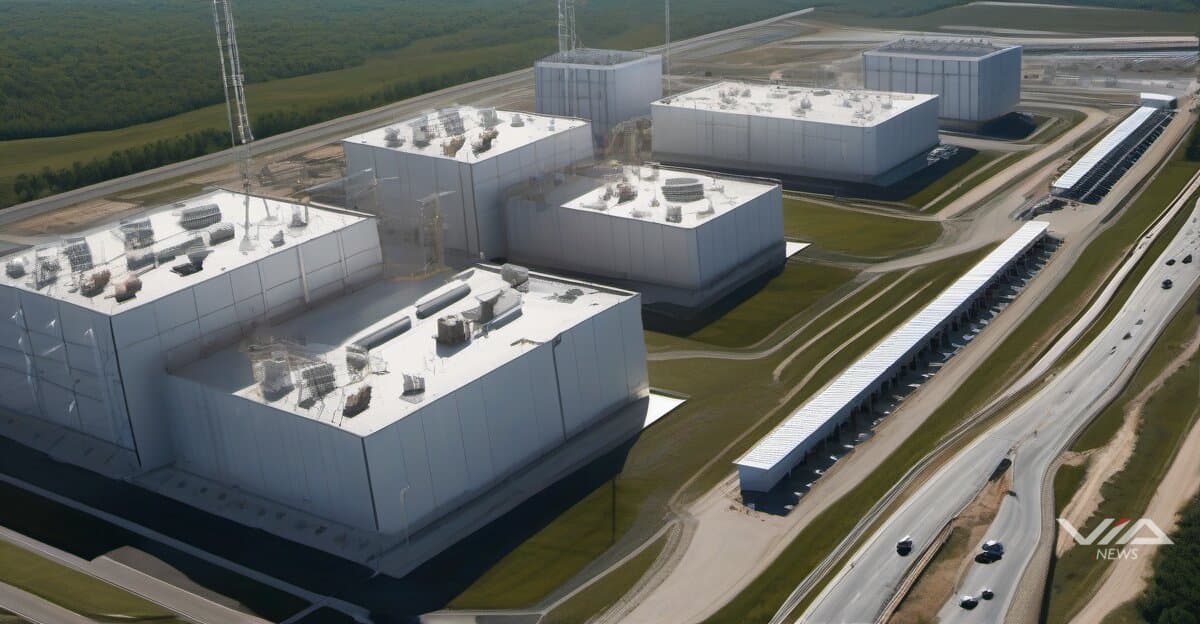
Duke Energy is deploying a billions five-year capital expenditure plan, driven by electricity supply agreements signed with major hyperscalers building AI data centers.1 The company's CEO has explicitly signaled that number will grow.
The utility is locking in long-term power contracts to supply data centers at scale. That shift is moving AI infrastructure costs onto regulated utility balance sheets — and into rate base calculations that affect every ratepayer in Duke's service territory.
Duke's inclusion of next-generation nuclear power in its forward plan is the sharpest signal in the announcement.1 Hyperscalers need 24/7 baseload electricity. Renewables without storage cannot guarantee that profile. Nuclear can. Utilities integrating nuclear into long-range plans are positioning to retain hyperscaler load commitments that may span decades.
The capital allocation pressure is not limited to Duke. Utilities across major data center corridors — where land, fiber, and transmission capacity intersect — face the same dynamic: absorb accelerating load growth now, or lose hyperscaler siting decisions to competing territories. The result is a capex supercycle concentrated in a handful of service areas.
For equity investors, two linked opportunities emerge. First, utilities in hyperscaler-dense territories stand to expand their regulated rate base on the back of guaranteed long-term load growth — a direct path to earnings expansion within a regulated return framework. Second, nuclear energy equities are seeing renewed institutional interest after years of stagnation, as both hyperscalers and utilities signal long-term demand for baseload-grade generation.1
Execution risk is real. A billions capex program requires sustained capital markets access, regulatory approval for cost recovery, and on-schedule project delivery. Utilities have historically struggled with large infrastructure programs on all three dimensions. Duke's CEO flagging further upside to the plan signals confidence in demand visibility — but confidence and delivery are different things.
AI compute infrastructure has now crossed the threshold where its power requirements are large enough to move utility sector fundamentals. Duke's announcement is the clearest single data point yet that hyperscaler demand has become a structural driver of utility capital allocation — not a cyclical tailwind.
Investors watching for correlated demand should monitor AI-adjacent hardware categories: liquid cooling systems, high-voltage power management equipment, and data center networking infrastructure. Each scales with the same buildout driving Duke's capex expansion.